
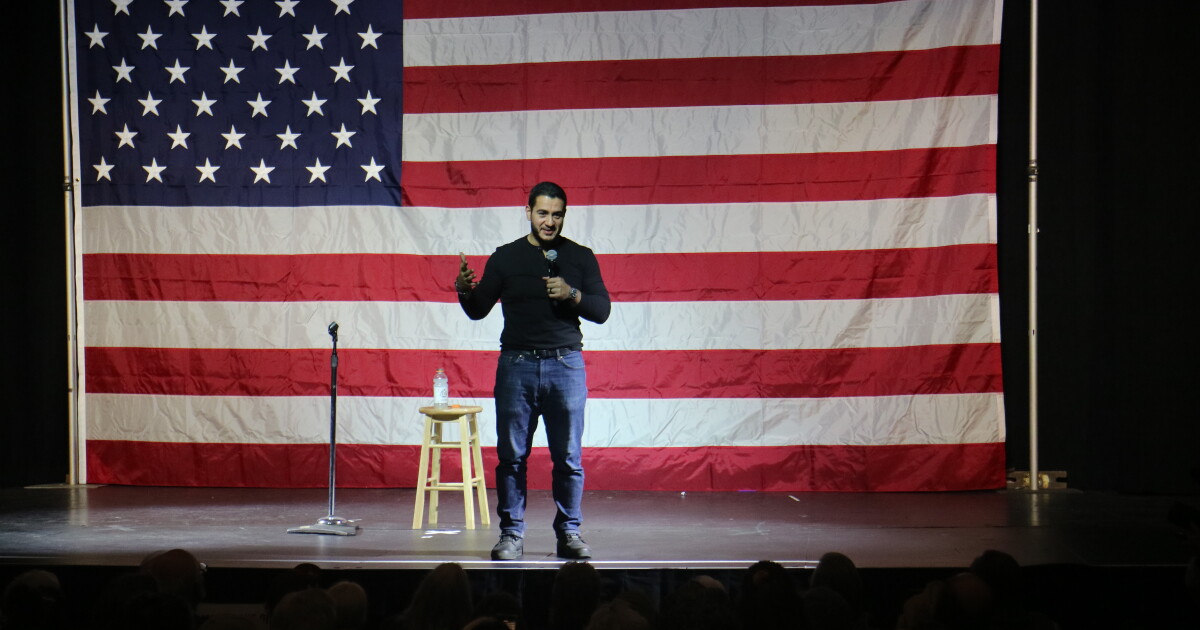
With control of the U.S. Senate potentially on the line, Michigan’s open Senate seat has become one of the most closely watched — and most expensive — races in the country. For everyday voters in the Great Lakes State, the stakes couldn’t feel more personal.
Democratic candidate Abdul El-Sayed brought his campaign to Central Michigan University’s Plachta Auditorium on Friday evening, drawing a standing-room-only crowd just over three weeks before the November 3 election. The visit came one night after a combative televised debate with his Republican opponent, former congressman Mike Rogers, that was marked by personal attacks and frequent crosstalk between the two candidates.
For some attendees, that very tension was what motivated them to show up in person and hear El-Sayed speak directly. Vicki Bunting, 61, a school employee from Alma, said she came because she wanted to form her own view of the candidate — separate from what she’d been seeing on television.
“Mostly it was because of the negative ads that we’ve seen over and over on television and about his family and his last name and his religion. We just want to make our own opinion.”
Her sentiment reflects a broader concern that has surfaced throughout Michigan’s 2026 midterm cycle: whether voters can cut through the noise of an extraordinarily high-spending race to make informed choices at the ballot box.
A Race Defined by Outside Money
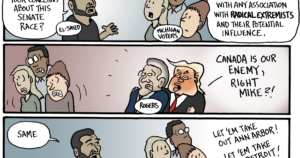
According to an analysis from Bridge Michigan, this contest is on track to become the most expensive U.S. Senate race in Michigan history, with disclosed spending already surpassing $205 million. Much of that outside money is tied to groups connected to the American-Israeli Affairs Council, known as AIPAC, whose involvement has become a defining factor in how the race has been framed for voters.
The United Democracy Project, an AIPAC-aligned super PAC, spent more than $33 million during the Democratic primary to support Michigan Congresswoman Haley Stevens against El-Sayed. That same group is now running ads against El-Sayed in the general election, according to NBC News. The flood of outside spending raises real questions about whose voices are shaping the information voters receive — and how that affects public trust in the democratic process.
The national stakes are equally significant. Michigan’s Senate seat is widely seen as a potential factor in whether Republicans can hold onto their majority in the chamber, drawing attention — and dollars — from across the country into a single state race.
What El-Sayed Is Telling Voters
At CMU, El-Sayed laid out his policy priorities for the crowd, including his support for Medicare for All and ending U.S. military involvement in Iran. On the economy, he detailed a tax plan that would tax capital gains above $1 million at the same rate as regular income and impose an additional tax on wealth exceeding $1 billion.
“I just don’t think it’s right for you to think that your billion should make a second billion while everybody else is just struggling to make the first $100,000.”
He also reflected on the nature of his campaign and what he believes politics should represent.
“We built a movement, having a conversation about what politics is supposed to be,”
he told the audience.
El-Sayed took questions from those in attendance but exited before speaking with reporters.
Where the Race Stands
Polling suggests the contest remains extremely competitive. An average of surveys tracked by Real Clear Politics shows El-Sayed leading Rogers by just over three percentage points — a margin that falls within the typical margin of error for most midterm polling. The Cook Political Report rates the race a toss-up, meaning either candidate could plausibly win on Election Day.
For voters like Bunting, the closeness of the race only reinforces why showing up — and tuning in — matters. She said she feels more engaged in this election than in past ones, explaining that she’s
“getting near retirement age and the future is sitting here.”
Michigan voters can follow continued coverage of Senate and statewide races through local and regional news reporting, including WCMU’s coverage. For more on the Rogers-El-Sayed debate and how the two candidates clashed the night before El-Sayed’s CMU appearance, reporting from Russ McNamara offers a full breakdown. Additional background on how Michigan Republicans solidified their candidates at their state convention, reported by Blace Carpenter, provides useful context for where the GOP side of this race began.


Comments are closed.