
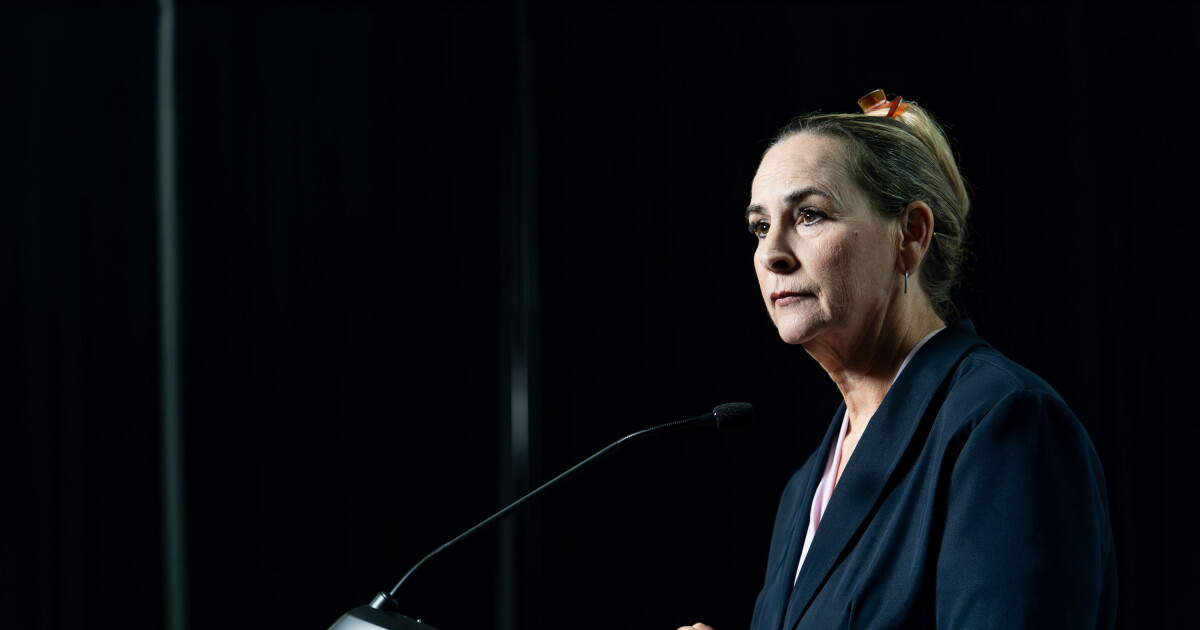
When a congressional candidate steps forward to report a violent crime, it raises questions that go far beyond one person’s experience — questions about safety on the campaign trail, the willingness of survivors to speak out, and what it means for democracy when candidates face intimidation while doing the basic work of running for office. For Bernadette Greene-Placentia, a Democratic candidate in Arizona’s 8th Congressional District, reporting that she was raped in August while repairing a campaign sign in Sun City was a decision she almost didn’t make — and one that has since sparked a national conversation about survivor silence, political violence, and the cost of participation in public life.
The Silence That Surrounds Sexual Violence
Long before Greene-Placentia decided to come forward, the odds were already stacked against disclosure. A 2018 Department of Justice report found that close to 80% of rapes and sexual assaults in the United States go unreported. That data, drawn from the National Crime Victimization Survey — sponsored by the Bureau of Justice Statistics and conducted by the U.S. Census Bureau — reflects a deeply entrenched pattern of survivor silence driven by fear, shame, and distrust of institutions.
Greene-Placentia knows that silence from the inside. She initially didn’t want to report she was raped, describing the weeks after the assault as a period of shame and self-doubt.
“I was in that boat. The first couple of weeks, it was like, I don’t want anybody to know. You know, it was embarrassing. I felt like, how could I let this happen to me? And, you know, to get women past that, you know, you didn’t let anything happen to you. This was done to you. And it’s not your fault,”
she said.
It was only through conversations with constituents — conversations about what she would fight for in Congress — that she decided speaking out was not just personal, but necessary. Since the story broke nationally on Wednesday, she said hundreds of messages have poured in from survivors, including many women who say they never came forward and likely never will.
“The outpouring, you know, from hundreds and hundreds of women, yeah, I mean, as far away as, you know, in Europe, saying, ‘I, too, was a victim,’ or ‘Thank you for standing up,’ and glad that a woman who is a public face and has a platform is standing up to say, ‘Hey, this can happen to anyone. This happened to me. It is OK to come forward,’ and to be a voice for those women that maybe don’t have, you know, somebody to fight for them, or don’t think that, you know, they can come forward, to show that, yes, you can come forward,”
she said.
Safety on the Campaign Trail and Democratic Participation
The attack occurred in August when Greene-Placentia was alone in a Sun City parking lot repairing a damaged campaign sign — the kind of grassroots, ground-level campaign work that candidates, especially those without large staffs, routinely do. In the weeks before the assault, her campaign had posted videos of her fixing signs late at night, with captions she described as tongue-in-cheek.
“Like, ‘Hey, do you know where your congressional candidate is? Oh, she’s out, you know, 1 o’clock in the morning, and it’s only 105 degrees in July! She’s, you know, pounding rebar and putting her signs up,'”
Greene-Placentia said. She noted that during the attack she partially regained consciousness and heard one of her assailants midsentence saying what sounded like “-ic b-tch,” leading her to believe she may have been called a “Democratic bitch,” though she cannot be certain. She said she was wearing her campaign shirt and working near a sign bearing her face at the time.
Greene-Placentia said she can’t confirm whether she was deliberately targeted because of her political identity or whether the attack was a crime of opportunity.
“I couldn’t tell you if I was, like, followed, if I was deliberately targeted. My thought was it was probably a crime of opportunity that somebody saw me out there,”
she said. But the possibility that a candidate was targeted while doing campaign work — an act central to democratic participation — is a question that carries weight far beyond one race. The Maricopa County Sheriff’s Office is investigating, though Greene-Placentia said as of Thursday she had received no updates on the inquiry.
Political Silence and Skepticism
The public response to Greene-Placentia’s disclosure has exposed a fault line in how political violence and sexual assault allegations are received depending on who is speaking and who is listening. High-level Arizona Democrats expressed support and outrage in the wake of the news. Her GOP opponent, incumbent Congressman Abe Hamadeh, had said nothing publicly as of Thursday evening.
Meanwhile, Andrew Kolvet — spokesperson for Turning Point USA and a producer behind the Charlie Kirk Show — used his podcast and social media platforms to suggest she may be lying, describing her account as “spectacular allegations” and a “dubious, highly inflammatory allegation.”
Greene-Placentia said she anticipated the skepticism.
“We knew it was going to come, and unfortunately, it has. And like I said, it’s just despicable that some people think that that’s OK, and that’s where, you know, the media and our family needs to speak out against people who resort to that,”
she said. When public doubt is cast on a candidate’s account of a violent crime — without any counter-evidence — it becomes part of a broader pattern that discourages victims from reporting and that erodes the civic trust democratic institutions depend on.
Standing Back Up
Greene-Placentia grew up in rural Nebraska and has long seen herself as fiercely self-reliant. After the attack, the first thing she wanted to do was go to a gun range and shoot — something she described as therapeutic. She invoked the way she was raised.
“Joe and Magda Greene raised a very strong daughter,”
she said.
But she also acknowledged that the assault shook her in ways she didn’t expect.
“I hate the fact that it did shake my confidence. And I hate that my daughter saw Mom, for the first time in her life, you know, scared and — and anxious, and not knowing what to do. And, you know, I hate that my husband saw, you know, me wavering. And, you know, I got my feet back under me, and like I said, you know, you get knocked down, you stand back up, and that’s what I’m doing,”
she said.
When the story went national Wednesday, the emotional weight returned.
“It had kind of died down, and then like I said, you know, yesterday my world exploded again and now it’s kind of come back. And with that is, you know, the anger and the frustration that, you know, there’s not actually anything I can do. I wish I could just go find these people myself and haul them to jail or something,”
she said.
She said the men who attacked her took away her bodily autonomy — and that by speaking publicly, she is reclaiming it. She called them weak.
“They’re the ones that are weak for doing what they did. That’s — that’s not a sign of strength. That’s a sign of weakness on their behalf. And to let women know that, you know, take back your voice, take back your power, and don’t let this define who you are.”
She has made clear the campaign continues.
“I just hope that other women either come forward or at least know that someone is advocating on their behalf and speaking out,”
she said.
For more on Arizona’s 2026 races and ballot measures, see the Arizona Voter Guide from KJZZ. You can also follow coverage of the 2026 Arizona Senate 9th Legislative District candidates, read about how Arizona’s 1st Congressional District candidates differ on data centers, learn whether Democratic legislative candidate Tammy Caputi lives in her district, and review the arguments for and against Arizona Props. 141 and 316. Share this story on LinkedIn or Bluesky.







Comments are closed.