
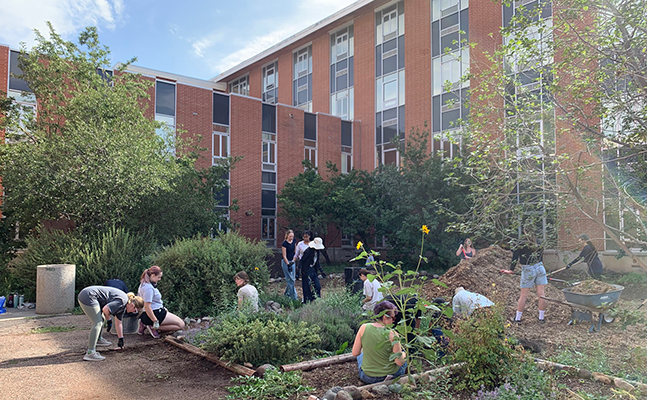
The revival of a unique outdoor learning environment at Northern Arizona University (NAU) is underway, thanks to a collaboration between the School of Hotel and Restaurant Management (HRM) and the Department of Biological Sciences. This initiative is set to enhance students’ educational experience by merging academic learning with practical food production skills.
The Shand Garden, named in honor of the late biology professor Richard Shand, was initially created around 15 years ago as a space for teaching and research. While much of the garden was dismantled for window renovations in the biology building last spring, efforts to restore this vital learning area are now in full swing. Spearheaded by a stewardship team including Janan Scott, Giovanna Macry, and Amanda Gonzalez, the restoration aims to incorporate a badging program to benefit students in their career pursuits.
Origin of the Collaboration
HRM’s executive director, Mark Molinaro, reached out to Janan Scott, a Coconino County master gardener, to explore the idea of establishing a culinary garden at NAU. During her search, Scott discovered the Shand Garden. “There were vegetables already planted there, so I reached out to the College of Environment, Forestry, and Natural Sciences (CEFNS) to see who was utilizing this garden,” Scott explained. An agreement was formed between HRM and CEFNS, marking the beginning of a fruitful partnership.
Despite the initial setback from renovation work, the collaboration has persisted. Recently, a diverse group of faculty, staff, and 30 student volunteers from various majors have begun the renovation process.
Biology and Spanish junior Liz Mott, a long-time volunteer, expressed her surprise and delight at the community’s response: “I couldn’t even count,” Mott said, reflecting on the number of volunteers. “Getting to see the growth of the people who care about this garden and being able to complete months of work in a single day was incredible.”
Volunteers have made significant strides, including installing new beds and a tree guild with pollinator plants, rebuilding the compost system with Chef Travis Bradford and HRM students, and establishing a Three Sisters Bed with the Blue Key Honor Society. These efforts honor HRM’s Indigenous hospitality class and involve growing corn, beans, and squash. The team’s next step is to solarize the field and prepare it for planting by next fall.
Educational Opportunities
Assistant professor in biological sciences, Richard Hodel, foresees the garden as a valuable resource for courses like sustainable botany. He highlights the importance of interdisciplinary collaboration, stating, “Many of the most interesting problems we face don’t fit neatly into one academic discipline. A garden is simultaneously a biological system, a designed landscape, an educational space and a place where people gather.”
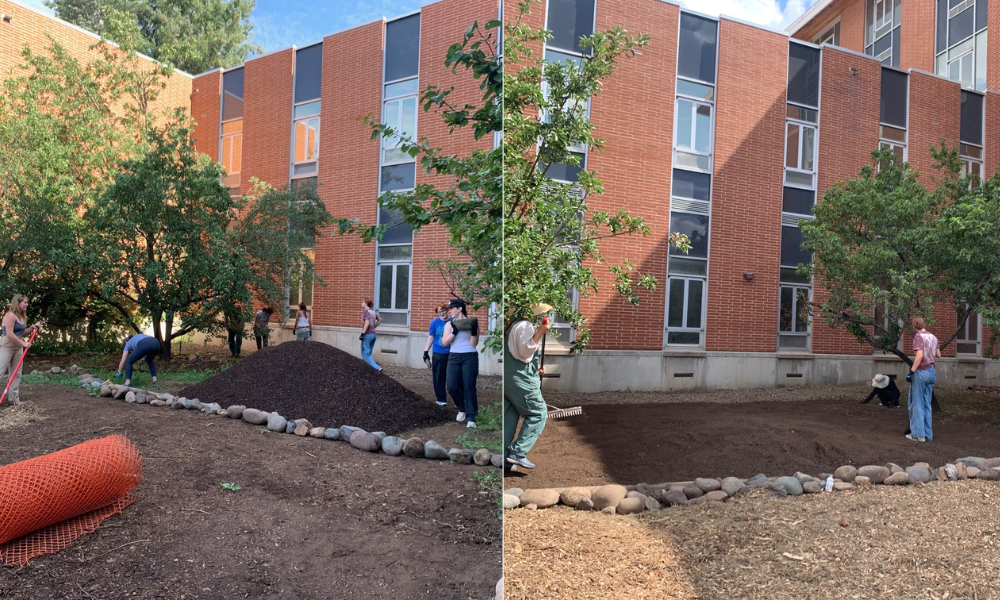
Hodel also emphasizes the need to consider future challenges such as arid conditions and saline soils, particularly in Arizona. For HRM students, the garden offers a farm-to-table experience, teaching them about the origins of food and the journey from growth to consumption.
Scott elaborates on this goal: “The idea is to be able to come out each day and see what produce is available and in season. We would like the students to be able to taste the difference between fresh-grown produce and grocery store produce and have an appreciation for how much work goes into growing it. Maybe that will also influence reducing food waste.”
Building Skills and Community
Set to launch in Spring 2027, the Shand Garden badge program aims to provide recognition for the skills and knowledge gained by volunteers. According to Macry, this initiative will allow students to demonstrate their skills to employers and internship coordinators. “From reinstalling irrigation systems, to plant bed development using appropriate methods for our region and to suit the intended crops, to compost maintenance for soil health and more, students can develop and demonstrate outdoor space management and leadership skills,” she explained.
Andrew Kelley, a junior in ecology and evolutionary biology, sees volunteering at the garden as more than skill-building. “I think this is a wonderful opportunity to get involved and be part of the community the garden creates,” he said. “It is such a welcoming community, and I am excited to see what grows in the garden.”
Volunteering opportunities are available at three upcoming restoration events: 9-11 a.m. on Oct. 10, 4:30-6 p.m. on Oct. 14, and 9-11 a.m. on Oct. 24. Interested individuals can contact Janan Scott for more information.
Read More Here









Comments are closed.