
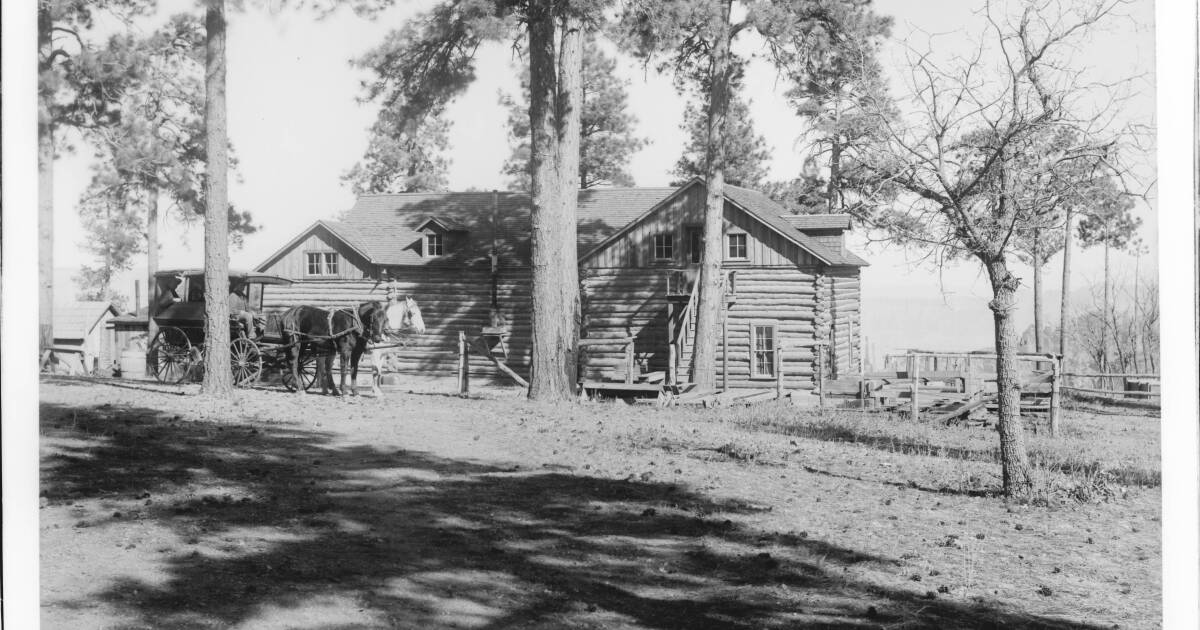
Long before the Grand Canyon became one of America’s most visited natural wonders, a modest hotel perched on its south rim quietly shaped how the country first experienced the canyon’s grandeur. That hotel is gone today — but its story reveals how quickly fortune can turn, even in one of the most spectacular settings on Earth.
In 1892, a miner and entrepreneur named Pete Berry established a copper mine on Horseshoe Mesa, roughly 3,000 feet below Grandview Point along the Grand Canyon’s south rim. The ore Berry extracted was high quality, but getting it out was another matter. Hauling copper from that depth up to the rim — and then onward to a distant smelter — was physically grueling and financially draining. As copper prices fell, the economics of the operation grew increasingly difficult to justify.
Rather than abandon the region entirely, Berry shifted his focus to an emerging opportunity: tourism. A stagecoach line had recently begun carrying visitors from Flagstaff to the south rim near Grandview Point, and Berry recognized the potential. Together with his wife Martha, he opened the Grandview Hotel in 1897. Built from ponderosa pine harvested on site, the hotel quickly established itself as the go-to destination for early Grand Canyon tourism.
A Destination Born of Necessity
For travelers who had endured an exhausting twelve-hour journey by stagecoach from Flagstaff, the Grandview Hotel offered something deeply welcome: hot meals and comfortable beds. Its location also provided direct access to the Grandview Trail, giving guests a gateway into the canyon itself. For a brief window of time, it was the premier place to experience one of the continent’s most awe-inspiring landscapes.
But that window closed faster than the Berrys could have anticipated. In 1901, the Santa Fe Railroad completed a spur line to Grand Canyon Village, located about 11 miles west of the Grandview Hotel. The choice facing travelers was straightforward — a smooth rail journey versus a bone-rattling day-long stagecoach ride. Tourists chose the train, almost unanimously, and the Grandview Hotel’s clientele evaporated.
Sold, Dismantled, and Remembered in Timber
By 1907, the Berrys had sold the property to newspaper publisher William Randolph Hearst. Hearst eventually had the hotel dismantled, and today there is no physical trace of the structure at Grandview Point. The land that once hosted the Canyon’s most celebrated lodging now greets visitors with silence and open sky.
Yet pieces of the Grandview Hotel did survive — just not where most people would think to look. Some of the original ponderosa pine timbers from the hotel were repurposed in the construction of the Desert View Watchtower, a landmark that still stands today along the south rim. Visitors walking through that historic structure may not realize they are standing among the bones of the Grandview Hotel, woven quietly into the walls around them.
This story was reported by Steve Schwartz for Earth Notes, produced by KNAU and the Sustainable Communities Program at Northern Arizona University. Stay up to date with local news from the region and tune into the KNAU Local News Now podcast for daily coverage.







Comments are closed.