
Pennsylvania has sent thousands of men to Washington over more than two centuries — but only a dozen women have ever won a seat in the U.S. House from the Keystone State. As the 2026 midterm elections approach, that number could grow, making this a pivotal moment in the state’s political history.
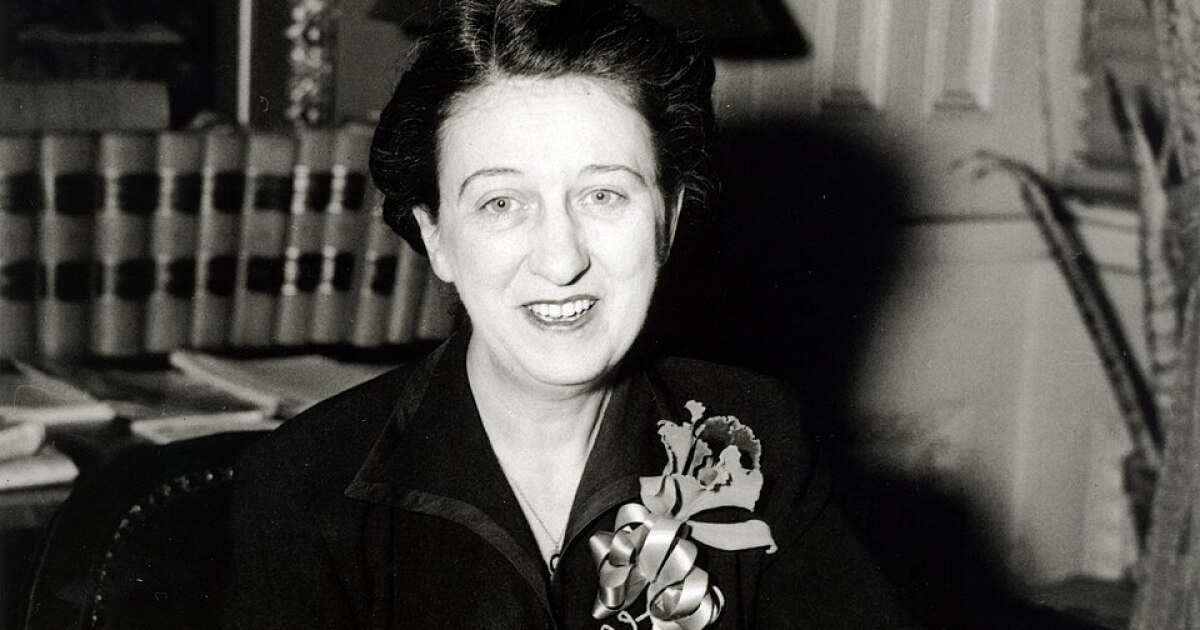
The story of Pennsylvania women in Congress begins not with fanfare, but with grief. In May 1942, U.S. Rep. Patrick Boland of Scranton died in office, leaving his congressional seat vacant. His wife, Veronica Grace Barrett Boland — who had worked as his secretary and lived with him in Scranton’s Hill Section — stepped forward. That November, she won a special election unopposed to serve out the final two months of her husband’s term, becoming the first woman from Pennsylvania ever elected to Congress.
Patrick Boland had been a significant figure in his own right. First elected in 1930, he was a close ally of President Franklin D. Roosevelt and was named House Democratic Whip in January 1935 — the same year Congress voted to establish Social Security.
A Pattern Repeated Twice More
Veronica Boland’s path to Congress — stepping in after a husband’s death — was not unique in the early decades. The second and third Pennsylvania women elected to the House followed nearly identical routes.
Vera Buchanan, a Democrat from Allegheny County, succeeded her late husband Frank Buchanan in 1950 and won reelection in 1952 before retiring. Kathryn E. Granahan, a Philadelphia Democrat, succeeded her late husband William Granahan in 1956, won reelection twice through 1960, and was later appointed U.S. Treasurer by President John F. Kennedy.
After those three, the next 29 women who ran for Pennsylvania’s U.S. House seats all lost.
Decades of Gaps
It wasn’t until 1992 that a fourth Pennsylvania woman won a House seat. Marjorie Margolies-Mezvinsky, a Montgomery County Democrat, broke the nearly three-decade drought — though she lost the seat two years later. Her son Marc is married to Chelsea Clinton, daughter of President Bill Clinton and Hillary Rodham Clinton.
The state didn’t elect its first Republican woman to the House until 2000, when Melissa Hart of Allegheny County won and went on to win reelection twice. Hart remains the only Republican woman Pennsylvania has ever sent to the House.
According to reporting on women in Pennsylvania politics, progress has been slow and uneven. Pennsylvania has never had a female U.S. senator or governor. The Democratic Party has nominated women for Senate — State Secretary of Internal Affairs Genevieve Blatt in 1964, Lynn Yeakel in 1992, and Katie McGinty in 2016 — but has never nominated a woman for governor. The Republican Party has nominated women for governor — then-state Auditor General Barbara Hafer in 1990 and state Treasurer Stacy Garrity in 2026 — but has never nominated a woman for Senate.
Democratic political consultant Brittany Crampsie says the barriers are real but slowly shifting.
“I think in the year 2026 it (being a woman) shouldn’t matter, but we’re still working to break glass ceilings. I’m sure there are some voters that are going to vote in part because of that. I think it would be a great sign for the next generation of women running for office.”
Recent Progress — and Why It Matters
Five of Pennsylvania’s 12 women elected to the House have won their seats since 2018 alone — Madeleine Dean, Mary Gay Scanlon, Chrissy Houlahan, Susan Wild, and Summer Lee. Crampsie argues that visible success feeds future participation.
“Every time you see a woman succeed, the next one thinks it’s more likely and is more likely to run. It’s very hard to recruit women to run for office. Statistically, you ask a man to run for office, you ask him one time, and he says yes, he’s going to file his petition signatures. On average, you have to ask a woman seven times to run for office before she says yes, and that’s a consultant coming in.”
Organizations like Emily’s List play a key role in recruiting women candidates, Crampsie noted.
“It’s hard to get women into this because they don’t see as many women succeeding. It continues on and on.”
11 Women on the Ballot in 2026
This midterm election cycle features an unusually large number of women competing for Pennsylvania’s congressional seats. Scranton Mayor Paige Cognetti is running against Republican U.S. Rep. Rob Bresnahan in the 8th Congressional District, which would make her the first woman from Northeast Pennsylvania elected to Congress since Veronica Boland more than 80 years ago — if she wins.
Other women challenging incumbents in competitive Pennsylvania House races include:
Democrat Rachel Wallace, a former Biden administration official, is challenging Republican U.S. Rep. Dan Meuser in the 9th Congressional District. Former TV news anchor Janelle Stelson, a Democrat, is making her second straight run against Republican U.S. Rep. Scott Perry in the 10th Congressional District. Republican Jessica Arriaga is taking on Democratic U.S. Rep. Brendan Boyle in the 2nd Congressional District. Republican Aurora Stuski is challenging Rep. Madeleine Dean in the 4th Congressional District. Democrat Nancy Mannion is running against Republican U.S. Rep. Lloyd Smucker in the 11th Congressional District. Democrat Beth Farnham is challenging Republican U.S. Rep. John Joyce in the 13th Congressional District.
Three Democratic women are also defending their seats: Rep. Mary Gay Scanlon (5th District), Rep. Chrissy Houlahan (6th District), and Rep. Summer Lee (12th District).
For broader context, Pennsylvania’s political landscape reflects national patterns. Nationwide, only 407 women have ever served in the U.S. House of Representatives. Currently, 156 women serve in Congress — 129 in the House and 27 in the Senate — out of the 12,591 individuals who have served in Congress since it first convened on March 4, 1789.
The complete list of the 12 Pennsylvania women elected to the U.S. House, and the year each first won, is: Veronica Boland (D), 1942; Vera Buchanan (D), 1952; Kathryn Granahan (D), 1956; Marjorie Margolies-Mezvinsky (D), 1994; Melissa Hart (R), 2000; Allyson Schwartz (D), 2006; Kathy Dahlkemper (D), 2008; Madeleine Dean (D), 2018; Mary Gay Scanlon (D), 2018; Chrissy Houlahan (D), 2018; Susan Wild (D), 2018; and Summer Lee (D), 2022.
For more local Pennsylvania news and coverage of the 2026 elections, visit WVIA. You can also follow WVIA on YouTube and LinkedIn, and listen to the latest debate coverage, including the Meuser-Wallace debate for the 9th Congressional District, on WVIA News Podcasts.






Comments are closed.