
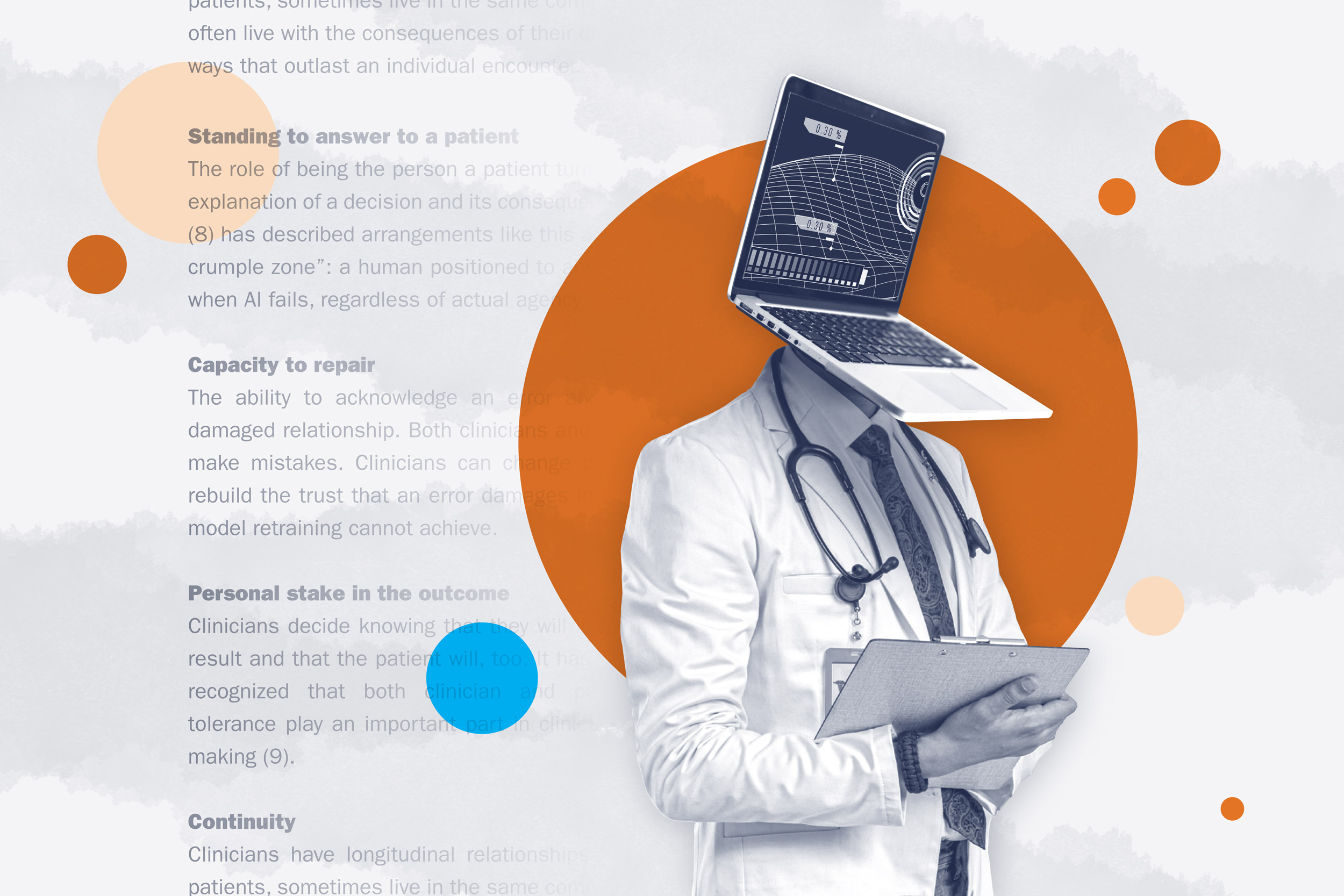
Doctors Advocate for Human Oversight Amid AI’s Growing Role in Healthcare
The integration of artificial intelligence in healthcare is transforming the industry, yet experts emphasize the irreplaceable value of human oversight in patient care. Doctors from the University of Virginia and Harvard University are highlighting the necessity of maintaining core human elements in medical decision-making as AI technology becomes more prevalent.
Dr. Andrew Parsons, an internal medicine physician at UVA Health, has co-authored a commentary with Dr. Adam Rodman from Harvard Medical School. They argue for the crucial role of doctors in patient care decisions despite AI’s fast-paced advancements. Parsons, who also serves as associate dean for clinical competency at the UVA School of Medicine, discusses the current and future roles of AI in healthcare.
AI’s Role in Medical Decision-Making
AI’s capability in diagnostics is rapidly improving due to its ability to quickly learn from mistakes and refine its processes using large datasets. However, Dr. Parsons points out that post-diagnosis decisions, such as testing and treatment plans, often lack clear-cut answers and depend heavily on individual patient circumstances. In such cases, it is essential for physicians to remain involved, owning the risks and consequences of these decisions.
Current AI Utilization in Healthcare
The use of AI in healthcare is expanding across all aspects, with a significant majority of doctors, over 80% according to the American Medical Association, incorporating it into their practice. Medical students and residents are also leveraging AI for various tasks, categorized into lower-stakes and higher-stakes responsibilities.
Lower-stakes tasks, such as drafting emails or documentation, benefit from AI’s assistance. AI technologies can now listen during patient consultations and create draft notes for doctors to edit, reducing the documentation burden. For higher-stakes tasks, AI supports clinical decision-making, aiding doctors in diagnosis and treatment deliberations through consultative interactions.
Collaborative Decision-Making Between Doctors and Patients
Decisions surrounding testing and treatment inherently involve risks. Dr. Parsons emphasizes that these decisions should be made collaboratively between patients and doctors, considering the individual’s risk tolerance and preferences. A doctor who understands the patient’s situation and is accountable for the outcomes is essential in these scenarios.
Need for Industry-Wide AI Guidelines
Currently, there is no overarching industry-wide guidance on AI use in medicine, leading to inconsistent regulations across different medical institutions. This absence of standardization results in varied AI applications nationwide. Additionally, there is growing concern over “deskilling,” where reliance on AI might erode doctors’ clinical reasoning skills developed over years of practice.
Read More Here










Comments are closed.