
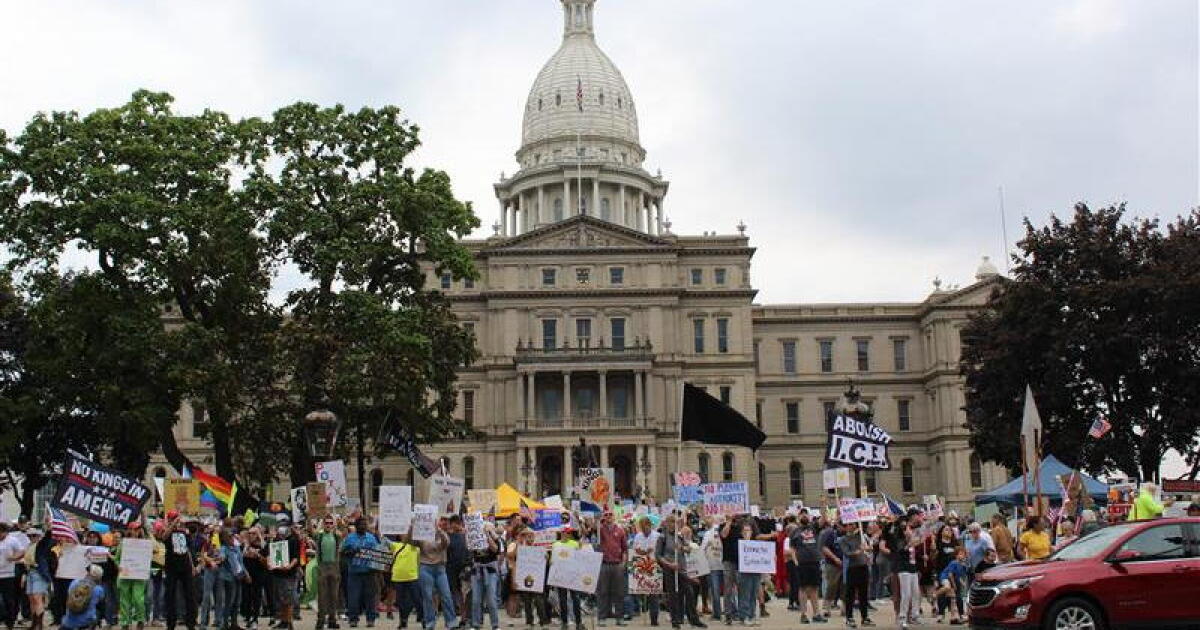
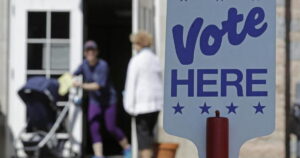
Across Michigan this Saturday, more than 75 community gatherings are set to take place under a banner that has previously been synonymous with anti-Trump protests — but organizers say this weekend is about something different entirely: making sure every eligible voter knows how, when, and where to cast a ballot. With local elections approaching and early voting windows open, the question of who shows up — and whether they know their options — could shape outcomes up and down the ballot.
More than 75 “No Kings: Vote Early” gatherings are scheduled throughout the state, each designed to give attendees practical information about voter registration, early voting locations, local ballot proposals, and how the voting process works. According to the No Kings website, the events are billed as a “day of nonpartisan voter participation.”
A Movement Reframing Its Message
The No Kings movement gained national attention through demonstrations critical of President Trump and his administration. But organizers are drawing a clear line between those earlier protests and what they say this weekend represents. Elizabeth Carmichael-Davis, with Indivisible Genesee Livingston and Oakland Warriors for the Great State of Michigan, pushed back on the idea that the movement has ever been about party politics.
“It’s really never been partisan in a Democrat or Republican sense. If it registers as against the current administration, that’s because of their authoritarian tendencies, not about their party politics.”
— Elizabeth Carmichael-Davis
At a news conference held Tuesday to announce the Michigan events, Christy McGillivray, executive director of Voters Not Politicians, echoed that framing, describing the movement as nonpartisan
“much like the Constitution and Bill of Rights, and the right of every American citizen to vote in free and fair elections.”
Keeping Politics Off the Stage
For Mari Douma, with Indivisible Michigan 7th District, the most telling sign of the weekend’s intent is who won’t be speaking at the Lansing event — the “No Kings: Parade to the Polls.”
“Even though we could ask some big names in politics to be our speakers to draw more attendees, we have chosen not to have partisan groups tabling at our event or speaking at our event. Of course, everyone is welcomed and encouraged to attend, but we really want to keep the focus on the fact that we support the Constitution.”
— Mari Douma
While previous No Kings events have drawn predominantly Democratic and liberal attendees, Douma said she sees an opening to reach a broader audience this time around — including Republicans who may have grown frustrated with the direction of the current administration.
“There are a lot of Republicans across the nation that are really disenchanted with what this administration has done to their party. They do not support this administration.”
— Mari Douma
Douma acknowledged that some attendees will likely still show up carrying anti-Trump messages, but said the core focus of the day is on celebrating and exercising the right to vote — not on which candidate or party benefits.
What Voters Can Expect at the Events
The gatherings vary in format depending on location. In Fenton, the “Your Vote is Your Superpower” event will include live music and fair-style games alongside voter information tables. In Howell, candidates running in nonpartisan races are expected to attend and field questions from community members.
Regardless of location, every event will offer attendees information on how to register to vote, where to cast an early ballot, and what local proposals are on the ballot — all without regard to party affiliation.
Carmichael-Davis summed up the goal plainly:
“It’s really focused on awareness of how the process works, not the outcome of the process. We don’t care which way you vote as long as you’re informed about that.”
That emphasis on process over outcome is at the heart of what organizers say distinguishes this weekend’s events from earlier demonstrations. Understanding how elections work — who can vote, when polls open, how early voting functions, and what’s on the local ballot — is something every eligible voter benefits from, regardless of political leanings.
For more on the 2026 Michigan Midterms and how voting rules affect participation across the state, reporting from Emma J Nelson at WKAR Public Media continues to track developments on the ground. Additional Michigan political coverage includes GOP governor candidate John James calling for accountability in Michigan’s education system, reported by Colin Jackson, as well as coverage of Governor Whitmer’s executive order on dyed diesel by Alvin (AJ) Jones and a federal lawsuit against Michigan’s cage-free egg law being dismissed, reported by Minnie Bardenhagen.
Central Michigan University Public Media provides ongoing statewide coverage. Learn more or get involved through their contact page, review their privacy policy, transparency and financial reports, or public file. You can also support their work or explore CMU. For audio coverage of Michigan news, check out WCMU’s Weekly News Podcast, Between the Lakes. You can also share this story on LinkedIn.



Comments are closed.