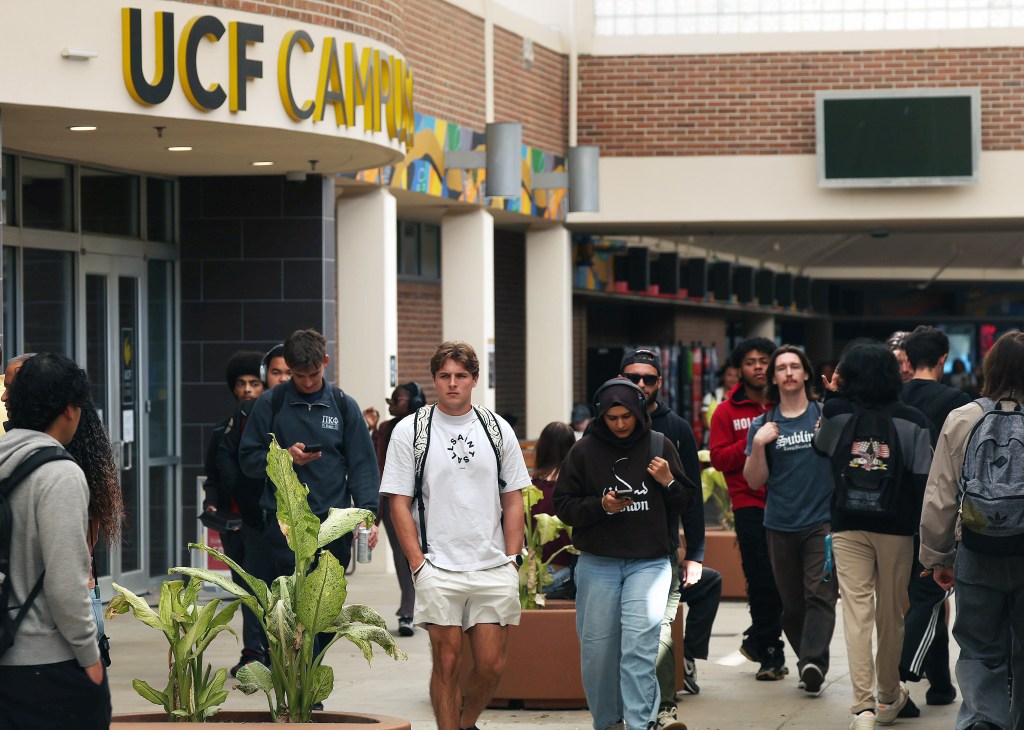
Florida Lawmaker Proposes Drastic Cuts to Out-of-State Enrollment at Top Universities
In a move aimed at prioritizing local students, a new legislative proposal seeks to significantly reduce the number of out-of-state students admitted to Florida’s leading public universities. This initiative, spearheaded by Rep. Jennifer Kincart Jonsson, aims to cap out-of-state enrollment at just 5% for first-year classes at the University of Florida, Florida State University, the University of Central Florida, and the University of South Florida.
The proposed bill, known as HB 1279, has already gained some traction with a favorable committee vote. The bill responds to concerns that Florida residents are losing university spots to wealthier out-of-state students, despite the fact that Florida’s universities have a lower percentage of such students compared to similar institutions nationwide.
Currently, UF and FSU have first-year classes with 15% and 20% out-of-state students, respectively. Jonsson argues that Florida’s top students are being unfairly denied admission, stating, “We have valedictorians and top ranked students who are being denied or deferred from our flagship institutions.”
Florida’s existing regulations allow up to 10% out-of-state enrollment, averaged across all 12 public universities. This flexibility enables more selective schools to admit a higher percentage of non-residents if others accept fewer. Jonsson’s bill lacks a corresponding Senate proposal, leaving its future uncertain.
While the proposal might appeal to parents eager for their children to secure spots in Florida’s competitive universities, it could financially impact these institutions. Out-of-state students at UCF, for example, pay significantly more in tuition, with rates of $22,482 compared to $5,954 for in-state students.
In recent years, Florida universities have increased their out-of-state enrollment, though they still prioritize local students more than many peer institutions. For example, schools like the University of Michigan and the University of Wisconsin-Madison enroll over half their students from out-of-state.
FSU’s out-of-state enrollment has grown from 8.4% in 2005, nearly doubling since then. Similarly, UF’s out-of-state student percentage has more than doubled over the last decade. USF reports about 12% of its students hail from outside Florida, showcasing a diverse student body.
Jonsson’s proposal includes provisions for universities to use a three-year average to calculate out-of-state enrollment. Starting in 2030, schools failing to meet the 5% cap risk losing state funding.
Jodi Furman, an independent college admissions counselor, supports the focus on Florida students but warns of potential financial consequences. “Going as low as 5% could have ‘potentially extreme’ consequences,” she noted.
The discussion has sparked varied reactions among parents. Some praise the move as overdue, while others caution that it could hinder students’ preparedness for competitive admissions environments.
FSU professor Paul Cottle estimates that reducing out-of-state enrollment to 5% could cost the university $44 million over four years. He suggests expanding university capacities as a more sustainable solution, though he doubts the Legislature’s willingness to fund such initiatives.
Read More Here