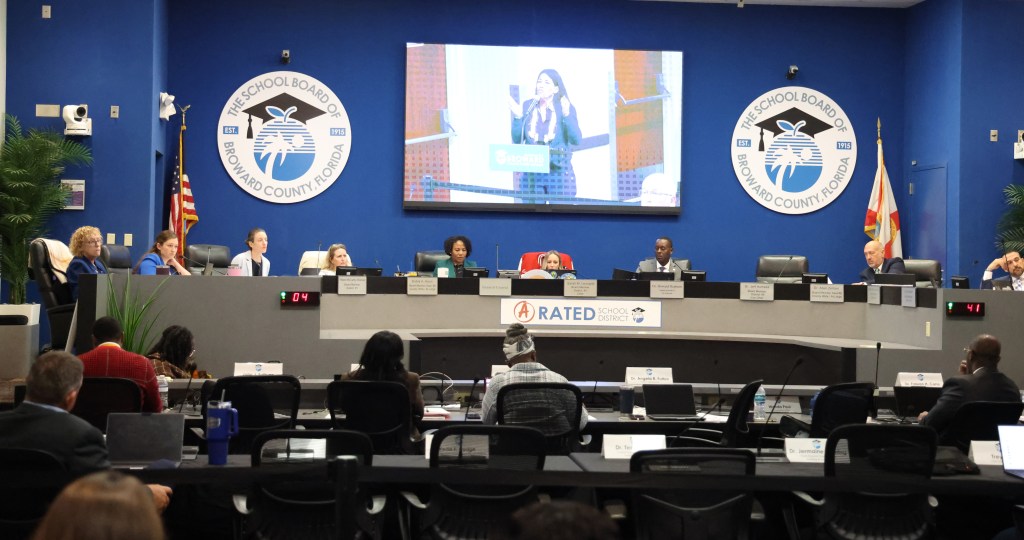
At a recent private meeting, the Broward School Board decided to cease funding popular weight-loss medications for its employees, a decision that has sparked controversy over potential violations of Florida’s open-government laws. This decision continues a pattern of secret meetings, raising transparency concerns.
Members of the School Board and the district’s director of benefits have confirmed that the decision to end coverage for GLP-1 medications, including Wegovy and Zepbound, was made during these closed discussions. While a school district spokesperson cited exemptions for collective bargaining strategies, union representatives argue that the coverage change was not part of any formal bargaining session.
Employees affected by this decision received a letter from Aetna, the insurance plan administrator, clarifying that the school district, not Aetna, decided on the coverage changes. Dildra Martin-Ogburn, the district’s director of benefits, confirmed this decision at a recent meeting, emphasizing that it would save the district approximately $12 million annually.
Martin-Ogburn explained that the district, being self-insured, made the decision after Aetna removed the weight-loss drugs from its formulary. Although she asserted that discussions about wages and benefits could occur in private, legal experts warn that such discussions should only be private if they will later be publicly bargained.
The Broward Teachers Union has filed a grievance, questioning whether the meeting violated the state’s Sunshine Law. Union President Anna Fusco expressed concerns about the process: “They did it all wrong.”
If a court finds a Sunshine Law violation, the remedy often involves redoing the meeting publicly. School Board member Adam Cervera acknowledged the concerns and expressed willingness to rectify any errors: “We’ll make sure it’s properly advertised or if it needs to be done at a board meeting or whatever. We’ll do that because we follow the law in Broward County.”
School Board Chairwoman Sarah Leonardi assured that legal counsel reviews all closed-door topics to ensure compliance with the law. However, district spokesman John Sullivan did not provide the date of the closed meeting when asked. Barbara Crowe, an executive at the district’s benefits consultants, noted that Gallagher only presents data, leaving decisions to the Board.
The district maintains that closed sessions are permissible for discussing collective bargaining strategies, but experts like Michael Barfield and Jennifer Mansfield argue otherwise. They emphasize that the collective bargaining exemption is narrow and should not encompass unrelated fiscal discussions.
Concerns over closed-door meetings are not new for the Broward School Board. Past incidents include undisclosed discussions about administrator bonuses and changes to school schedules, often under the guise of collective bargaining exemptions. These actions have repeatedly drawn scrutiny and criticism for lacking transparency.
Efforts to improve compliance include drafting new rules for closed meetings, requiring staff to justify the need for privacy, and ensuring general counsel approval. Despite these measures, disputes over the legality and appropriateness of closed sessions continue to challenge the board’s commitment to transparency.
Read More Here