
For most Lackawanna County homeowners, the headline looks reassuring: property taxes aren’t going up in 2027. But beneath that relief, county financial leaders are sounding a serious alarm about what’s quietly driving government costs higher — and what it could mean for residents’ wallets in the years ahead.
The county unveiled a proposed 2027 budget on October 15 that holds the property tax rate steady at 5.79 mills. For the average homeowner — whose property is assessed at around $244,000 — that means a county tax bill of roughly $1,412.76, unchanged from the prior year. That figure covers only the county’s share and does not include local government or school district taxes.
But the numbers underneath that steady rate tell a more complicated story — one that touches directly on the financial pressures families across the country are already feeling, from skyrocketing insurance premiums to rising health care bills.
A Budget Built on a Shaky Foundation
The proposed budget calls for spending just under $190 million while bringing in just shy of $186 million in revenues. That leaves a roughly $4 million gap — a shortfall county commissioners pledged to close before a final budget is adopted.
That gap was actually larger when budget discussions began. It stood at around $8.9 million before officials made a series of adjustments, including tapping $1.5 million from a health care insurance premium surplus and collecting $1.5 million in reimbursements from the county stadium authority.
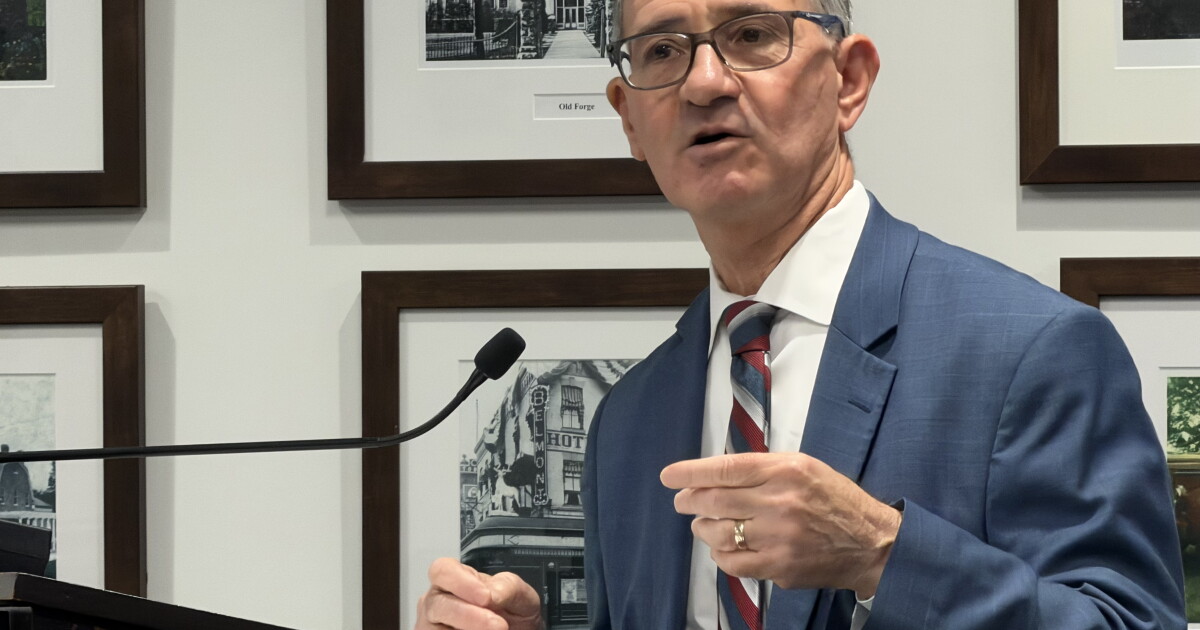
Chief Financial Officer David Bulzoni made clear that while commissioners intend to close the remaining deficit, the path forward is narrow. And the bigger warning he delivered had nothing to do with 2027.
“Hell is going to visit us for breakfast, gentlemen, in 2028, and I’m only forewarning you,”
Bulzoni told commissioners after walking them through the budget details.
Bulzoni, who was blunt about the limits of financial creativity, told commissioners:
“Well, my middle initial is M for Michael, not Merlin. There’s only so many things that we have the ability to do now. We are looking at other adjustments. This has been a continuous process, and we will get that (deficit) number down. I don’t have any doubt about that. But obviously, if we’re building into that process, the assumption that there will be no real estate tax adjustment in 2027, then that number has to be brought to zero, and getting there is going to be a challenge.”
Health Care and Insurance Costs Are Driving the Problem
The pressures pushing county expenses higher are the same ones straining household budgets across America. Overall county expenses rose by 5.1% — but it’s the specifics that stand out.
Health care costs jumped 14.8%. Pension contributions rose nearly 16%. Liability insurance premiums climbed 15.3%. These aren’t abstract government numbers — they reflect the same economic forces battering families who open their own insurance bills each month.
Bulzoni acknowledged that the county participates in a health care consortium with other counties to help manage costs, but noted the savings have limits.
“Now we are looking at a number of options that help to reduce that cost, but that cost can only be reduced by so much,”
he said.
“It’s still going to be a significant annual expense.”
On the insurance side, he drew a direct connection to everyday American life.
“It’s going to be a built-in expense every year. And lastly, liability insurance, and I think we’re all aware, from a personal standpoint, of how our insurance costs have increased. Auto insurance, homeowners’ insurance, post-pandemic particularly, have increased really significantly. It’s no different for the county, and particularly in the case of our liability insurance. We live in a litigious society. That has an impact on the county.”
Meanwhile, the total assessed value of all county real estate grew by only 0.57% in 2026 — translating to just 0.26% more in property tax revenue. That’s a razor-thin increase against expenses rising more than five times as fast.
Pension Debt Is Adding Pressure for Years to Come
Part of the financial strain comes from decisions made long before the current administration took office. For many years, the county contributed too little — or nothing at all — to its employee pension fund. Now it’s paying the price.
Bulzoni said pension costs will continue to increase by roughly $1.5 million per year through 2030 as the county works to properly fund its retirement plan and make up for years of underfunding.
“It’s going to be a built-in expense every year,”
he said.
The Deeper Warning: Revenues Must Keep Pace With Reality
Bulzoni’s most pointed message was about the long-term sustainability of how the county funds itself. He pointed out that without consistent revenue adjustments, deficits compound — a cycle the county has lived through before.
Before a 33% tax hike in a prior budget cycle, deficits had ballooned from $8 million to $15 million over earlier years, and were projected to hit $37 million in 2025 had that increase not been made.
“And I don’t think we want to go back to that,”
Bulzoni said.
He stressed that county government, at its core, is a service provider — and that cutting services has direct consequences for residents who depend on them.
“But regardless of where we start, the county delivers services. That’s really what we do. With services, you don’t really have as much latitude to be able to cut and not impact the delivery of those services. In other words, we have to fund those services consistently.”
The county has also set a policy target of maintaining a budget surplus equal to 12% of general fund revenues — a cushion that strengthens the county’s ability to borrow money at lower interest rates. But Bulzoni acknowledged that achieving that surplus level consistently has been a struggle. The county’s bond rating currently sits just one notch above junk status, and allowing surpluses to shrink risks pushing borrowing costs even higher — costs that ultimately fall on property taxpayers.
“Until that balance surplus achieves a level of consistency, the county can’t rely on its fund balance to plug budget holes,”
he said.
“That was something the county had done time out of mind in the past. It’s the reason that we have a (bond) debt rating that’s one notch above junk or speculative grade.”
His message to commissioners — and, by extension, to the residents they represent — was straightforward: the math only works if revenue keeps pace with real costs.
“It doesn’t take the expertise of a strategic management planning program report to understand that adjusting revenues on a recurring basis is a necessity,”
he said.
“Otherwise, what happens is what has happened, and not just while I was here, but even prior.”
Reporting on this story and other local news from Northeast Pennsylvania is available through WVIA News. You can also follow WVIA on LinkedIn and YouTube, and explore recent podcast episodes including coverage of Pennsylvania’s measles outbreak response, the state’s new Nurse Shortage Assistance Program, and innovative new treatment technology at a Wilkes-Barre rehabilitation hospital. Sports coverage includes regional football matchups and the Friday Night Rivals game of the week. Nature and community programming covers everything from the Tannersville Cranberry Bog to local fairs, festivals, and the NEPA Ring Rescue. Learn more about the WVIA News team and share this story.





Comments are closed.