Pennsylvania Faces Challenges as State Considers Taking Over Federal Role in School Discrimination Cases
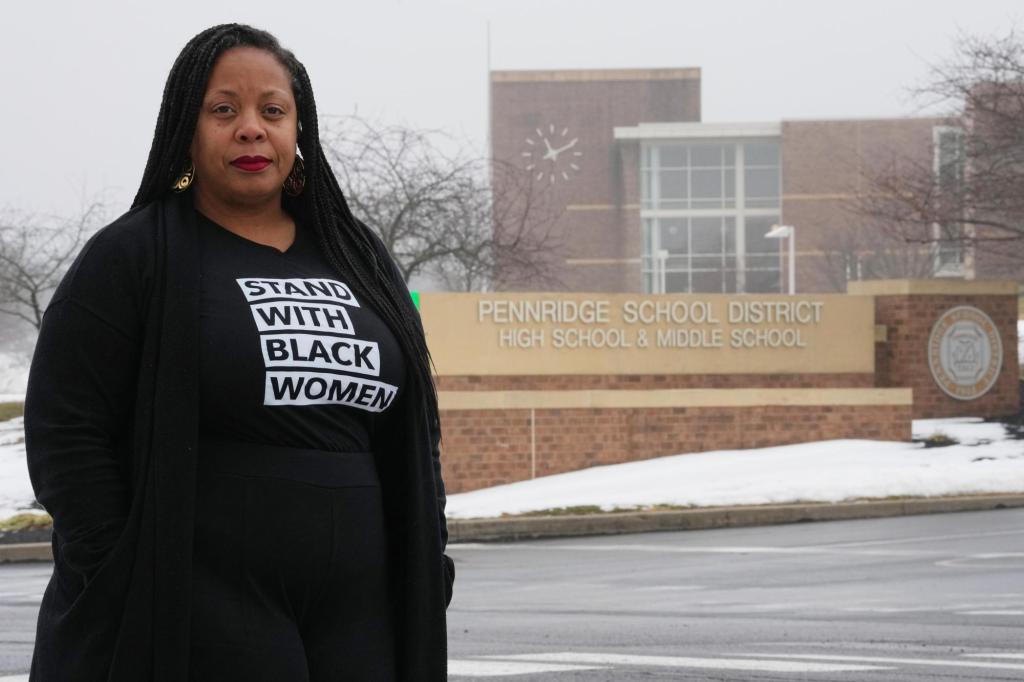
In a predominantly white school district in Pennsylvania, Black students are often subjected to racial slurs without consequence. Claims of racial bullying at the Pennridge School District have been brought to the attention of the U.S. Education Department, but families find themselves waiting for action that may never come due to federal office delays induced by layoffs during the Trump administration.
Adrienne King, who has two daughters in the district, shared her frustration with the system. “There was an expectation that something was going to happen,” said King, who is also the president of the NAACP Bucks County chapter. She described the situation as leaving a “very hollow, empty feeling.”
With the federal Education Department’s role in policing discrimination weakened, a push is emerging for state intervention. In Pennsylvania, legislation has been proposed to establish a new state agency to handle civil rights in schools, traditionally a federal responsibility. This move has sparked concerns about the creation of inconsistent protections across states.
State-Level Initiatives to Address Civil Rights
Democratic Senator Lindsey Williams of Pennsylvania has introduced a proposal for a state civil rights office similar to the federal one. She stated, “If the federal government won’t stand up for our most vulnerable students, I will.” However, the proposal faces significant challenges in the Republican-controlled state Senate.
Advocates in Pennsylvania are also calling for increased funding for the Pennsylvania Human Relations Commission, which has the authority to investigate educational discrimination but is underutilized. Only 5% of its cases recently involved education, and its staff numbers have dwindled from over 200 to about 100.
Kristina Moon, a lawyer with the Education Law Center, is advising families to bring their complaints to the state commission as a viable alternative to federal channels. “It’s incredibly important for students and families to be aware of any other option available to them,” she said.
According to Desireé Chang, the commission’s education director, managing a potential increase in cases would be challenging. She noted, “A stark influx would definitely put some weight on our agency. But we would do it because that is what we are charged with doing.”
Impact of Federal Policy Changes on Civil Rights
The U.S. Education Department’s Office for Civil Rights has slowed its work due to layoffs and shifting priorities under the Trump administration. Offices in major cities like Philadelphia and Chicago have been closed, and investigations have become less frequent.
Amid these changes, Trump officials have redirected efforts to challenge accommodations made for transgender students, claiming it discriminates against girls and women. Despite efforts to bring back some laid-off employees, the backlog of complaints persists.
In response, states like Maryland are considering giving their own civil rights commissions authority to investigate school discrimination. During a recent hearing, Glendora Hughes, general counsel for Maryland’s commission, emphasized the need for state-level action: “Offices have been closed, people have been fired, cases are piling up or not even moving — that’s why we sought to step in that gap and provide Maryland students an option.”
Advocates in Massachusetts are similarly turning to state agencies, while legal aid groups like the Southern Poverty Law Center are taking action in court, such as their lawsuit against a Louisiana school district for reducing classroom time for a student with autism.
As families in Pennridge consider their options, Adrienne King remains concerned about the long-term effects on her daughters, who still endure racial slurs and insensitive remarks. “I feel as though my girls have normalized a lot of this, but for the sake of survival — middle school is hard,” she said. “You just want to be like everybody else.”
The Associated Press’ education coverage receives financial support from multiple private foundations. AP is solely responsible for all content. Find AP’s standards for working with philanthropies, a list of supporters and funded coverage areas at AP.org.
Read More Here