Ohio’s Innovative Approach to Early Literacy: Screening at Pediatric Visits
In Columbus, Ohio, a new initiative is taking root that shifts the focus of early childhood literacy from the classroom to the doctor’s office. Nationwide Children’s Hospital has introduced literacy screenings for children as young as three during routine pediatric visits, aiming to tackle the national issue of falling literacy rates head-on.
Dr. Sara Bode, the hospital’s medical director of school-based health, explains the strategy: “They are all doing developmental screenings, they’re all talking to parents repeatedly. So this is an opportunity.”
The hospital selected clinics for these screenings based on their closeness to schools with lower performance scores in kindergarten readiness. In the 2024-2025 school year, over 63% of Columbus City Schools’ kindergarteners lagged in language and literacy, per state assessments.
Nationwide, literacy concerns persist, with only about 30% of fourth graders scoring proficient in reading according to the 2024 National Assessment of Educational Progress. This marks a decline of four percentage points since 2019, highlighting the impact of pandemic learning losses.
Expanding Literacy Awareness in Healthcare
While literacy screenings in medical settings are uncommon, renowned pediatric centers like Boston Children’s Hospital acknowledge the vital role of reading in child development. The program at Nationwide aims to identify children who might struggle with reading before they enter school, thus providing early intervention.
Children who start kindergarten with lower literacy levels often find it challenging to catch up. The Children’s Reading Foundation reports that nearly 75% of kindergarteners in the lowest 20% for readiness remain there through fifth grade.
Implementing Literacy Screenings
Traditionally, pediatric assessments focus on milestones like walking and talking, potentially missing other readiness areas for kindergarten. To address this, Nationwide implemented literacy screenings in about half of its clinics, with screenings conducted more than 2,400 times since the program’s 2022 inception.
The screenings do not diagnose learning disabilities but identify areas needing support. Devin Kearns, an early literacy expert at North Carolina State University, stresses the importance of selecting the right screening tool. At Nationwide, coordinators use a book-based assessment, which takes about 10 minutes and is tailored in both English and Spanish.
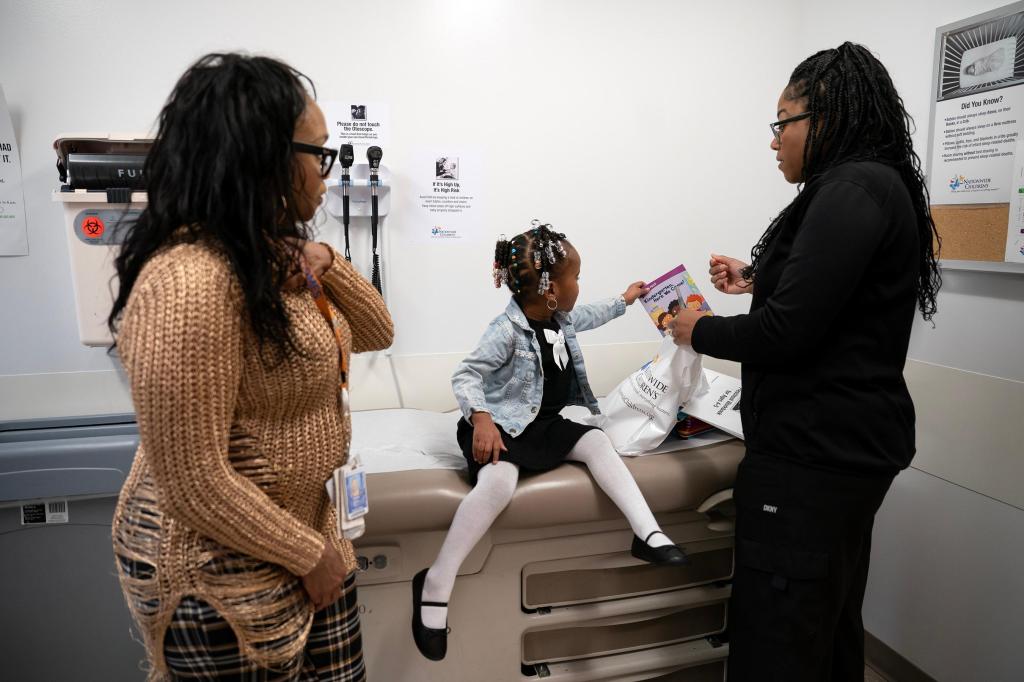
Following a screening, a personalized literacy plan is developed, and coordinators demonstrate home activities like reading aloud, as explained by Carneshia Edwards, the hospital’s kindergarten readiness coordinator.
Empowering Families for Literacy Success
Quintina Davis, grandmother to Juri Sleet, a participant in the program, initially worried about Juri’s learning opportunities. However, the literacy coordinator showed Davis numerous home activities to enhance Juri’s learning. “She didn’t know as much, but our coordinator was very patient with her,” Davis remarked.
After each screening, families receive literacy kits containing tools for at-home practice, such as books and writing materials. These resources are supplemented by feedback from Columbus City Schools teachers on kindergarten readiness needs.
Coordinators maintain contact with families and sometimes refer children to early education programs like Head Start or SPARK. Upon return visits, progress is assessed. Davis noted significant improvements in Juri’s letter and word recognition over a year, aided by her enrollment in a local YMCA preschool.
“The goal is to make sure by the time she starts kindergarten, that she’s absolutely ready without having a lot of challenges,” Davis said. “So right now, I think she is heading towards that way.”
Patrick Aftoora-Orsagos in Columbus, Ohio, contributed to this report.
The Associated Press’ education coverage receives financial support from multiple private foundations. AP is solely responsible for all content. Find AP’s standards for working with philanthropies, a list of supporters and funded coverage areas at AP.org.
Read More Here