By MORIAH BALINGIT, Associated Press Education Writer
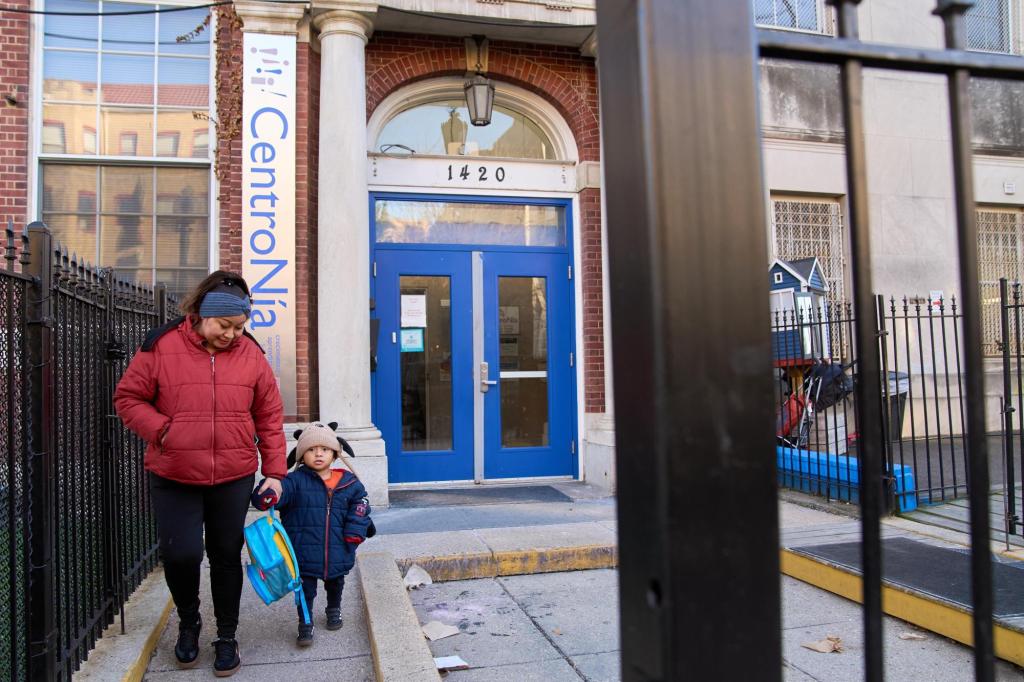
WASHINGTON (AP) — In the shadow of increased immigration enforcement, CentroNía bilingual preschool in Washington, D.C., has had to adjust its daily activities. The preschool, located in a predominantly Latino neighborhood, saw teachers halting trips to nearby parks and libraries, as the presence of Immigration and Customs Enforcement (ICE) became more common in the area.
The school also canceled its annual Hispanic Heritage Month parade, a cherished tradition where children would dress in costumes representing their cultural heritage. This decision was driven by concerns over attracting unwanted scrutiny, especially after ICE officials detained some staff members who all have legal immigration status.
These changes preceded the arrest of a teacher at a Spanish immersion preschool in Chicago, highlighting the pervasive anxiety felt by immigrant child care workers and families. The Trump administration’s aggressive immigration policies have particularly affected the child care sector, which relies heavily on immigrant workers. Many of these workers, despite having legal status, fear encounters with ICE, leading some to leave the field altogether.
Child Care Industry’s Reliance on Immigrants
Immigrants play a crucial role in the child care industry, with about 20% of child care workers in the U.S. being foreign-born. In states like California, New York, and the District of Columbia, this figure can rise to 40%, according to research from UC Berkeley’s Center for the Study of Child Care Employment.
Many immigrants in the child care field are well-educated and fulfill the demand for bilingual education, a growing trend among parents who wish to give their children a head start in learning languages such as Spanish.
Despite rigorous background checks and the legal status of most immigrant workers, recent policy changes have stripped many of their legal protections. For instance, the termination of Temporary Protected Status (TPS) for over 300,000 Venezuelans and others has forced some immigrants out of the child care workforce.
CentroNía has lost employees due to these policy shifts, as did Tierra Encantada, a network of Spanish immersion preschools, which saw a dozen teachers depart after losing their TPS.
Impact of Fear on Legally Residing Immigrants
Fear of ICE extends even to those with legal status. At CentroNía, one staff member was detained for hours without the ability to notify the school, while another, teacher Edelmira Kitchen, recounted being stopped by ICE on her way to work. Kitchen, a U.S. citizen, described feeling her rights were violated during the encounter.
Such incidents have taken a toll on the mental health of the school’s staff, with some experiencing panic attacks. The school has prioritized mental health services for teachers, recognizing that their well-being directly impacts the students.
Elsewhere, at a Guidepost Montessori School in Portland, Oregon, an ICE arrest near the school led to a lockdown, causing distress among the children. Teachers noted behavioral changes in students afterward, with more frequent emotional outbursts and visits to calming areas within the school.
Amy Lomanto, the school’s leader, emphasized that the fear of immigration enforcement is no longer confined to specific communities but is increasingly affecting a broader swath of society.
“With the current situation, more and more of us are likely to experience this kind of trauma,” she said. “That level of fear now is permeating a lot more throughout our society.”
The Associated Press’ education coverage receives financial support from multiple private foundations. AP is solely responsible for all content. Find AP’s standards for working with philanthropies, a list of supporters and funded coverage areas at AP.org.
Read More Here