
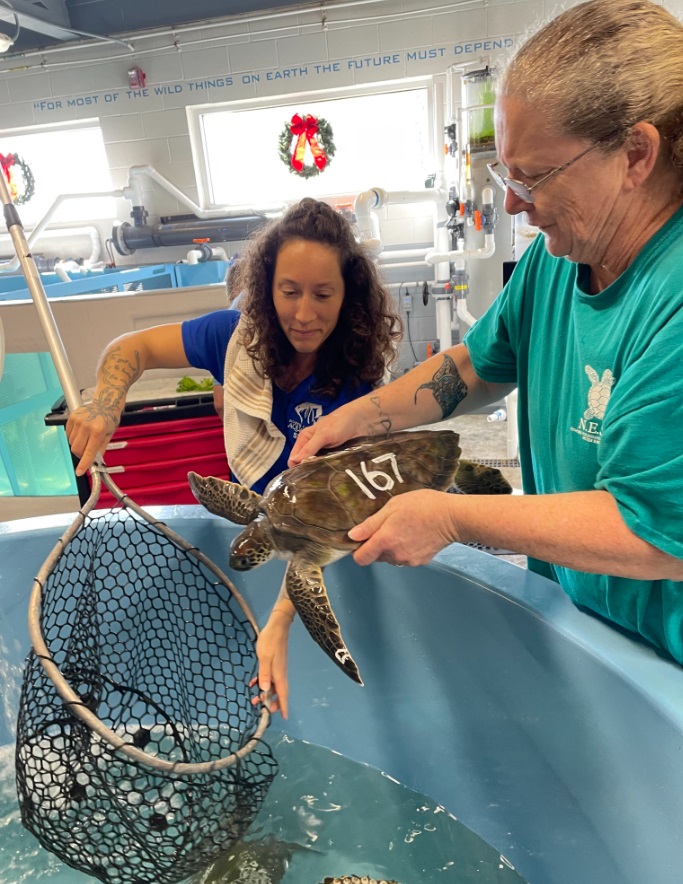
In a heartwarming effort against nature’s challenges, volunteers at the Outer Banks have been actively rescuing sea turtles struck by cold-stunning, a state induced by sudden freezing temperatures. These turtles, emblematic of the region, are being moved to a local aquarium for recovery and care.
The N.C. Aquarium in Manteo has become a sanctuary for 120 of these turtles within a single week, following a recent cold spell. The sea turtles are receiving vital treatment at the aquarium’s Sea Turtle Assistance and Rehabilitation (S.T.A.R.) Center.
Cold-stunning is a natural phenomenon that occurs when sea temperatures drop suddenly, catching turtles before they can migrate to warmer waters like the Gulf Stream, explained Aquarium spokeswoman Sallie Bowman. The turtles, caught off guard, exhibit symptoms akin to hypothermia and are often found lifeless along the shores. This year’s numbers are notably less than last year when the aquarium took in 800 turtles from December to March 2025.
The Network for Endangered Sea Turtles, a dedicated volunteer nonprofit, has gathered nearly 200 turtles since Thanksgiving. Their efforts include foot patrols through difficult terrains like mud, shallow waters, and tall grass, in addition to maintaining a hotline for reports.
The financial and time investment in rehabilitating these turtles is significant, with costs ranging from $300 to $500 per turtle until they can pass swim tests and be released back into the wild. The rehabilitation process might extend from several weeks to months.
During their recovery, the animal care teams meticulously warm the turtles indoors, providing them with nourishment, fluids, antibiotics, and necessary eye care. Once the turtles regain their ability to swim and lift their heads effortlessly, they are tagged with a unique number on their shoulder muscle, ensuring accessible information for future reference.
The green sea turtles are the most frequent victims of cold-stunning due to their preference for grazing on grass and algae in the warm, shallow waters of Roanoke Sound. Kemp’s Ridley turtles, which feed on crabs in the same area, are also susceptible to abrupt temperature changes.
Read More Here
![Robert Harmon Celebrates 99th Birthday at UVA’s Homecomings Weekend[embed]https://www.youtube.com/watch?v=c_VPFnE8x-w[/embed]](https://realnewsfast.com/wp-content/uploads/2026/10/Robert-Harmon-Celebrates-99th-Birthday-at-UVAs-Homecomings-Weekendembedhttpswwwyoutubecomwatchvc_VPFnE8x-wembed-300x200.jpg "Robert Harmon Celebrates 99th Birthday at UVA’s Homecomings Weekend[embed]https://www.youtube.com/watch?v=c_VPFnE8x-w[/embed]")
![Environmental Opera “Auksalaq” Opens UVA’s Arts on the Hill Series[embed]https://www.youtube.com/watch?v=PjYuP9wh3Hw[/embed]](https://realnewsfast.com/wp-content/uploads/2026/10/Environmental-Opera-Auksalaq-Opens-UVAs-Arts-on-the-Hill-SeriesembedhttpswwwyoutubecomwatchvPjYuP9wh3Hwembed-300x200.jpg "Environmental Opera “Auksalaq” Opens UVA’s Arts on the Hill Series[embed]https://www.youtube.com/watch?v=PjYuP9wh3Hw[/embed]")
![New documentary explores Elizabeth Holmes’ final days before prison[embed]https://www.youtube.com/watch?v=GGJSRFWALTI[/embed]](https://realnewsfast.com/wp-content/uploads/2026/10/New-documentary-explores-Elizabeth-Holmes-final-days-before-prisonembedhttpswwwyoutubecomwatchvGGJSRFWALTIembed-300x200.jpg "New documentary explores Elizabeth Holmes’ final days before prison[embed]https://www.youtube.com/watch?v=GGJSRFWALTI[/embed]")