
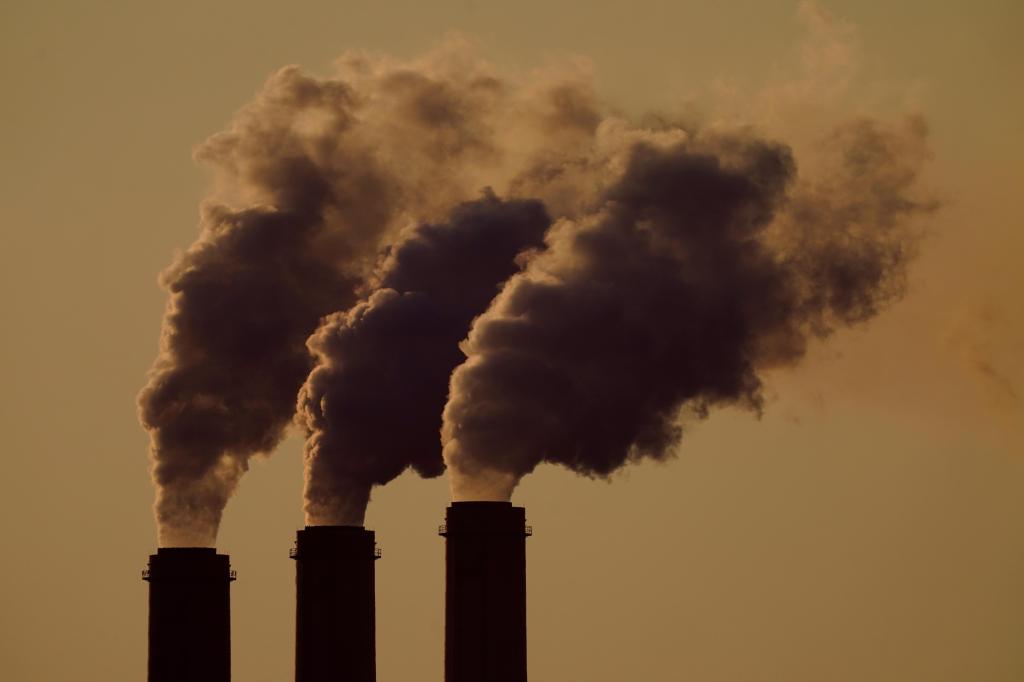
The Trump Administration Advances Plans to Modify Key Air Pollution Rule
By MATTHEW DALY
WASHINGTON (AP) — The Trump administration has initiated efforts to revise a contentious rule aimed at regulating cross-state air pollution from smokestack emissions. This move is one of several regulatory changes being considered under the guidance of Environmental Protection Agency Administrator Lee Zeldin.
Known as the “good neighbor” rule, the regulation is designed to curb emissions from coal-fired power plants and industrial sites that exacerbate air pollution in neighboring states. However, the rule’s enforceability has been under scrutiny since the Supreme Court ruled in 2024 against the EPA’s enforcement.
On Wednesday, the EPA proposed granting eight states the authority to manage ozone air pollution independently. If approved, these states would no longer require federal approval under the “Good Neighbor Plan,” according to the EPA.
The states in question—Alabama, Arizona, Kentucky, Minnesota, Mississippi, Nevada, New Mexico, and Tennessee—had previously seen their ozone plans rejected or tentatively disapproved under President Joe Biden’s administration. The Biden-era EPA deemed the plans insufficient in mitigating cross-state ozone emissions.
EPA Administrator Zeldin emphasized the administration’s commitment to “cooperative federalism,” enabling states to establish their own strategies to meet air quality targets. “Today, we are taking an important step to undo a Biden administration rule that treated our state partners unfairly,” Zeldin stated, arguing that the new EPA plan would empower states to achieve cleaner air without undue federal interference.
Zeldin criticized the previous administration’s approach as a “heavy-handed, one-size-fits-all, federal mandate” regarding ozone pollution.
The EPA’s proposal asserts that the eight states have provided sufficient data proving they do not hinder ozone attainment as per National Ambient Air Quality Standards. The agency also plans to retract proposed error corrections for plans submitted by Iowa and Kansas.
Looking ahead, the EPA plans to address “interstate transport” obligations for other states affected by the Biden-era “Good Neighbor Plan.”
Environmental organizations have expressed concern, arguing that the EPA’s proposal could incentivize states to neglect their responsibilities. Air pollution from industrial hubs in states like Indiana and Ohio commonly affects East Coast states such as Connecticut and Delaware.
According to Zachary Fabish, a lawyer for the Sierra Club, “Once again, Donald Trump and Lee Zeldin are choosing to protect aging, dirty and expensive coal plants and other industrial polluters over strong federal clean air protections that address interstate pollution problems.”
Fabish further warned, “Letting states off the hook while their pollution continues harming air quality in neighboring states is dangerous,” suggesting it could worsen public health and increase energy costs.
The EPA will open a public comment period for at least 30 days following the rule’s publication in the Federal Register.
Read More Here


![Robert Harmon Celebrates 99th Birthday at UVA’s Homecomings Weekend[embed]https://www.youtube.com/watch?v=c_VPFnE8x-w[/embed]](https://realnewsfast.com/wp-content/uploads/2026/10/Robert-Harmon-Celebrates-99th-Birthday-at-UVAs-Homecomings-Weekendembedhttpswwwyoutubecomwatchvc_VPFnE8x-wembed-300x200.jpg "Robert Harmon Celebrates 99th Birthday at UVA’s Homecomings Weekend[embed]https://www.youtube.com/watch?v=c_VPFnE8x-w[/embed]")
![Environmental Opera “Auksalaq” Opens UVA’s Arts on the Hill Series[embed]https://www.youtube.com/watch?v=PjYuP9wh3Hw[/embed]](https://realnewsfast.com/wp-content/uploads/2026/10/Environmental-Opera-Auksalaq-Opens-UVAs-Arts-on-the-Hill-SeriesembedhttpswwwyoutubecomwatchvPjYuP9wh3Hwembed-300x200.jpg "Environmental Opera “Auksalaq” Opens UVA’s Arts on the Hill Series[embed]https://www.youtube.com/watch?v=PjYuP9wh3Hw[/embed]")
![New documentary explores Elizabeth Holmes’ final days before prison[embed]https://www.youtube.com/watch?v=GGJSRFWALTI[/embed]](https://realnewsfast.com/wp-content/uploads/2026/10/New-documentary-explores-Elizabeth-Holmes-final-days-before-prisonembedhttpswwwyoutubecomwatchvGGJSRFWALTIembed-300x200.jpg "New documentary explores Elizabeth Holmes’ final days before prison[embed]https://www.youtube.com/watch?v=GGJSRFWALTI[/embed]")