
In a significant decision on surveillance and privacy, a federal judge has determined that the Norfolk Police Department’s use of Flock Safety cameras does not breach the Fourth Amendment’s privacy protections. This ruling was delivered by U.S. District Judge Mark S. Davis, who dismissed a lawsuit challenging the constitutionality of the police department’s camera system.
Judge Davis granted a summary judgment favoring the Norfolk police, effectively nullifying the lawsuit brought forward by two local residents, Lee Schmidt and Crystal Arrington. Represented by the Institute for Justice, the plaintiffs argued that the department’s use of 176 Flock cameras without warrants amounted to unreasonable searches.
According to Davis’s 51-page ruling, Schmidt and Arrington failed to show that the camera system captured sufficient data to map the entirety of their movements. He noted that while many cameras are positioned in high-traffic areas, they do not blanket the city in the manner of cell phone towers, which have been subjects of similar legal challenges.
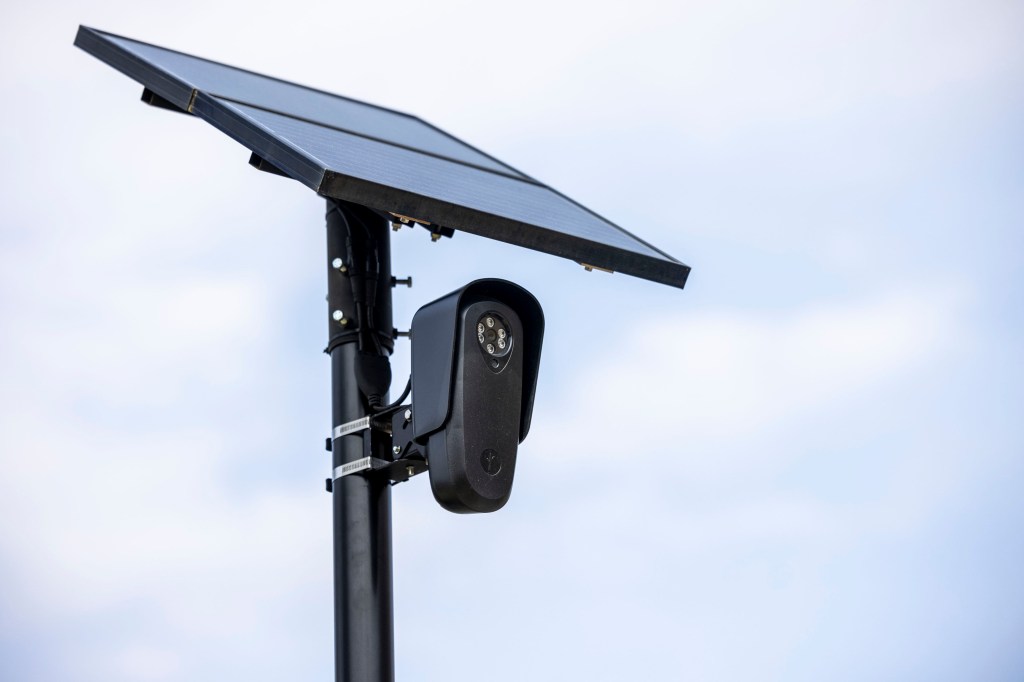
The Flock cameras, which are installed on 12-foot poles, photograph passing vehicles, recording details such as license plates, vehicle type, and distinct features like bumper stickers. This data is stored for 21 days and shared extensively among police agencies.
Flock Safety, an Atlanta-based company, welcomed the court’s decision, citing consistent favorable rulings from more than 30 state and federal courts nationwide. “This decision aligns with strong national precedent,” the company stated, emphasizing that Flock cameras do not equate to continuous tracking.
The Institute for Justice expressed its intent to appeal the decision, arguing that the government should not be able to track individuals’ movements without a warrant. Attorney Michael Soyfer stated, “The government cannot monitor someone’s daily movements without a warrant based on probable cause, which is why we’ll appeal today’s decision.”
Soyfer highlighted a statement by Norfolk Police Chief Mark Talbot, who said it would be challenging to drive any significant distance without encountering a camera. The law firm also raised concerns about potential abuses of automated license plate recognition (ALPR) systems by law enforcement.
Judge Davis acknowledged that the plaintiffs had legal standing to challenge the surveillance system. He noted that over a short test period, the plaintiffs’ vehicles were captured hundreds of times, which is expected to increase over time. However, he ruled this frequency insufficient to constitute a constitutional violation.

Peter Dujardin, Daily Press
A Flock camera on J. Clyde Morris Boulevard in Newport News captures images of cars heading into York County from the I-64 interchange.
While higher courts have recognized that certain technologies can track an individual’s complete movements, Davis concluded that Norfolk’s cameras, which are strategically grouped in clusters, do not reach that threshold. He emphasized that Flock cameras only capture vehicles on public roadways and do not track individuals into private spaces.
Virginia state legislation has imposed some limits on the use of Flock cameras, including reducing data retention from 30 to 21 days. Judge Davis left open the possibility that an increase in cameras could one day lead to constitutional concerns, but for now, he ruled that Norfolk’s current system does not violate privacy rights.
“But when?” Davis pondered, considering if and when the system might overstep boundaries. “While a definitive answer to that question is elusive, what is readily apparent to this Court is that, at least in Norfolk, Virginia, the answer is: not today.”
Peter Dujardin, 757-897-2062, pdujardin@dailypress.com
Read More Here
![Robert Harmon Celebrates 99th Birthday at UVA’s Homecomings Weekend[embed]https://www.youtube.com/watch?v=c_VPFnE8x-w[/embed]](https://realnewsfast.com/wp-content/uploads/2026/10/Robert-Harmon-Celebrates-99th-Birthday-at-UVAs-Homecomings-Weekendembedhttpswwwyoutubecomwatchvc_VPFnE8x-wembed-300x200.jpg "Robert Harmon Celebrates 99th Birthday at UVA’s Homecomings Weekend[embed]https://www.youtube.com/watch?v=c_VPFnE8x-w[/embed]")
![Environmental Opera “Auksalaq” Opens UVA’s Arts on the Hill Series[embed]https://www.youtube.com/watch?v=PjYuP9wh3Hw[/embed]](https://realnewsfast.com/wp-content/uploads/2026/10/Environmental-Opera-Auksalaq-Opens-UVAs-Arts-on-the-Hill-SeriesembedhttpswwwyoutubecomwatchvPjYuP9wh3Hwembed-300x200.jpg "Environmental Opera “Auksalaq” Opens UVA’s Arts on the Hill Series[embed]https://www.youtube.com/watch?v=PjYuP9wh3Hw[/embed]")
![New documentary explores Elizabeth Holmes’ final days before prison[embed]https://www.youtube.com/watch?v=GGJSRFWALTI[/embed]](https://realnewsfast.com/wp-content/uploads/2026/10/New-documentary-explores-Elizabeth-Holmes-final-days-before-prisonembedhttpswwwyoutubecomwatchvGGJSRFWALTIembed-300x200.jpg "New documentary explores Elizabeth Holmes’ final days before prison[embed]https://www.youtube.com/watch?v=GGJSRFWALTI[/embed]")