
Federal Judge Preserves Consumer Financial Protection Bureau Funding Amidst Legal Challenges
In a significant ruling, a federal district court has ensured the continued operation of the Consumer Financial Protection Bureau (CFPB) by affirming its funding source, just days before potential financial exhaustion threatened the agency’s workforce.
Judge Amy Berman declared that the CFPB will maintain its financial support from the Federal Reserve, despite the Fed experiencing operational losses. The judge rejected the White House’s recent legal reasoning concerning the CFPB’s funding mechanism.
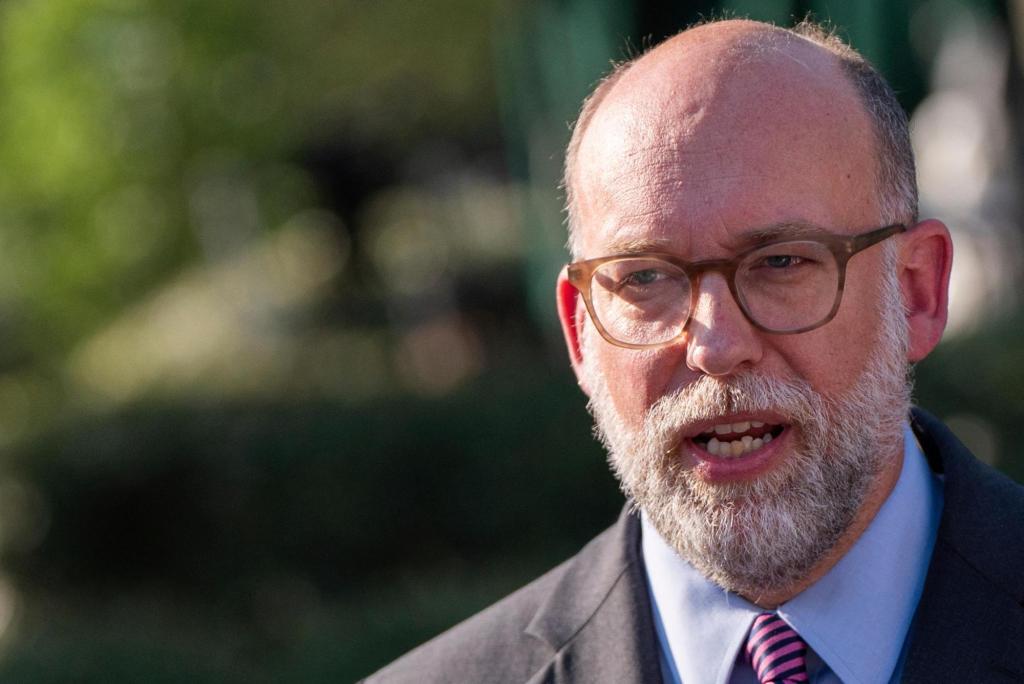
The legal battle centers on the actions of Russell Vought, President Donald Trump’s budget director and the acting director of the CFPB, who has been accused of trying to dismantle the agency and dismiss its employees. Since Trump assumed office, the CFPB’s activities have been largely curtailed, with efforts focused on reversing policies from previous administrations.
Vought has openly expressed his objective to effectively terminate the CFPB. However, the National Treasury Employees Union, representing CFPB staff, has successfully thwarted mass layoffs through legal action, securing a preliminary injunction against Vought’s plans.
Recently, the White House introduced a novel argument to counter the court’s injunction, claiming that the Federal Reserve lacks “combined earnings” to fund the CFPB due to its current paper losses. The CFPB traditionally receives funding through expected quarterly payments from the Fed’s budget.
The Federal Reserve’s losses stem from its efforts to combat inflation, holding bonds from a low-interest-rate period during the COVID-19 pandemic, while paying higher interest rates to banks. These losses are recorded as a “deferred asset,” expected to be resolved as the bonds mature.
Amid these financial challenges, the administration argued that the CFPB’s funding would be depleted by early 2026, with no supplementary congressional appropriations anticipated. This “combined earnings” theory, though previously untested, has circulated in conservative legal discussions since the Fed’s financial downturn.
Judge Berman criticized the argument in her opinion, stating, “It appears that defendants’ new understanding of ‘combined earnings’ is an unsupported and transparent attempt to starve the CPFB of funding and yet another attempt to achieve the very end the Court’s injunction was put in place to prevent.”
The White House did not immediately comment on the ruling.
Read More Here



![Robert Harmon Celebrates 99th Birthday at UVA’s Homecomings Weekend[embed]https://www.youtube.com/watch?v=c_VPFnE8x-w[/embed]](https://realnewsfast.com/wp-content/uploads/2026/10/Robert-Harmon-Celebrates-99th-Birthday-at-UVAs-Homecomings-Weekendembedhttpswwwyoutubecomwatchvc_VPFnE8x-wembed-300x200.jpg "Robert Harmon Celebrates 99th Birthday at UVA’s Homecomings Weekend[embed]https://www.youtube.com/watch?v=c_VPFnE8x-w[/embed]")
![Environmental Opera “Auksalaq” Opens UVA’s Arts on the Hill Series[embed]https://www.youtube.com/watch?v=PjYuP9wh3Hw[/embed]](https://realnewsfast.com/wp-content/uploads/2026/10/Environmental-Opera-Auksalaq-Opens-UVAs-Arts-on-the-Hill-SeriesembedhttpswwwyoutubecomwatchvPjYuP9wh3Hwembed-300x200.jpg "Environmental Opera “Auksalaq” Opens UVA’s Arts on the Hill Series[embed]https://www.youtube.com/watch?v=PjYuP9wh3Hw[/embed]")
![New documentary explores Elizabeth Holmes’ final days before prison[embed]https://www.youtube.com/watch?v=GGJSRFWALTI[/embed]](https://realnewsfast.com/wp-content/uploads/2026/10/New-documentary-explores-Elizabeth-Holmes-final-days-before-prisonembedhttpswwwyoutubecomwatchvGGJSRFWALTIembed-300x200.jpg "New documentary explores Elizabeth Holmes’ final days before prison[embed]https://www.youtube.com/watch?v=GGJSRFWALTI[/embed]")