
By MEGAN JANETSKY
MEXICO CITY (AP) — A recent statement from the Trump administration has sparked debate over its portrayal of the Mexican-American War, with many accusing it of historical inaccuracies to support its modern foreign policy in Latin America.
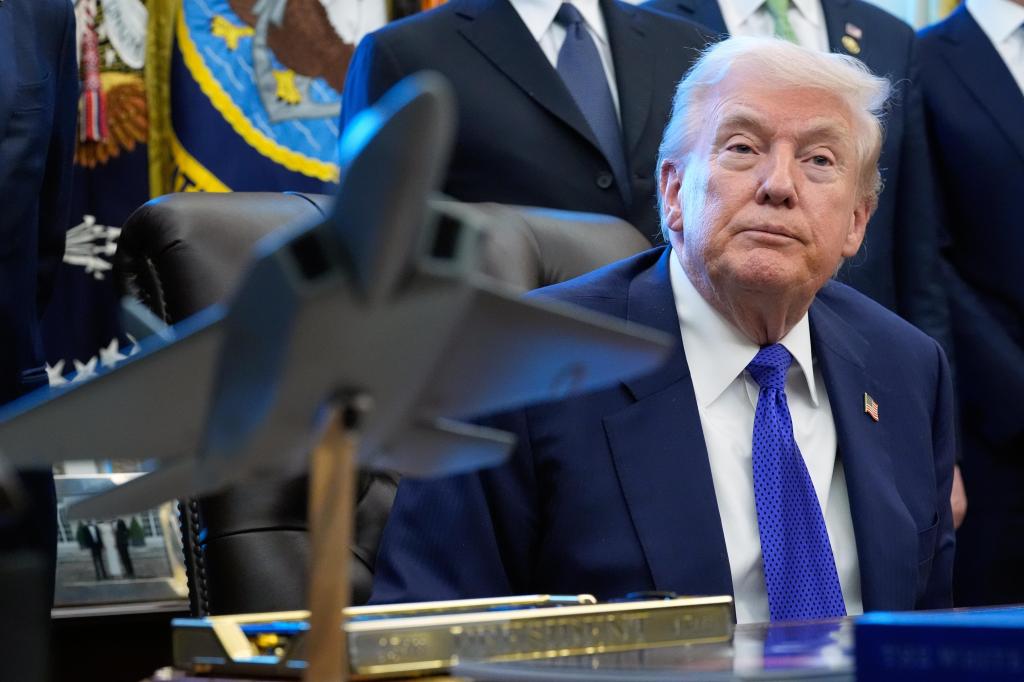
The White House’s statement commemorated the war’s anniversary as a “legendary victory that secured the American Southwest, reasserted American sovereignty, and expanded the promise of American independence across our majestic continent.” This narrative aligns with the administration’s assertive policies in Latin America, suggesting they are necessary to maintain safety in the hemisphere.
“Guided by our victory on the fields of Mexico 178 years ago, I have spared no effort in defending our southern border against invasion, upholding the rule of law, and protecting our homeland from forces of evil, violence, and destruction,” the statement read. Notably, the statement omitted the significant impact of slavery on the conflict and the displacement of Native Americans during the “Manifest Destiny” era.
Sparking Criticism
Alexander Aviña, a Latin American history professor at Arizona State University, criticized the statement for downplaying the extensive violence involved in U.S. territorial expansion to the Pacific. He noted that the Trump administration’s involvement in Latin American affairs, such as attempts to unseat Venezuela’s president and threats of military action in Mexico, mirrors historical U.S. imperialism.
“U.S. political leaders since then have seen this as an ugly aspect of U.S. history, this is a pretty clear instance of U.S. imperialism against its southern neighbor,” Aviña said. “The Trump administration is actually embracing this as a positive in U.S. history and framing it – inaccurately historically – as some sort of defensive measure to prevent the Mexico from invading them.”
Mexican President Claudia Sheinbaum responded to the statement with humor, emphasizing the importance of defending sovereignty. She has previously navigated a careful diplomatic path with the Trump administration, often using sarcasm when addressing controversial actions, like renaming the Gulf of Mexico.
Historical Context
The Mexican-American War (1846–1848) was ignited by border disputes following the U.S. annexation of Texas. The war resulted in Mexico ceding over 525,000 square miles, including present-day Arizona, California, Nevada, and Texas, to the U.S. This acquisition turned Texas into a significant site during the Civil War and led Ulysses S. Grant to later describe the conflict as “one of the most unjust ever waged by a stronger against a weaker nation.”
This war remains a contentious issue between the U.S. and Mexico, particularly as Sheinbaum continues to remind Trump of Mexico’s sovereignty in response to his administration’s military threats and economic pressure.
Rewriting History
According to Albert Camarillo, a history professor at Stanford University, the White House’s portrayal of the war reflects a broader effort by the Trump administration to reshape historical narratives, presenting a “distorted, ahistorical, imperialist version” of events. This aligns with its attempts to promote the ‘America First’ policy throughout the Americas, despite historical inaccuracies.
The administration has also edited historical displays at the Smithsonian Institution and removed contentious historical references from government websites, including those related to slavery and Native American cultures. Camarillo condemned these actions as attempts to “whitewash and reframe U.S. history and erase generations of historical scholarship.”
Read More Here



![Robert Harmon Celebrates 99th Birthday at UVA’s Homecomings Weekend[embed]https://www.youtube.com/watch?v=c_VPFnE8x-w[/embed]](https://realnewsfast.com/wp-content/uploads/2026/10/Robert-Harmon-Celebrates-99th-Birthday-at-UVAs-Homecomings-Weekendembedhttpswwwyoutubecomwatchvc_VPFnE8x-wembed-300x200.jpg "Robert Harmon Celebrates 99th Birthday at UVA’s Homecomings Weekend[embed]https://www.youtube.com/watch?v=c_VPFnE8x-w[/embed]")
![Environmental Opera “Auksalaq” Opens UVA’s Arts on the Hill Series[embed]https://www.youtube.com/watch?v=PjYuP9wh3Hw[/embed]](https://realnewsfast.com/wp-content/uploads/2026/10/Environmental-Opera-Auksalaq-Opens-UVAs-Arts-on-the-Hill-SeriesembedhttpswwwyoutubecomwatchvPjYuP9wh3Hwembed-300x200.jpg "Environmental Opera “Auksalaq” Opens UVA’s Arts on the Hill Series[embed]https://www.youtube.com/watch?v=PjYuP9wh3Hw[/embed]")
![New documentary explores Elizabeth Holmes’ final days before prison[embed]https://www.youtube.com/watch?v=GGJSRFWALTI[/embed]](https://realnewsfast.com/wp-content/uploads/2026/10/New-documentary-explores-Elizabeth-Holmes-final-days-before-prisonembedhttpswwwyoutubecomwatchvGGJSRFWALTIembed-300x200.jpg "New documentary explores Elizabeth Holmes’ final days before prison[embed]https://www.youtube.com/watch?v=GGJSRFWALTI[/embed]")