
Help Me Grow Livingston | Family Health & Safety
Understanding the Impact of Partner Violence on Maternal Health in Michigan
Ensuring safety and support for parents is crucial at all stages of pregnancy and early parenthood.
As families prepare for a new addition, the focus often remains on prenatal care and the baby’s arrival. However, the safety and stability of relationships are equally significant. The Michigan Department of Health and Human Services (MDHHS) has highlighted the critical link between intimate partner violence (IPV) and maternal health, emphasizing the importance of awareness and support for families.
For those residing in Livingston County, recognizing these risks and knowing where to seek help is vital for fostering a healthy environment for children.
LACASA Center offers domestic violence support within Livingston County. More information can be found at LACASA Center or by contacting the National Domestic Violence Hotline at 800-799-7233.
Assistance is available even if you are not in an immediate crisis.
Defining Intimate Partner Violence
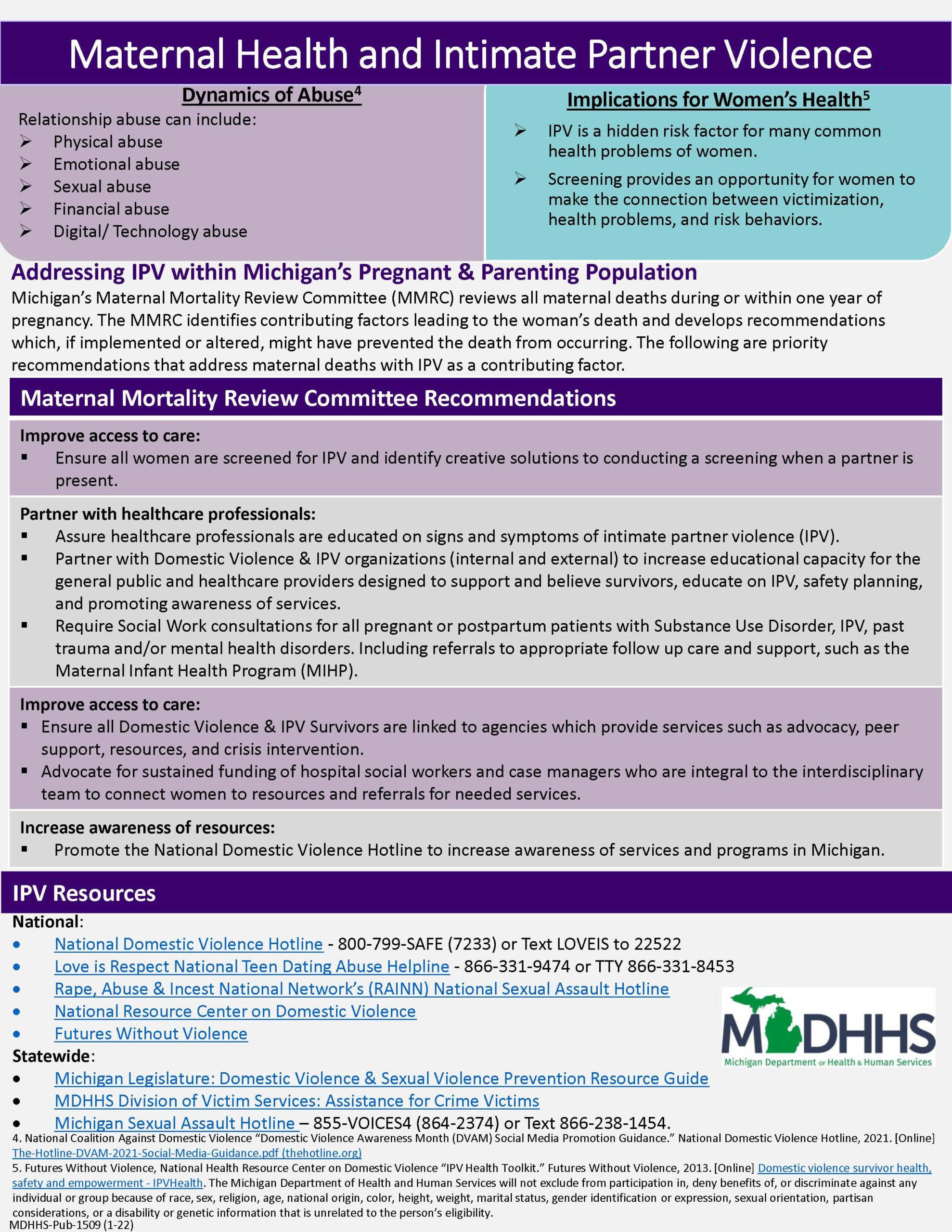
Intimate partner violence (IPV) involves abuse or controlling actions by a current or former partner. While physical abuse is commonly recognized, IPV can manifest in various ways:
- Physical abuse: Physical harm such as hitting or restraining.
- Emotional abuse: Actions like threats or humiliation.
- Sexual abuse: Unwanted sexual activity or coercion.
- Financial abuse: Restricting access to financial resources.
- Digital abuse: Using technology for control or surveillance.
Recognizing these behaviors can be challenging, especially when they develop gradually. Support is available for those affected.
Insights from Michigan Data on Pregnancy-Related Violence
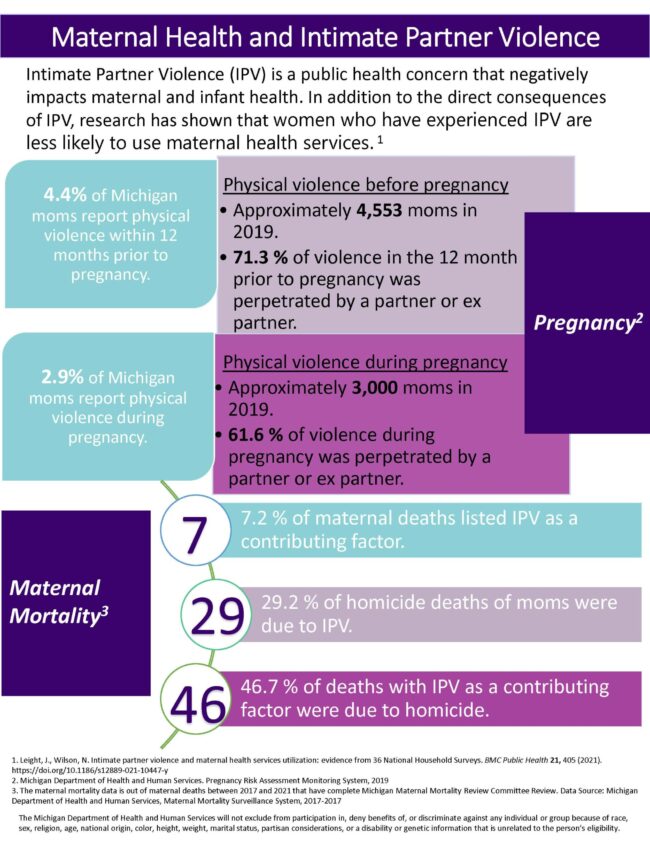
The MDHHS fact sheet references the 2019 Pregnancy Risk Assessment Monitoring System, revealing that:
of Michigan mothers experienced physical violence in the year leading up to pregnancy, approximately affecting 4,553 mothers in 2019.
of mothers reported facing physical violence during pregnancy, impacting around 3,000 mothers in 2019.
of reported pre-pregnancy violence was committed by a current or former partner.
of violence during pregnancy was linked to a current or former partner.
These statistics are historical statewide figures from 2019 and may not reflect current data specific to Livingston County.
The Link Between IPV and Maternal Mortality
The Michigan Maternal Mortality Review Committee studies maternal deaths to identify contributing factors. The MDHHS fact sheet highlights:
- 7.2% of maternal deaths reviewed involved IPV as a contributing factor.
- 29.2% of maternal homicide deaths were associated with IPV.
- 46.7% of IPV-related maternal deaths were due to homicide.
These statistics underscore the serious implications of IPV on maternal health. IPV can deter women from accessing essential maternal health services, as cited by MDHHS research.
Explore the Michigan Maternal Health Fact Sheet
View the Full MDHHS Fact Sheet (PDF)
The Importance of Family Safety for Young Children
Creating a healthy start for children goes beyond health care, involving secure and nurturing relationships. Exposure to violence can adversely affect a child’s emotional and developmental health.
Families experiencing IPV may require additional support in areas such as healthcare, housing, and social connections.
Safe and nurturing relationships benefit every child, and caregivers should have access to support without judgment.
Community and Healthcare Responses to IPV
The Maternal Mortality Review Committee in Michigan advocates for improved community and healthcare provider responses to IPV, suggesting actions such as:
- Confidential IPV screenings in healthcare settings.
- Training for healthcare professionals to identify abuse signs.
- Collaborations with domestic violence organizations.
- Linking survivors to support and crisis services.
- Assisting families through social workers and care coordinators.
- Raising awareness of available resources.
These efforts highlight the necessity of integrated community support systems. No single entity can address all needs, but collaboration eases access to help.
Accessing Support in Livingston County
For those affected by abuse, confidential resources are available to explore options without pressure to decide immediately.
LACASA Center
LACASA Center supports individuals and families in Livingston County affected by violence.
Website: lacasacenter.org
Help Me Grow Livingston
Help Me Grow Livingston offers guidance on child development, health, and community resources for families with young children.
This service is not a crisis intervention but aids in navigating early childhood supports.
Explore Help Me Grow Livingston
Safety reminder: For immediate danger, call 911. If monitored, consider using a safer device to contact a domestic violence advocate.
Creating a Safe and Supportive Community
At Great Start Livingston and Help Me Grow Livingston, we emphasize the interconnectedness of children’s well-being with their caregivers’ health and safety.
Focusing on maternal health, relationship support, and resource connections are vital for a robust early childhood system.
Every family should know that help is available and that they are not alone in facing challenges.
Michigan Department of Health and Human Services, Maternal Health and Intimate Partner Violence, MDHHS-Pub-1509 (January 2022). Pregnancy prevalence findings are from the 2019 Pregnancy Risk Assessment Monitoring System. Maternal mortality findings are from Michigan’s Maternal Mortality Review Committee; the original publication contains inconsistent dates in its mortality source note.
Michigan Maternal Mortality Surveillance
Read More Here






Comments are closed.