
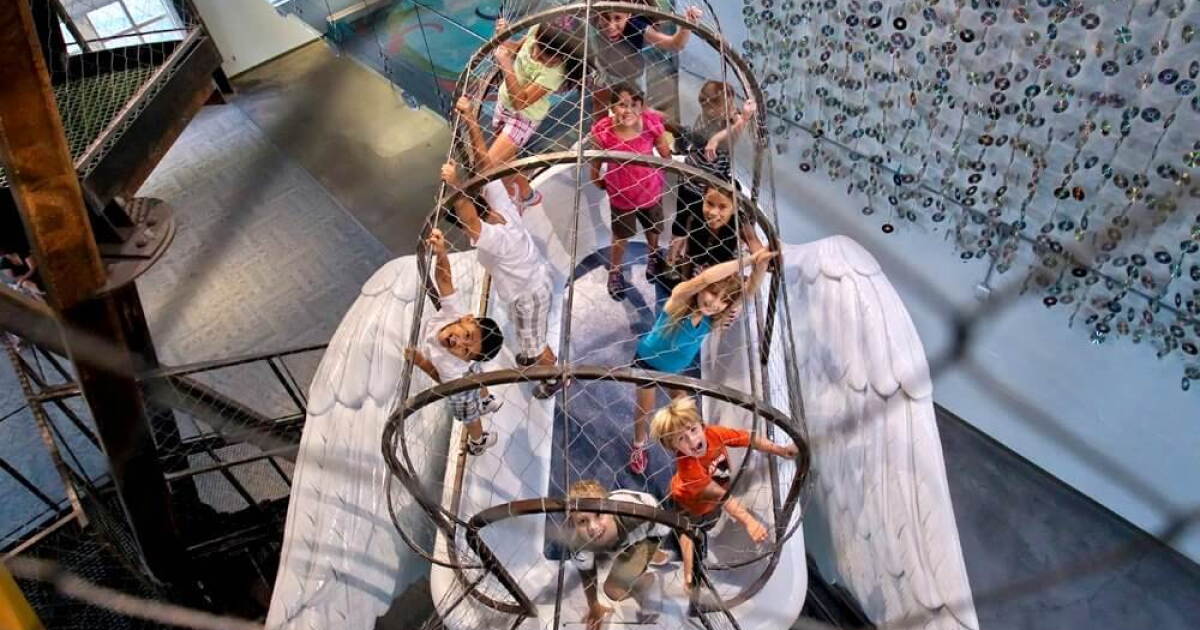
Finding quality childcare in downtown Phoenix has long felt like an impossible task for working parents — and for families with infants, the search is even more daunting. Now, one of the city’s most beloved institutions is stepping in to help fill that gap in a meaningful way.
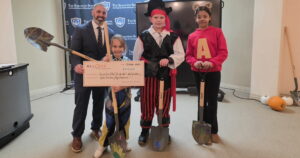
The Children’s Museum of Phoenix is undergoing a major expansion — more than 35,000 square feet of new and renovated space — that will include a brand-new preschool serving infants through preschool-age children, plus an early literacy learning center. The preschool is set to open next fall, and it’s being built with the specific needs of downtown families in mind. KJZZ’s Mark Brodie spoke with Kate Wells, president and CEO of the Children’s Museum of Phoenix, about what this expansion means for the community.
A Childcare Desert Gets Relief
For a downtown Phoenix parent currently paying upward of $1,500 a month for infant care — if they can even find an open spot — the new preschool represents something rare: a high-quality option close to where they work. Arizona has one of the most severe childcare shortages in the country, and downtown Phoenix has been especially hard hit.
Wells didn’t mince words about the scale of the problem.
“Arizona is an absolute childcare desert. We don’t have enough quality preschools at all, and they are concentrated in different parts of the community. Downtown Phoenix in particular is really a childcare desert.”
The new preschool will serve between 70 and 80 children, starting from infancy. That age range is intentional. Infant care is among the most expensive and hardest-to-find categories of childcare — and it’s often the deciding factor in whether a parent, particularly a mother, can stay in the workforce. By including infants, the museum is addressing one of the most critical pressure points for working families.
What It Could Cost — And Why It Might Be Affordable
One of the most common fears parents have about a preschool connected to a museum is sticker shock. But the Children’s Museum is partnering with the YMCA — the largest childcare provider in Arizona — specifically because the Y has already built a tiered-tuition model designed to keep care accessible across income levels.
Think of it this way: a family earning a modest income working downtown could qualify for a lower tuition tier, making regular, high-quality care achievable without gutting a monthly budget. Wells emphasized that affordability is a core goal, not an afterthought.
“We really intend to focus on low- and moderate-income families at our preschool to really help those families engage at a higher level in their children’s early education. While it won’t be exclusively low- and moderate-income — and there’s certainly room for all of the tiers — we understand that being in downtown especially, that there’s a really big need and we want to make sure that everyone has access.”
The museum evaluated four different models before settling on the YMCA partnership — including running the preschool independently, bringing in a for-profit partner, and working with the local school district. Ultimately, the data pointed clearly toward partnering with an established nonprofit already excelling in the space.
“The hard parts — like the trainings and all of the software that you need to buy and the licensing — that can all be done by someone who’s great at doing it already,”
Wells explained. That decision came out of research funded during COVID through a grant from LISC (Local Initiatives Support Corporation) and the federal government.
A Ripple Effect Across Arizona
The 70-to-80-child capacity won’t solve Arizona’s childcare shortage alone. But the preschool is designed to function as a learning lab — a place where best practices in early childhood education can be tested, refined, and then spread statewide through the YMCA’s broader network. For the thousands of families the YMCA serves across Arizona, improvements piloted here could eventually mean better quality care in their own neighborhoods.
“While the impact is not huge at our particular school, because the YMCA is the largest childcare provider in the state, the things that we do at our school here as a learning lab preschool will infiltrate throughout the entire YMCA program,”
Wells said.
There are about a dozen children’s museums across the country that have added preschools or full schools to their facilities — a model that makes intuitive sense, Wells argued, because the philosophy of learning through play that museums practice every day is exactly what early childhood education research supports.
“That’s what we do here every day at the Children’s Museum. Creating preschools, especially that are focused on learning through play and really hands-on learning, really just complements each other perfectly.”
A Literacy Center Built for Families With Limited Time
The expansion also includes nearly 3,000 square feet dedicated to an early literacy learning center — a resource aimed squarely at one of Arizona’s most stubborn educational challenges. For parents who worry about whether their child will learn to read on time, this center is designed to extend support beyond school hours and into evenings and weekends, when working families are actually available.
Wells described the scale of Arizona’s literacy problem plainly:
“One of the biggest challenges in our state — and it doesn’t matter whether you talk to teachers in the classroom, parents, or business leaders — our literacy rates in Arizona are, frankly, embarrassing.”
The center will operate during museum hours with programming for visitors, and after hours it will be available to literacy partner organizations to run family programs and evening sessions. Multiple evidence-based literacy nonprofits are expected to collaborate in the space, meaning families will have access to programs that have a proven track record — not just well-intentioned programming.
When Institutions Step In Where Policy Falls Short
The fact that a children’s museum is building a preschool and a literacy center speaks to a larger reality facing Arizona families: the state has chronically underfunded early childhood education, leaving parents, nonprofits, and community institutions to fill the void. For families navigating the cost of childcare alongside groceries, rent, and other essentials, every new quality option matters.
“Arizona continues to underfund education and make choices about how we support classroom learning that don’t necessarily support the way children learn,”
Wells said.
“We feel like it’s part of our role in the community… It feels like a natural extension of what we’re doing.”
For more education coverage from The Show at KJZZ, including stories on workforce pathways, school programs, and community learning, visit the Education section.
Related Stories:
$3 million federal grant to help expand classroom to career pathways in Scottsdale
Charles W. Harris Elementary School in Phoenix unveils new STEM Lab for students
Scottsdale Unified discusses potential reduction of classroom screentime for students
4 injured by nearby lightning strike at El Mirage Elementary School
It’s Bat Week! And a massive new ASU study is rewriting the bat family tree





Comments are closed.