Editor’s note: This article was written by Dr. Aarti Raja, a professor at Nova Southeastern University, in collaboration with South Florida Sun Sentinel staff writer Cindy Krischer Goodman.
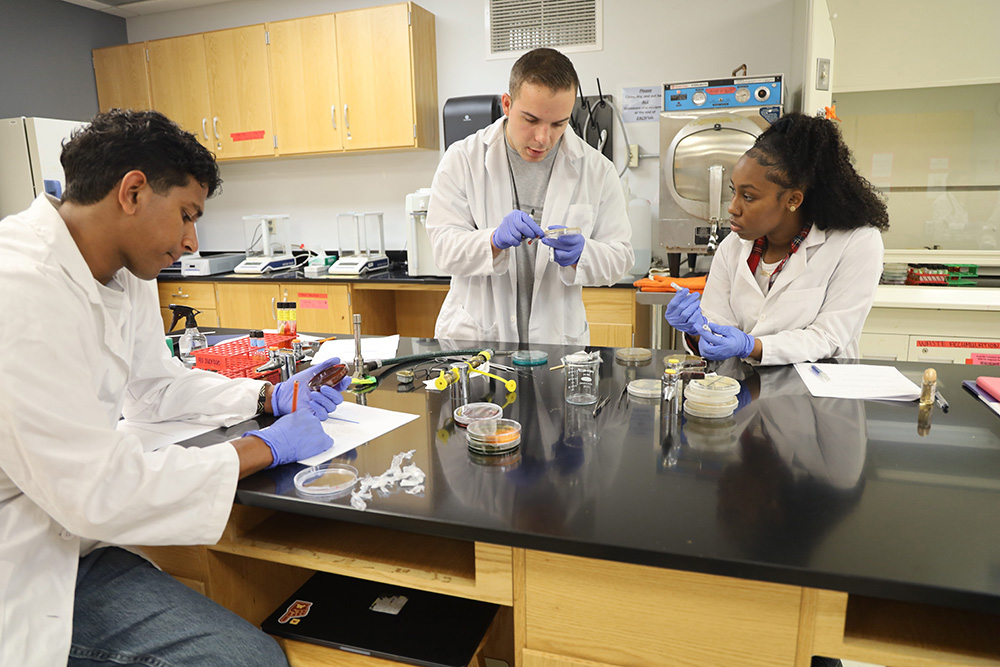
As global health grapples with the escalating threat of antibiotic resistance, students at Nova Southeastern University in South Florida are actively contributing to a potential breakthrough. Engaging in hands-on research, they belong to the Tiny Earth network, which empowers them to take a scientific approach to solve one of the world’s pressing health issues.
According to the Centers for Disease Control and Prevention, antimicrobial resistance accounted for 1.27 million deaths globally in 2019, with drug-resistant infections linked to nearly 5 million deaths. Forecasts predict a rise to 10 million deaths annually by 2050, surpassing cancer fatalities.
Under the guidance of Dr. Aarti Raja, 40 students at NSU are diligently exploring soil samples from campus and their backyards to unearth new antibiotics. “Some students have found bacteria that are producing antibiotic-like compounds,” Dr. Raja explained. “We are working to identify what these bacteria are and the composition of the compounds they are producing.”
The initiative highlights the power of crowdsourcing in scientific discovery. By involving entire classes, it democratizes research opportunities and fosters a sense of belonging among aspiring scientists.
“Students often speak about how research plays an important role in their career path and express genuine interest in engaging in the work,” noted Raja. “For many students, there is a great thrill in owning a project, being involved in a global effort, and the possibility of discovering something novel.”
NSU joins 540 institutions worldwide, involving 800 faculty and 16,000 students, in the quest to combat antibiotic resistance. This collaboration is vital as the issue poses significant challenges to healthcare systems and limits treatment options.
Jennifer Vargas, a junior at NSU, shared her outreach efforts: “I was able to create pamphlets and talk about antibiotic resistance with my family, and help people understand the importance of it and why it should be taken seriously. I hope the pamphlets I created in English and Spanish will help patients.”
The students’ work will be shared with peers, the university community, and the global network of researchers. Some may even present their findings at international scientific conferences.
In the U.S, the CDC reports that antimicrobial-resistant microorganisms cause 2.8 million infections and 35,000 deaths each year. Additionally, the World Health Organization points out the dwindling rate of new antibiotic development, averaging only 1.2 agents approved annually worldwide.
The economic repercussions are substantial, with increased healthcare costs, extended hospital stays, and impacts on agriculture. Students at NSU recognize the significance of their research both academically and practically. “This was my first experience with hands-on research,” said Jaelyn Freeston, an NSU junior. “I am grateful for the opportunity to have contributed to something meaningful and important in the real world.”
This article was contributed as a collaboration between the South Florida Sun Sentinel and the Mako Media Institute at Nova Southeastern University.
Read More Here