
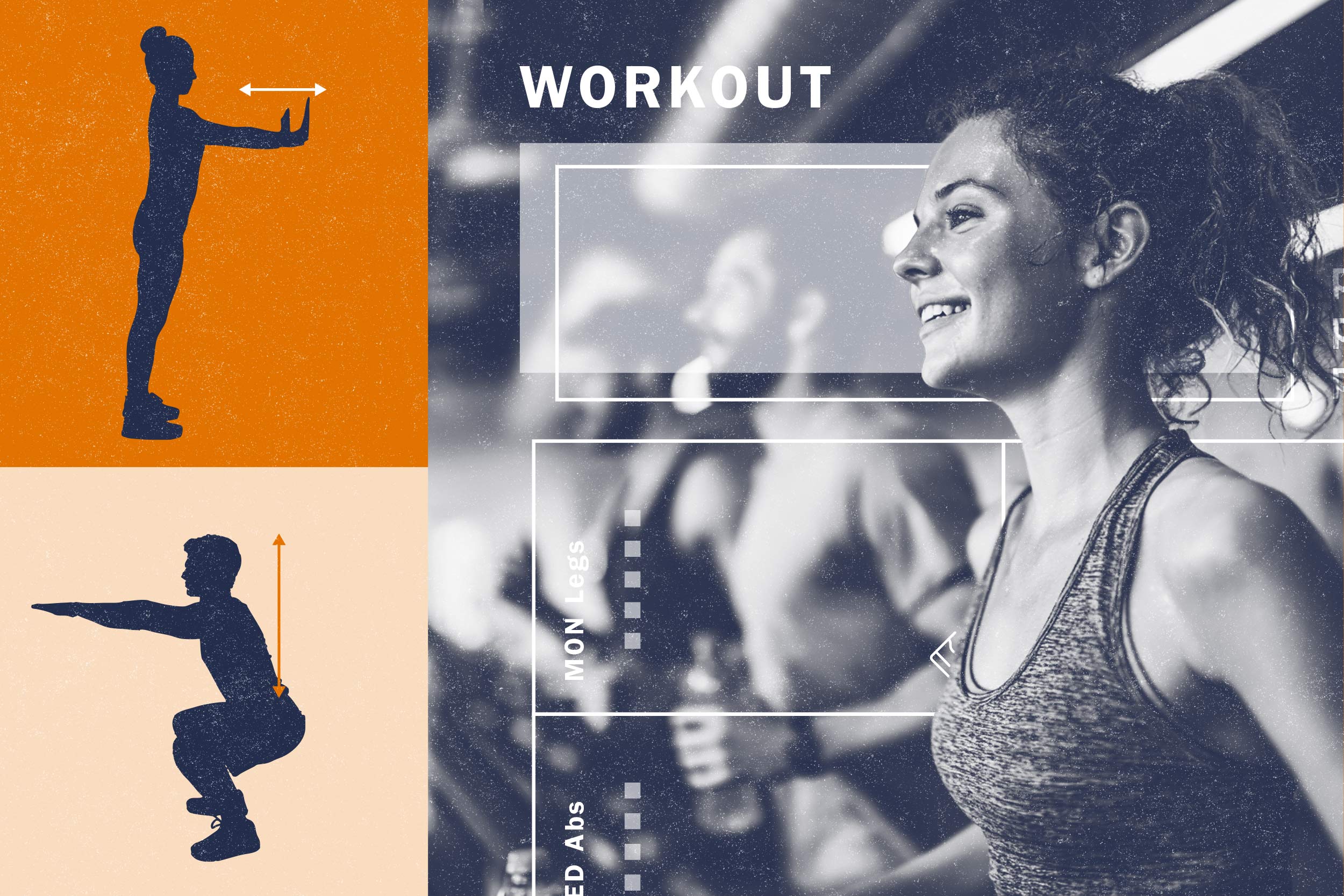
Daily life requires us to perform a variety of movements, many of which can be broken down into five key categories: pushing, pulling, squatting, single-leg movements, and twisting. These exercises not only reflect natural body mechanics but also prepare us for the physical demands of everyday tasks. According to fitness expert Lebeau, the push, pull, squat, one-legged move, and twist are fundamental for maintaining functional fitness.
Building Strength with Foundational Exercises
Squats, lunges, and push-ups are essential exercises because they replicate real-life activities, such as reaching for an object in a high cabinet. “We sit and stand all day, so making sure that you’re maintaining the lower body strength to do that particular motion is really important,” Lebeau emphasized.
To perform a squat, Lebeau advises mimicking the motion of sitting into a chair. “A squat should be conducted with a person’s weight back in their hips and heels,” she explained. For those with hip or knee concerns, modifications such as reducing the depth, adjusting stance, using support, and keeping resistance light can help build strength safely.
Another recommended exercise is the lunge, which Perkins describes as “essentially a single-leg squat.” The movement begins by standing tall, stepping one foot forward, and lowering the body until both knees are bent, with the front thigh parallel to the floor and the back knee pointing toward the floor. It’s important to maintain an upright torso and push through the front heel to return to a standing position.
Lunges enhance strength, stability, and coordination, reflecting the motions we use daily. They can also be adapted by modifying the range of motion or employing supports like the back of a chair or a ballet bar.
The versatile push-up is another core exercise recommended by fitness experts. To perform a standard push-up, start in a plank position, lower your chest to the floor by bending your elbows, and push through your hands to return to the start. Variations include knee push-ups or standing push-ups against a wall or stable chair.
Once these basic movements are mastered, the American College of Sports Medicine suggests progressing and scaling workouts. “You just add weight in increments,” said Perkins, cautioning against overloading, as “too much of anything too soon is what causes injury.”
Read More Here





![Robert Harmon Celebrates 99th Birthday at UVA’s Homecomings Weekend[embed]https://www.youtube.com/watch?v=c_VPFnE8x-w[/embed]](https://realnewsfast.com/wp-content/uploads/2026/10/Robert-Harmon-Celebrates-99th-Birthday-at-UVAs-Homecomings-Weekendembedhttpswwwyoutubecomwatchvc_VPFnE8x-wembed-300x200.jpg "Robert Harmon Celebrates 99th Birthday at UVA’s Homecomings Weekend[embed]https://www.youtube.com/watch?v=c_VPFnE8x-w[/embed]")
![Environmental Opera “Auksalaq” Opens UVA’s Arts on the Hill Series[embed]https://www.youtube.com/watch?v=PjYuP9wh3Hw[/embed]](https://realnewsfast.com/wp-content/uploads/2026/10/Environmental-Opera-Auksalaq-Opens-UVAs-Arts-on-the-Hill-SeriesembedhttpswwwyoutubecomwatchvPjYuP9wh3Hwembed-300x200.jpg "Environmental Opera “Auksalaq” Opens UVA’s Arts on the Hill Series[embed]https://www.youtube.com/watch?v=PjYuP9wh3Hw[/embed]")
![New documentary explores Elizabeth Holmes’ final days before prison[embed]https://www.youtube.com/watch?v=GGJSRFWALTI[/embed]](https://realnewsfast.com/wp-content/uploads/2026/10/New-documentary-explores-Elizabeth-Holmes-final-days-before-prisonembedhttpswwwyoutubecomwatchvGGJSRFWALTIembed-300x200.jpg "New documentary explores Elizabeth Holmes’ final days before prison[embed]https://www.youtube.com/watch?v=GGJSRFWALTI[/embed]")