
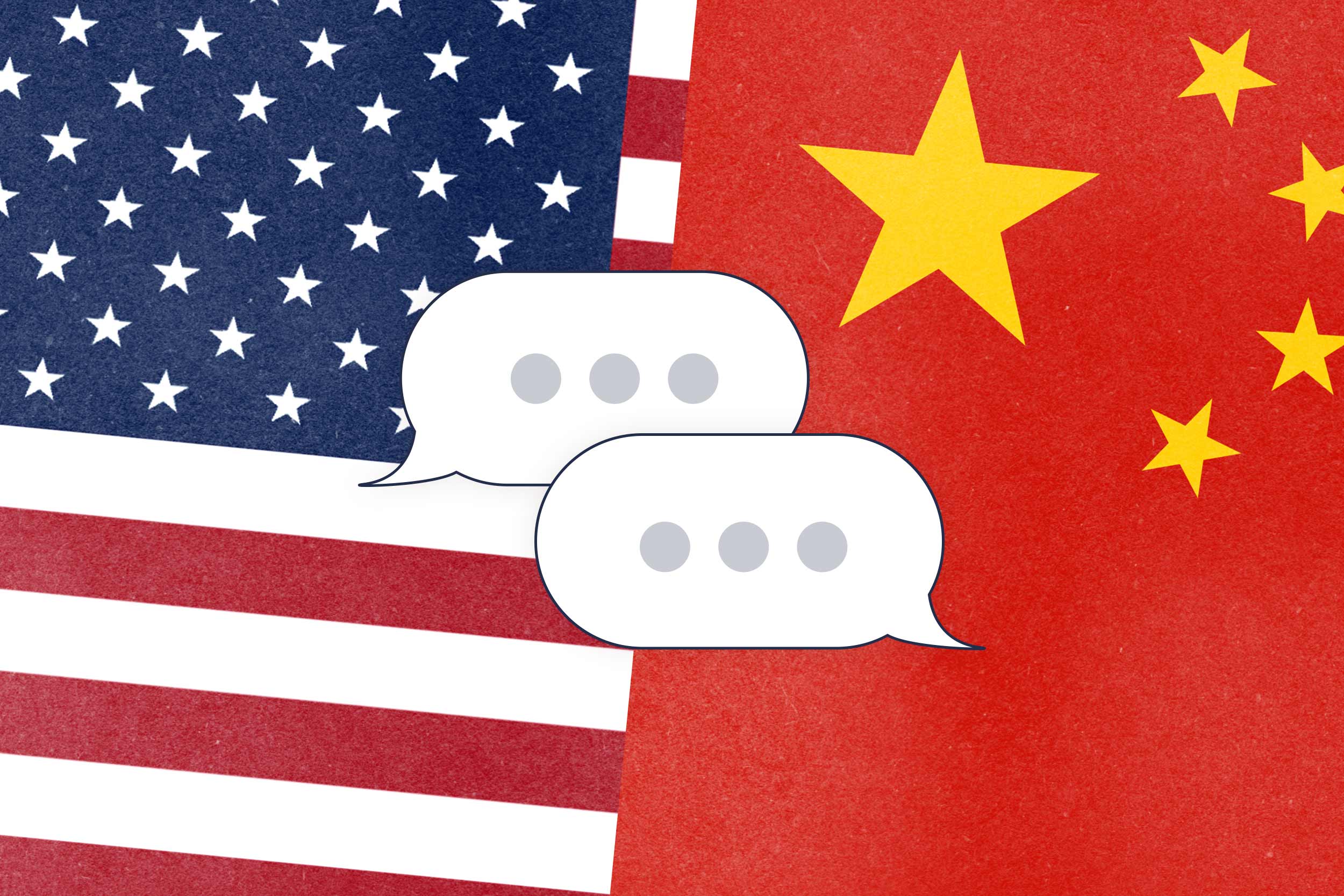
Challenging trade dynamics and cultural divides have strained the ties between the United States and China, according to insights shared by experts at the University of Virginia’s Miller Center for Public Affairs.
Experts emphasized the significance of enhancing communication and deepening mutual understanding to alleviate these tensions.
“Technically speaking, the relationship stinks,” remarked Scott Kennedy, a senior adviser at the Center for Strategic and International Studies and an alumnus of UVA.
He elaborated, “In just the last few weeks, both sides have been punching back and testing the other. The U.S., at the end of September, came out with some new export controls, and then the Chinese, just a few days ago, came out with a whole new feature of export controls around rare earths to globalize the control of them.”
Rare earth minerals, such as neodymium, scandium, and yttrium, are crucial for various technologies, including computer chips and electric vehicles, as well as sophisticated military equipment. Despite not being particularly rare, these minerals are challenging to mine and refine. China’s significant investment in processing has enabled it to dominate much of the global supply.
Kennedy was joined by Brantly Womack, a professor of foreign affairs emeritus and senior faculty fellow at the Miller Center, during a panel discussion on “U.S.-China relations in Trump’s second term.” The event was moderated by Aynne Kokas, C.K. Yen Professor at the Miller Center and director of UVA’s East Asia Center.
Womack supported Kennedy’s perspective, saying, “I’m not going to be trying to present a bright side of things, because it does stink. This rivalry between us and China has emerged and grown accepted by both sides over the last couple of years, and not just from Trump. Remember, President Joe Biden continued most of the attitude and policies of the first Trump administration toward China.”
Womack pointed out that both nations perceive each other as potential adversaries, taking measures to safeguard their interests through various means, including economic and political strategies.
“One aspect of that is to make sure the other side behaves the way it should, and you see that particularly in U.S. policy. Now you’re seeing the Chinese increasingly having the same type of attitude, with the rare earths policy being probably the best current example,” Womack explained. “But how far can this go? Are we seeing maybe scene two in a play, with a train wreck in scene four?”
Kennedy highlighted three primary challenges confronting the U.S. and China: competition over resources and global influence, conflicting security interests, and persistent economic and trade tensions.
Read More Here





![Robert Harmon Celebrates 99th Birthday at UVA’s Homecomings Weekend[embed]https://www.youtube.com/watch?v=c_VPFnE8x-w[/embed]](https://realnewsfast.com/wp-content/uploads/2026/10/Robert-Harmon-Celebrates-99th-Birthday-at-UVAs-Homecomings-Weekendembedhttpswwwyoutubecomwatchvc_VPFnE8x-wembed-300x200.jpg "Robert Harmon Celebrates 99th Birthday at UVA’s Homecomings Weekend[embed]https://www.youtube.com/watch?v=c_VPFnE8x-w[/embed]")
![Environmental Opera “Auksalaq” Opens UVA’s Arts on the Hill Series[embed]https://www.youtube.com/watch?v=PjYuP9wh3Hw[/embed]](https://realnewsfast.com/wp-content/uploads/2026/10/Environmental-Opera-Auksalaq-Opens-UVAs-Arts-on-the-Hill-SeriesembedhttpswwwyoutubecomwatchvPjYuP9wh3Hwembed-300x200.jpg "Environmental Opera “Auksalaq” Opens UVA’s Arts on the Hill Series[embed]https://www.youtube.com/watch?v=PjYuP9wh3Hw[/embed]")
![New documentary explores Elizabeth Holmes’ final days before prison[embed]https://www.youtube.com/watch?v=GGJSRFWALTI[/embed]](https://realnewsfast.com/wp-content/uploads/2026/10/New-documentary-explores-Elizabeth-Holmes-final-days-before-prisonembedhttpswwwyoutubecomwatchvGGJSRFWALTIembed-300x200.jpg "New documentary explores Elizabeth Holmes’ final days before prison[embed]https://www.youtube.com/watch?v=GGJSRFWALTI[/embed]")