
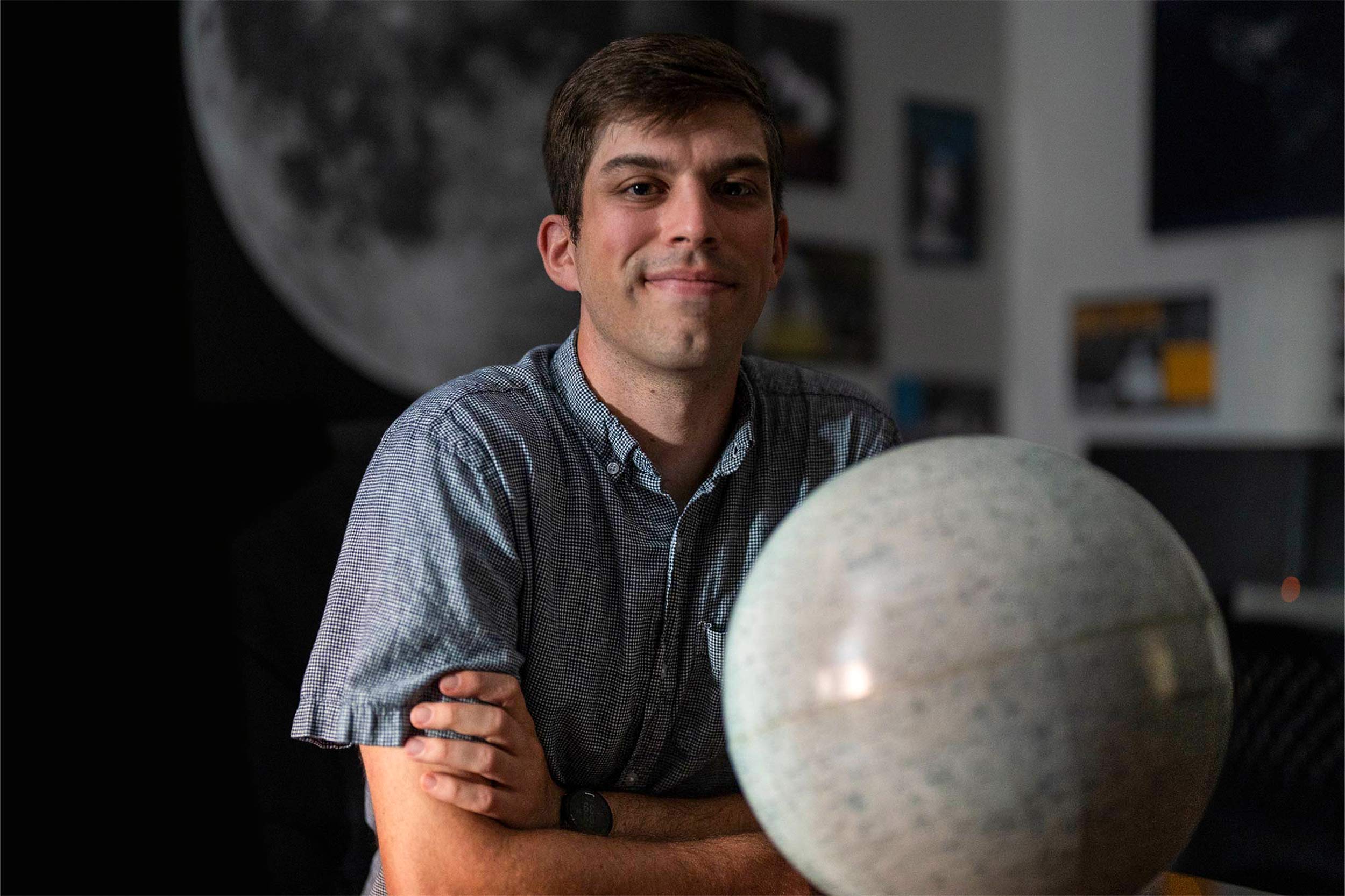
The pursuit of space exploration continues to captivate and inspire, much like the historic Apollo program did decades ago. With the Artemis program, a new era of lunar exploration is set to begin, promising to not only rekindle the spirit of discovery but also contribute to scientific advancements that enhance human knowledge and safety in space.
Humans Have Not Returned to the Moon Since 1972
Since the end of the Apollo missions in 1972, only 24 individuals have ventured into deep space, all part of the Apollo program. These astronauts embarked on unprecedented journeys to the moon, pioneering space exploration simply because it was within our reach. Today, only five of these astronauts are still alive, each in their 90s, having left a legacy of scientific achievements and firsthand observations of the moon’s far side.
The upcoming Artemis II mission aims to add to this legacy, as four astronauts are slated to embark on a 10-day journey that will enable them to witness the moon’s far side. The primary obstacle preventing human return to the moon since the 1970s has been a lack of political resolve and the financial backing that follows.
Continuous Discovery Awaits
Central to Artemis’s objectives is establishing a sustainable human presence in deep space. Such efforts require overcoming the unique challenges posed by leaving Earth’s protective atmosphere and magnetic field. For instance, radiation exposure increases the risk of cancer, with women being particularly vulnerable. Artemis I focused on developing the necessary shielding to safely send female astronauts into deep space, ensuring mission specialist Christina Koch of Artemis II can journey safely.
These missions are designed to collect data that will enhance the safety of future deep-space endeavors, ensuring astronauts can consistently undertake these demanding journeys.
The Power of Global Collaboration
The Artemis program exemplifies the strength of international cooperation. Although led by NASA, the initiative includes significant contributions from the Canadian Space Agency, European Space Agency, Japan Aerospace Exploration Agency, and the Mohammed Bin Rashid Space Centre of the UAE. Jeremy Hansen from the Canadian Space Agency will be the first non-American to travel beyond low Earth orbit, highlighting the collaborative spirit of the mission.
By sharing data and collaborating internationally, scientific knowledge expands, and the Artemis program serves as a prime example of such beneficial cooperation.
Challenges of Lunar and Beyond-Lunar Exploration
Launching rockets into space is a formidable task, particularly with human passengers on board. The Artemis program’s current goal is to maintain a consistent human presence on or near the moon, laying the groundwork for more ambitious missions, like those to Mars. Although Mars exploration remains a distant goal, the incremental progress made today will enable more substantial advances in the future.
Humanity’s ability to accomplish challenging feats, such as lunar missions, underscores the progress of human ingenuity and the potential for future exploration.
Read More Here






![Robert Harmon Celebrates 99th Birthday at UVA’s Homecomings Weekend[embed]https://www.youtube.com/watch?v=c_VPFnE8x-w[/embed]](https://realnewsfast.com/wp-content/uploads/2026/10/Robert-Harmon-Celebrates-99th-Birthday-at-UVAs-Homecomings-Weekendembedhttpswwwyoutubecomwatchvc_VPFnE8x-wembed-300x200.jpg "Robert Harmon Celebrates 99th Birthday at UVA’s Homecomings Weekend[embed]https://www.youtube.com/watch?v=c_VPFnE8x-w[/embed]")
![Environmental Opera “Auksalaq” Opens UVA’s Arts on the Hill Series[embed]https://www.youtube.com/watch?v=PjYuP9wh3Hw[/embed]](https://realnewsfast.com/wp-content/uploads/2026/10/Environmental-Opera-Auksalaq-Opens-UVAs-Arts-on-the-Hill-SeriesembedhttpswwwyoutubecomwatchvPjYuP9wh3Hwembed-300x200.jpg "Environmental Opera “Auksalaq” Opens UVA’s Arts on the Hill Series[embed]https://www.youtube.com/watch?v=PjYuP9wh3Hw[/embed]")
![New documentary explores Elizabeth Holmes’ final days before prison[embed]https://www.youtube.com/watch?v=GGJSRFWALTI[/embed]](https://realnewsfast.com/wp-content/uploads/2026/10/New-documentary-explores-Elizabeth-Holmes-final-days-before-prisonembedhttpswwwyoutubecomwatchvGGJSRFWALTIembed-300x200.jpg "New documentary explores Elizabeth Holmes’ final days before prison[embed]https://www.youtube.com/watch?v=GGJSRFWALTI[/embed]")