Arizona’s wine industry is seeing a dynamic transformation, with growers cultivating nearly 80 grape varieties last year. The latest Cooperative Extension report reveals a broader range of niche grape varieties than initially anticipated, highlighting the state’s diverse viticultural landscape.
“Statewide, syrah is the number one grape we grow, followed by grenache and then cabernet sauvignon, but the Verde Valley has a lot of minor and Italian varieties – barbera, alianico and sangiovese are big,” stated Matt Halldorson, Yavapai County Extension director and co-author of the 2025 Arizona Wine Grape Growers Harvest Report. “The breadth of the different varieties that we grow is impressive.”
Data from the report, sourced directly from growers, underscores the significant economic impact of Arizona’s wine industry, which contributed $351 million in economic output in 2023, according to a study by the Arizona Office of Tourism.
Halldorson emphasized that the annual harvest report will provide grape growers with a valuable tool for making informed decisions. “It’s a baseline,” he noted. “We’ll be able to see how the industry grows from year to year. Right now, we have one data point, but in 10 years we’ll have a really nice trend as to where the wine industry is going.”
Grape Varieties and Acreage
Six key grape varieties — syrah, grenache, cabernet sauvignon, viognier, malvasia bianca, and chardonnay — dominated the 532 acres harvested, while others, like gamay noir and lemberger, were cultivated on less than half an acre each. Overall, growers reported a statewide harvest of 1,187 tons.
Vineyard Distribution
Arizona’s vineyards are primarily located in three American Viticultural Areas (AVAs): Willcox, Verde Valley, and Sonoita, designated by the Alcohol and Tobacco Tax and Trade Bureau. While Willcox remains the leading grape-producing region, surprisingly, the second-largest number of acres cultivated falls outside these established AVAs.
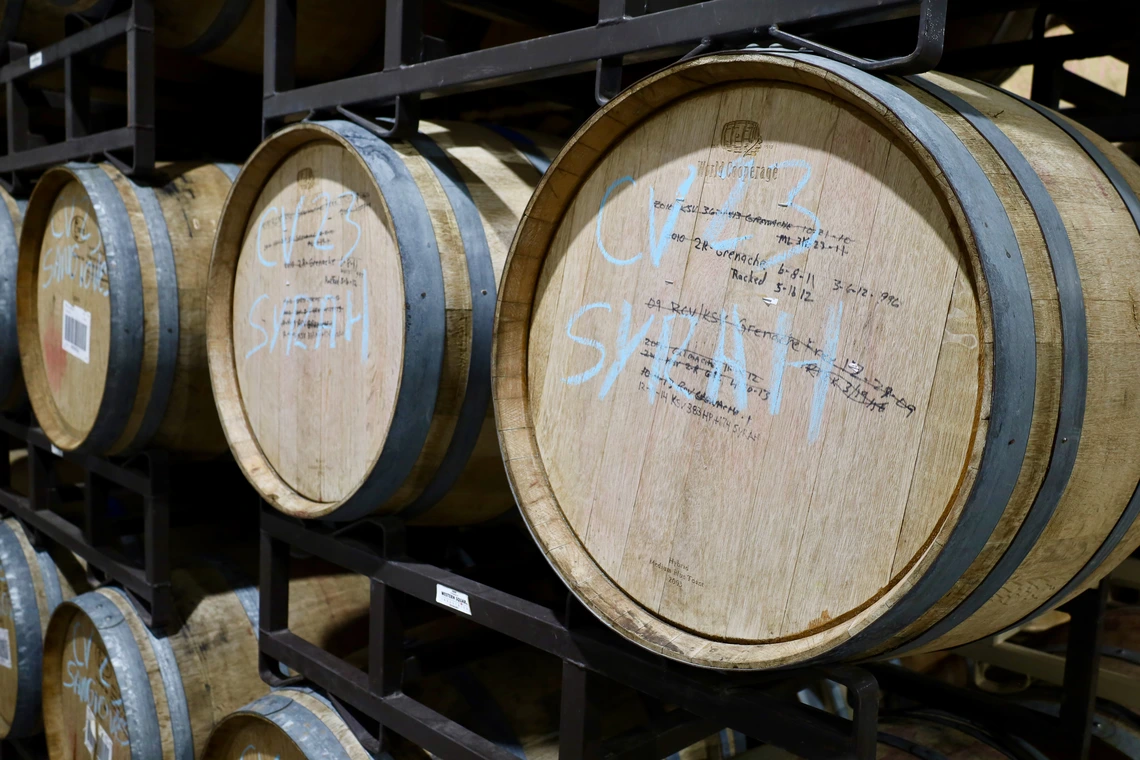
Grenache was the second most common variety grown by Arizona grape growers in 2025.
Brad Poole/Cooperative Extension
The report offers vital insights for the tourism sector and other stakeholders in understanding and marketing Arizona’s wine industry. “They will know how to quantify what they’ve got, how to value the industry,” Halldorson explained. “They’ll know how to describe it, how to market it. What kind of wines do we sell? What kind of varieties do we grow? I don’t think anyone really understood this.”
Wine growers can leverage the data to navigate market demands, determining which grape varieties to increase or decrease in production. “They can tell what’s hot,” Halldorson added. “What should they plant more of? What should they plant less of? It’s also good for pricing. We have the average price of a ton of grapes, red and white, and if you’re selling for way under that price, you might not be getting all the value out of your grapes. Or if you’re a winemaker paying way more than that price, you may say, ‘Whoa, why am I paying so much?'”
Building Industry Trust
The report’s success hinges on the trust growers placed in the Cooperative Extension by sharing their production data, which is anonymized. This collaboration also sets the stage for future university research, as co-author Michael Pierce, an assistant in Extension and experienced winemaker, pointed out.
“Extension’s role is to provide a neutral, research-based analysis that helps the industry better understand trends and make informed decisions,” Pierce said. “Collecting producer-reported data and providing neutral analysis is exactly the kind of role Cooperative Extension is designed to serve. In many ways, this first report also serves as a needs assessment that will guide future Extension research and educational programs.”
Future reports plan to incorporate water use data, further illustrating the suitability of grape crops in Arizona’s arid climate. This initiative is part of a broader effort by Cooperative Extension to support the state’s wine industry through various programs and resources.
The Cooperative Extension has been proactive in addressing industry needs, conducting an industry needs assessment in 2024, organizing the annual Arizona Wine Summit, and hosting workshops that connect growers with university research.
Additionally, resources like the Arizona Metrological Network offer real-time weather data, while the Climate Geospatial Environmental Modeling provides a climate newsletter tailored for grape growers.
A version of this article originally appeared on the Cooperative Extension website.
Read More Here