
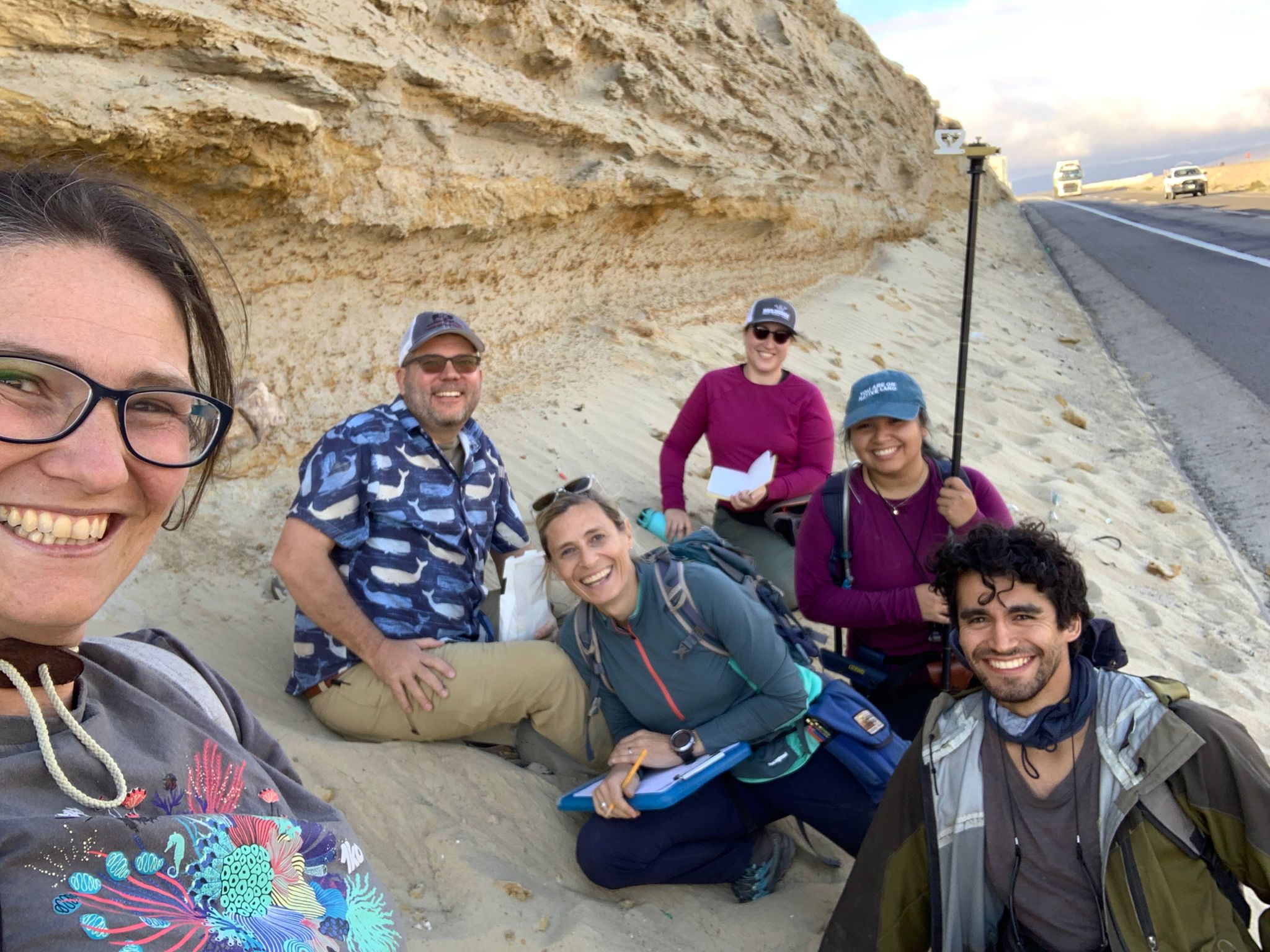
In a remarkable discovery in 2010, construction workers on Chile’s Panamerican Highway stumbled upon a treasure trove of ancient marine fossils in the Atacama Desert. Paleontologists rushed to the site, named Cerro Ballena or “Whale Hill,” and uncovered over 40 fossilized specimens, including whales and porpoises, dating back approximately 6 to 9 million years. This site is now recognized as the world’s largest concentration of whale fossils, prompting scientists to question how so many marine animals perished in such a confined space.
Coinciding with this period, significant changes were occurring in marine life. Whales were growing larger, and global climate data indicated a shift toward cooler sea surface temperatures. The late Miocene epoch, marked by intense volcanic eruptions and tectonic activities, saw the formation of the Andes mountain range. Researchers from the University of Arizona have now uncovered a critical piece of this puzzle: the impact of volcanic ash on oceanic ecosystems.
According to a study published in Nature Communications Earth & Environment, led by Barbara Carrapa of the University of Arizona’s College of Science, volcanic eruptions released ash rich in nutrients such as phosphorus, iron, and silicon into the atmosphere. This ash eventually deposited into the Southern Ocean, fueling marine algae growth. The increased nutrient availability spurred primary producers—organisms that use sunlight to produce food—leading to a cascade of ecological changes.
This nutrient influx supported the growth of larger whales but also resulted in harmful algal blooms in areas like Cerro Ballena, which contributed to the whales’ demise. Additionally, these algal blooms absorbed significant amounts of carbon dioxide, a potent greenhouse gas, contributing to global cooling during the late Miocene.
Historically, volcanic eruptions have been associated with increasing atmospheric carbon dioxide levels, but their role in cooling the planet has been less understood. Carrapa explains, “Once you put a lot of very important nutrients coming from volcanoes into the ocean, then your primary producers are going to go crazy, because all of a sudden they have a lot of nutrients available to them, and that, in turn, is going to affect the entire marine ecosystem.”
Among these primary producers are diatoms, single-celled algae known for their silicate shells. The study, which brought together experts in climate modeling, ocean geochemistry, geology, and paleobiology, highlighted the previously unexplored connections between Andean volcanism, ocean productivity, and climate change.
During the Miocene, Earth’s climate continued a cooling trend that began after the Mesozoic era. The continents assumed their current formations, with forests giving way to grasslands and mammals diversifying. However, the exact cause of the declining carbon dioxide levels during the late Miocene remained a mystery.
Kaustubh Thirumalai, a co-author and associate professor in the Department of Geosciences at the University of Arizona, used climate simulation models to explore these historical changes. “To illustrate our approach, we’d say, ‘Let’s start erupting the Andes on purpose and see what happens,'” he said. “And what we found is that there is another component that wasn’t really appreciated – the biology of the ocean responds, with feedback effects on climate worldwide.”
These biological processes facilitated carbon storage in the deep ocean, resulting in global cooling. Carrapa noted, “Once you take the biological effects of volcanoes fertilizing the ocean into consideration, we could see a beautiful correlation between Andean volcanism and all those changes that are happening in the ocean, specifically those looking at the late Miocene cooling event.”
Co-author and whale expert Mark Clementz, from the University of Wyoming, emphasized the significance of these findings. “This work improves our understanding of how natural processes can regulate Earth’s climate, which is directly relevant to anticipating future climate change and its impacts on society,” he said. The study sheds light on the complex interplay between volcanism, ocean productivity, and carbon dioxide drawdown, offering insights into long-term climate regulation mechanisms.
Read More Here










Be First to Comment