
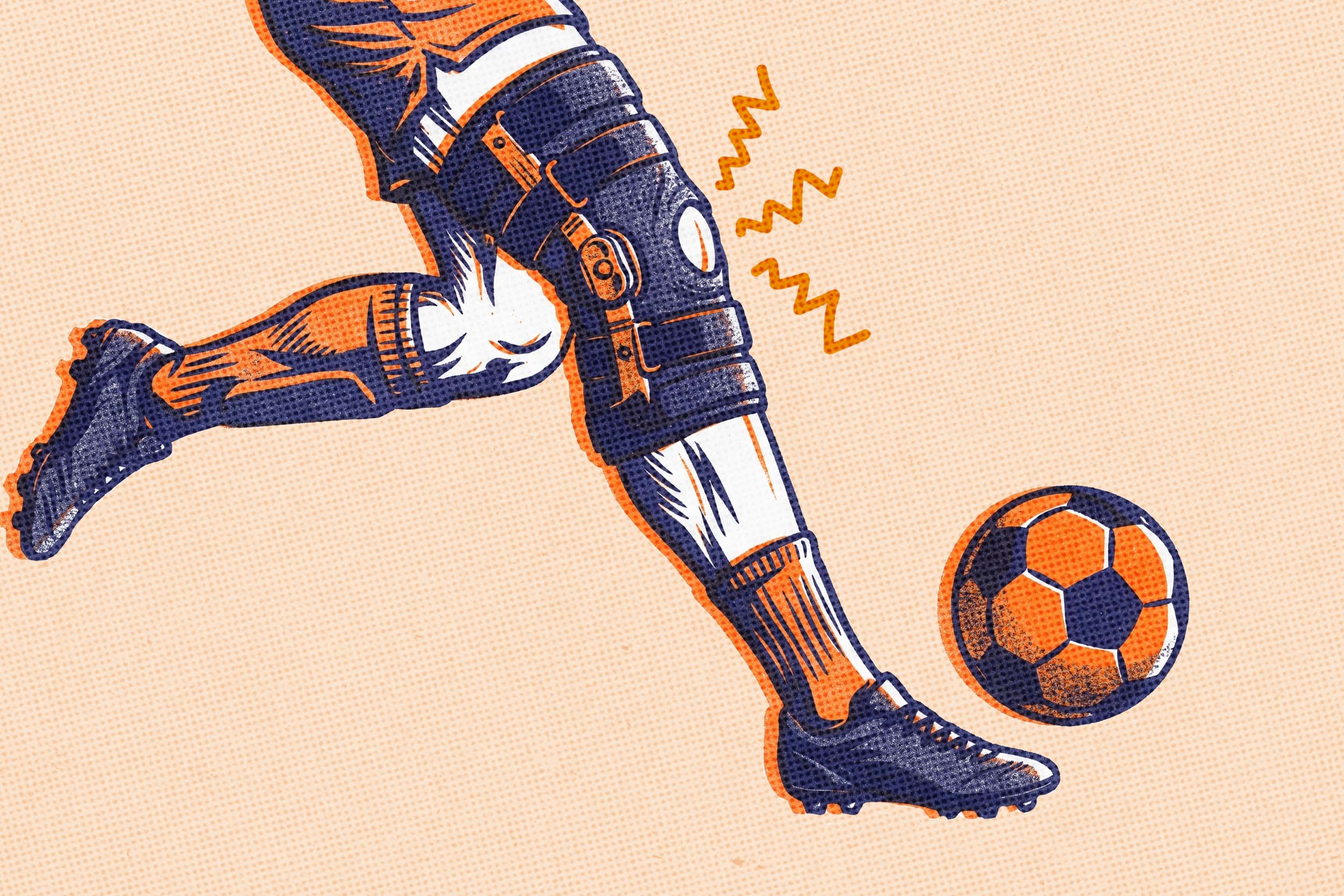
As the anticipation for the 2026 World Cup builds, the spotlight turns to a frequent and troubling issue affecting soccer players: ACL injuries. This injury has already sidelined numerous athletes, sparking renewed discussions on its prevalence in the sport.
The 2023 Women’s World Cup highlighted a concerning trend with numerous female athletes suffering ACL tears, drawing attention to the issue. According to research, women are significantly more prone to this injury in elite soccer, facing a risk 2½ to 3 times greater than their male counterparts.
However, male soccer players are not exempt from ACL injuries. This summer, several men’s World Cup players are absent due to this debilitating condition.
To gain insights into ACL injuries, insights from Chris Kuenze, an athletic trainer and associate professor at the University of Virginia’s School of Education and Human Development, were sought. Kuenze’s expertise lies in aiding individuals in recovering both physically and psychologically from such injuries.
Understanding ACL Tears
According to Kuenze, an ACL functions like a bungee cord within the knee, maintaining the connection between the femur and tibia. It plays a crucial role in stabilizing the knee during movements such as pivoting, landing, and sudden deceleration.
When athletes sustain a torn ACL, it can mean a complete tear or a partial tear with a portion still intact, severely impacting knee stability.
Impact on Functionality
Kuenze explains, “A broken bungee cord isn’t very good at keeping your trunk closed when you bring home too much stuff from Lowe’s or HomeGoods.” An ACL tear results in diminished knee function, causing instability and sending distress signals to the brain, prompting the body to protect the injured knee.
The injury is typically painful, accompanied by significant swelling, which can make even basic activities like walking or climbing stairs challenging.
Why Soccer Increases ACL Injury Risk
In soccer, 60% to 70% of ACL injuries occur without contact with another player. The stress on the ACL is heightened during quick directional changes, rapid deceleration, or landing after jumps, especially in response to other players’ movements. Consequently, sports like soccer, lacrosse, basketball, and football pose a higher risk for ACL injuries compared to sports with predictable movements, such as track or baseball.
Nevertheless, 30% of soccer-related ACL injuries result from direct contact, such as slide tackles, contributing to the injury risk.
Recovery and Return to Play
Elite athletes often make remarkable recoveries from ACL injuries, sometimes returning to play sooner than the average person. Kuenze notes, “Elite athletes are just that, elite.” Their unique anatomy, physiology, and psychological resilience set them apart, especially at the professional level, such as World Cup players.
Read More Here






![Robert Harmon Celebrates 99th Birthday at UVA’s Homecomings Weekend[embed]https://www.youtube.com/watch?v=c_VPFnE8x-w[/embed]](https://realnewsfast.com/wp-content/uploads/2026/10/Robert-Harmon-Celebrates-99th-Birthday-at-UVAs-Homecomings-Weekendembedhttpswwwyoutubecomwatchvc_VPFnE8x-wembed-300x200.jpg "Robert Harmon Celebrates 99th Birthday at UVA’s Homecomings Weekend[embed]https://www.youtube.com/watch?v=c_VPFnE8x-w[/embed]")
![Environmental Opera “Auksalaq” Opens UVA’s Arts on the Hill Series[embed]https://www.youtube.com/watch?v=PjYuP9wh3Hw[/embed]](https://realnewsfast.com/wp-content/uploads/2026/10/Environmental-Opera-Auksalaq-Opens-UVAs-Arts-on-the-Hill-SeriesembedhttpswwwyoutubecomwatchvPjYuP9wh3Hwembed-300x200.jpg "Environmental Opera “Auksalaq” Opens UVA’s Arts on the Hill Series[embed]https://www.youtube.com/watch?v=PjYuP9wh3Hw[/embed]")
![New documentary explores Elizabeth Holmes’ final days before prison[embed]https://www.youtube.com/watch?v=GGJSRFWALTI[/embed]](https://realnewsfast.com/wp-content/uploads/2026/10/New-documentary-explores-Elizabeth-Holmes-final-days-before-prisonembedhttpswwwyoutubecomwatchvGGJSRFWALTIembed-300x200.jpg "New documentary explores Elizabeth Holmes’ final days before prison[embed]https://www.youtube.com/watch?v=GGJSRFWALTI[/embed]")