
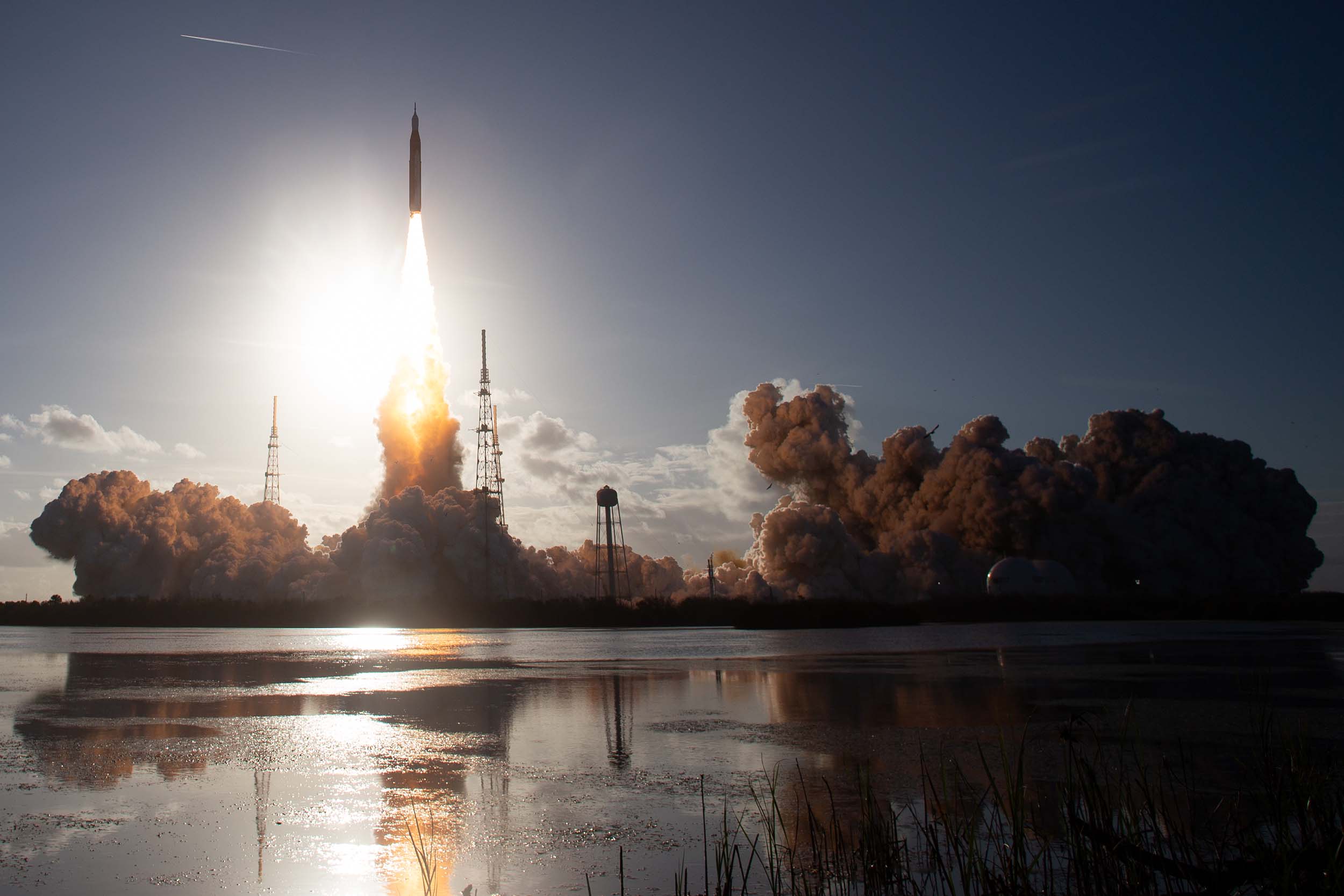
The recent conclusion of the Artemis II mission marks a significant milestone in space exploration. The mission, which successfully ended with a splashdown, saw a crew of four astronauts embark on a 10-day voyage around the moon, setting a new record for the furthest distance humans have ever traveled from Earth. This venture paves the way for humanity’s return to the lunar surface.
Prior to the mission’s launch, UVA Today consulted with Matt Pryal, an assistant professor in the University of Virginia’s Department of Astronomy, to discuss the mission’s significance. After the mission’s completion, Pryal shared five key insights regarding the accomplishments of Artemis II.
1. The Fascination of Lunar Exploration
The awe of a moon mission cannot be overstated. Sending astronauts over 250,000 miles from Earth was an unprecedented achievement, allowing audiences worldwide to witness it via live stream. The awe-inspiring Earthset image and the moving total solar eclipse photo captured the public’s imagination. The enthusiasm from both the astronauts and NASA’s mission control during the journey was infectious and entertaining.
2. The Human Element of Space Travel
A particularly poignant moment occurred when the Artemis astronauts named a lunar feature “Carroll Crater” after Commander Reid Wiseman’s late wife, Carroll, a gesture that highlighted the personal and emotional aspects of space travel. Observing the astronauts manage everyday challenges such as bathroom problems and technical issues with Microsoft Outlook brought a relatable human dimension to the mission.
3. Gathering Pioneering Data
The Artemis II mission not only tested human endurance but also the capabilities of the new Orion spacecraft. The astronauts, including pilot Victor Glover, evaluated its performance, conducting maneuvers and assessing its reliability. While the spacecraft’s journey produced a wealth of data—much of which remains to be analyzed—initial findings have already begun to provide new insights.
Although the far side of the moon is regularly surveyed by lunar orbiters, the mission’s value lay in the astronauts’ firsthand observations. These included the color and detail of the lunar surface, as well as reported “impact flashes” from meteorites—phenomena that remain to be fully verified.
Read More Here






![Robert Harmon Celebrates 99th Birthday at UVA’s Homecomings Weekend[embed]https://www.youtube.com/watch?v=c_VPFnE8x-w[/embed]](https://realnewsfast.com/wp-content/uploads/2026/10/Robert-Harmon-Celebrates-99th-Birthday-at-UVAs-Homecomings-Weekendembedhttpswwwyoutubecomwatchvc_VPFnE8x-wembed-300x200.jpg "Robert Harmon Celebrates 99th Birthday at UVA’s Homecomings Weekend[embed]https://www.youtube.com/watch?v=c_VPFnE8x-w[/embed]")
![Environmental Opera “Auksalaq” Opens UVA’s Arts on the Hill Series[embed]https://www.youtube.com/watch?v=PjYuP9wh3Hw[/embed]](https://realnewsfast.com/wp-content/uploads/2026/10/Environmental-Opera-Auksalaq-Opens-UVAs-Arts-on-the-Hill-SeriesembedhttpswwwyoutubecomwatchvPjYuP9wh3Hwembed-300x200.jpg "Environmental Opera “Auksalaq” Opens UVA’s Arts on the Hill Series[embed]https://www.youtube.com/watch?v=PjYuP9wh3Hw[/embed]")
![New documentary explores Elizabeth Holmes’ final days before prison[embed]https://www.youtube.com/watch?v=GGJSRFWALTI[/embed]](https://realnewsfast.com/wp-content/uploads/2026/10/New-documentary-explores-Elizabeth-Holmes-final-days-before-prisonembedhttpswwwyoutubecomwatchvGGJSRFWALTIembed-300x200.jpg "New documentary explores Elizabeth Holmes’ final days before prison[embed]https://www.youtube.com/watch?v=GGJSRFWALTI[/embed]")