
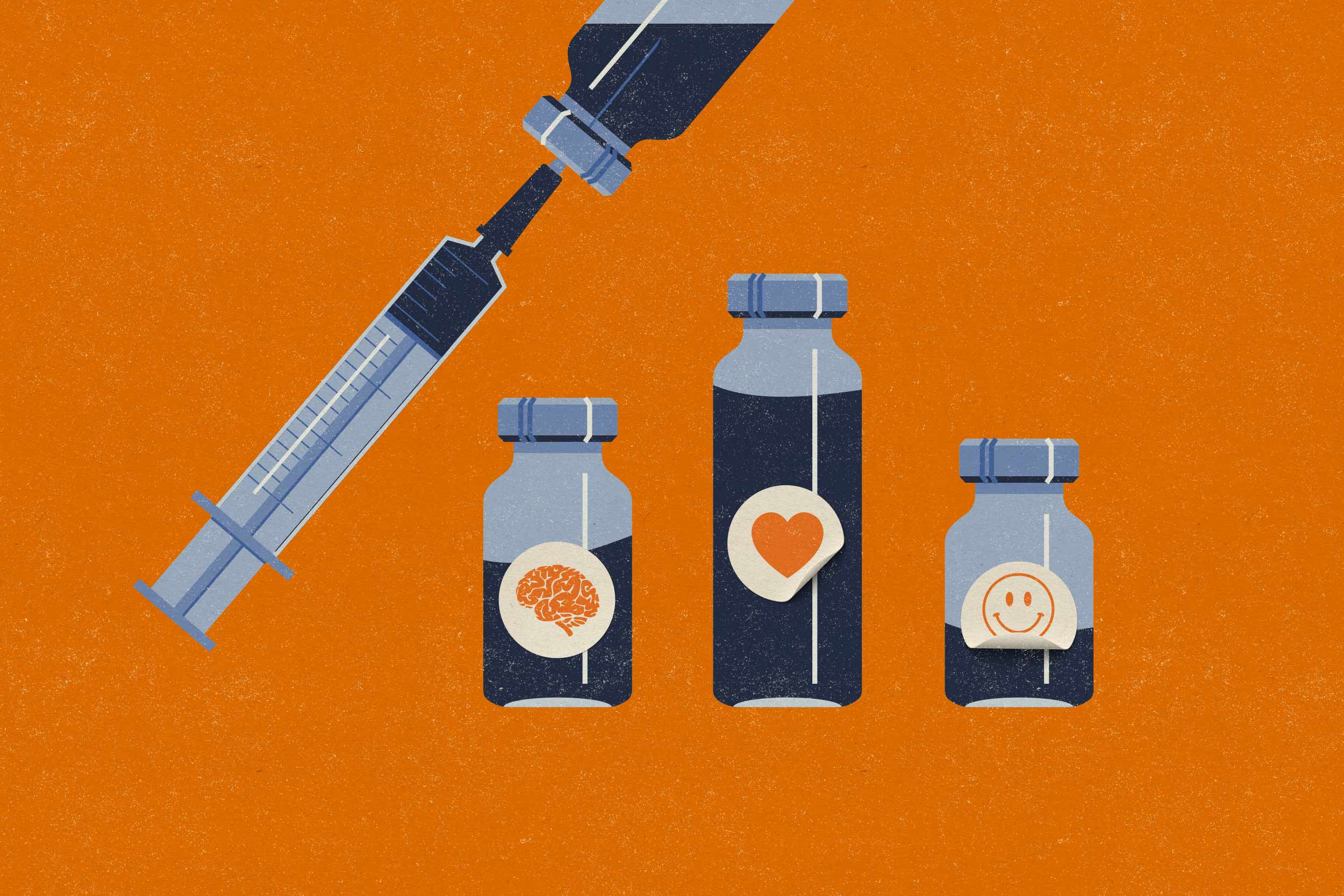
Imagine a scenario where you could simply inject a substance to achieve a bronzed glow, enhance your fitness, and boost your overall health. It seems enticing to many, as evidenced by the growing number of enthusiasts embracing this trend.
Social media platforms are abuzz with influencers promoting vials labeled BPC-157 or Sermorelin, claiming they offer radiant skin, a sculpted physique, or swift muscle recovery. This has led to a surge in individuals administering these injections, with the most devoted obtaining them through online gray markets.
While some peptides, like the ones used in weight-loss treatments such as semaglutide, come with a doctor’s prescription and are considered low-risk, the safety of purchasing substances online is questionable. To delve deeper, UVA Today consulted Dr. Cate Varney, the director of obesity medicine at UVA Health.
What Are Peptides?
Peptides are commonly defined as short chains of amino acids, either synthetic or naturally sourced, used in injectable or oral forms. They are marketed for various purposes including weight loss, anti-aging, muscle recovery, and performance enhancement. These range from FDA-approved drugs like GLP-1 receptor agonists (Wegovy, Zepbound) for weight reduction to unregulated substances lacking comprehensive human safety data.
How Peptides Function
Peptides are believed to influence various biological processes, targeting areas such as longevity pathways, mitochondrial function, immune enhancement, neuroprotection, and metabolic regulation. Some mechanisms, such as those of FDA-approved GLP-1 agonists for weight loss, are well-supported, while others, like epitalon or thymosin alpha-1, are speculative with minimal human clinical validation.
Effectiveness of Peptides
The success of peptides varies greatly depending on the specific compound and its intended use. For instance, peptides like melanotan are effective for tanning by stimulating melanin production, but they come with significant safety hazards. Animal studies show potential for injury recovery peptides like BPC-157 and TB-500, though human clinical evidence is scant.
Most health optimization peptides are unregulated, raising safety concerns. Melanotan, while effective at darkening skin, is linked to severe risks, including reports of melanoma developing from existing moles shortly after use. These products lack FDA approval for tanning purposes, and health organizations worldwide have issued warnings against them. The only FDA-approved product, Scenesse, is intended for increasing pain-free light exposure in adults with severe sun sensitivity.
Safety of Self-Injection
Injecting FDA-approved peptides at home can be safe when using properly manufactured products and after receiving adequate training. However, the self-injection of non-FDA-approved or compounded peptides raises concerns due to risks such as contamination, incorrect dosing, and severe adverse effects like compartment syndrome, which can necessitate surgery or lead to death, as noted in FDA reports.
Potential Side Effects
Patients using FDA-approved peptides like Saxenda, Wegovy, and Zepbound may experience gastrointestinal issues, including nausea, vomiting, and diarrhea, affecting up to 80% of users. Rare but serious side effects include gallstones or pancreatitis, although these are generally mild and manageable.
Read More Here







![Robert Harmon Celebrates 99th Birthday at UVA’s Homecomings Weekend[embed]https://www.youtube.com/watch?v=c_VPFnE8x-w[/embed]](https://realnewsfast.com/wp-content/uploads/2026/10/Robert-Harmon-Celebrates-99th-Birthday-at-UVAs-Homecomings-Weekendembedhttpswwwyoutubecomwatchvc_VPFnE8x-wembed-300x200.jpg "Robert Harmon Celebrates 99th Birthday at UVA’s Homecomings Weekend[embed]https://www.youtube.com/watch?v=c_VPFnE8x-w[/embed]")
![Environmental Opera “Auksalaq” Opens UVA’s Arts on the Hill Series[embed]https://www.youtube.com/watch?v=PjYuP9wh3Hw[/embed]](https://realnewsfast.com/wp-content/uploads/2026/10/Environmental-Opera-Auksalaq-Opens-UVAs-Arts-on-the-Hill-SeriesembedhttpswwwyoutubecomwatchvPjYuP9wh3Hwembed-300x200.jpg "Environmental Opera “Auksalaq” Opens UVA’s Arts on the Hill Series[embed]https://www.youtube.com/watch?v=PjYuP9wh3Hw[/embed]")
![New documentary explores Elizabeth Holmes’ final days before prison[embed]https://www.youtube.com/watch?v=GGJSRFWALTI[/embed]](https://realnewsfast.com/wp-content/uploads/2026/10/New-documentary-explores-Elizabeth-Holmes-final-days-before-prisonembedhttpswwwyoutubecomwatchvGGJSRFWALTIembed-300x200.jpg "New documentary explores Elizabeth Holmes’ final days before prison[embed]https://www.youtube.com/watch?v=GGJSRFWALTI[/embed]")