
Gout: A Growing Concern Beyond the “Disease of Kings”
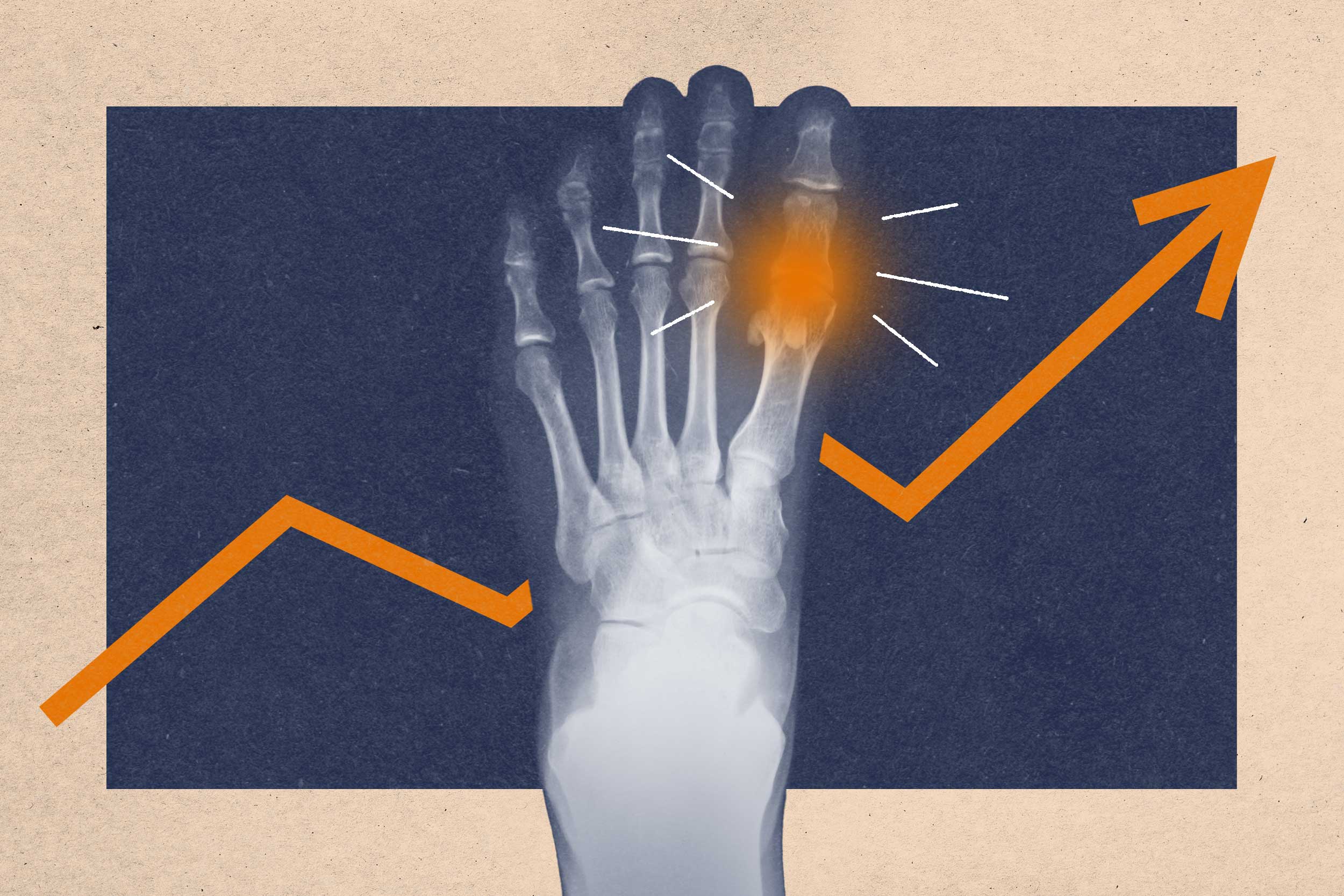
Once known as the “disease of kings,” gout is now affecting a broader segment of the population. This type of inflammatory arthritis, characterized by acute and severe pain often in the big toe, has seen a more than 20% increase in cases since 1990. Despite its growing prevalence, gout is often misunderstood as purely a lifestyle-related condition.
Malinda Whitlow, an associate professor at the University of Virginia’s School of Nursing, explains, “Gout is an inflammatory form of arthritis, which is unique because it’s an immune-mediated response to uric acid and sharp uric crystals that build up in and around the joints.” While the big toe is most commonly affected, other joints can also suffer, leading to intense pain and potential joint damage.
“Many people can’t even put shoes on because their big toe hurts so badly,” Whitlow noted. The pain can persist for weeks, and over time, the buildup of urate crystals can cause permanent joint deformity and reduced mobility.
Uric acid, which comes from breaking down purines found in foods like red meat, beer, and certain vegetables, has traditionally linked gout with dietary choices and alcohol consumption. However, current medical understanding recognizes it as a complex condition also influenced by genetic factors, kidney health, medications, and other health issues, affecting people across various lifestyles and economic backgrounds.
Whitlow emphasizes that a rich diet or excessive drinking is not a prerequisite for developing gout. Even individuals with normal uric acid levels who experience sudden toe pain may be diagnosed with the condition. “You also start to see more gout with age. You start to see it more in people over 60 and in people with certain metabolic conditions, like high blood pressure, obesity, diabetes, and chronic kidney disease,” Whitlow added.
The aging American population may result in more cases of gout, especially as people with chronic diseases live longer. Staying hydrated is one preventive measure against gout or its flares. Whitlow advises, “Particularly as it gets warmer, when we start to complete a patient history, we’re looking at how much water people are drinking, especially if they have a chronic condition that puts them at risk.”
Some medications can also elevate the risk of gout. For instance, diuretics can hinder the kidneys’ ability to eliminate uric acid efficiently. Men are more frequently diagnosed with gout than women, partly due to estrogen’s protective role, which wanes after menopause, increasing susceptibility.
Read More Here








![Robert Harmon Celebrates 99th Birthday at UVA’s Homecomings Weekend[embed]https://www.youtube.com/watch?v=c_VPFnE8x-w[/embed]](https://realnewsfast.com/wp-content/uploads/2026/10/Robert-Harmon-Celebrates-99th-Birthday-at-UVAs-Homecomings-Weekendembedhttpswwwyoutubecomwatchvc_VPFnE8x-wembed-300x200.jpg "Robert Harmon Celebrates 99th Birthday at UVA’s Homecomings Weekend[embed]https://www.youtube.com/watch?v=c_VPFnE8x-w[/embed]")
![Environmental Opera “Auksalaq” Opens UVA’s Arts on the Hill Series[embed]https://www.youtube.com/watch?v=PjYuP9wh3Hw[/embed]](https://realnewsfast.com/wp-content/uploads/2026/10/Environmental-Opera-Auksalaq-Opens-UVAs-Arts-on-the-Hill-SeriesembedhttpswwwyoutubecomwatchvPjYuP9wh3Hwembed-300x200.jpg "Environmental Opera “Auksalaq” Opens UVA’s Arts on the Hill Series[embed]https://www.youtube.com/watch?v=PjYuP9wh3Hw[/embed]")
![New documentary explores Elizabeth Holmes’ final days before prison[embed]https://www.youtube.com/watch?v=GGJSRFWALTI[/embed]](https://realnewsfast.com/wp-content/uploads/2026/10/New-documentary-explores-Elizabeth-Holmes-final-days-before-prisonembedhttpswwwyoutubecomwatchvGGJSRFWALTIembed-300x200.jpg "New documentary explores Elizabeth Holmes’ final days before prison[embed]https://www.youtube.com/watch?v=GGJSRFWALTI[/embed]")