
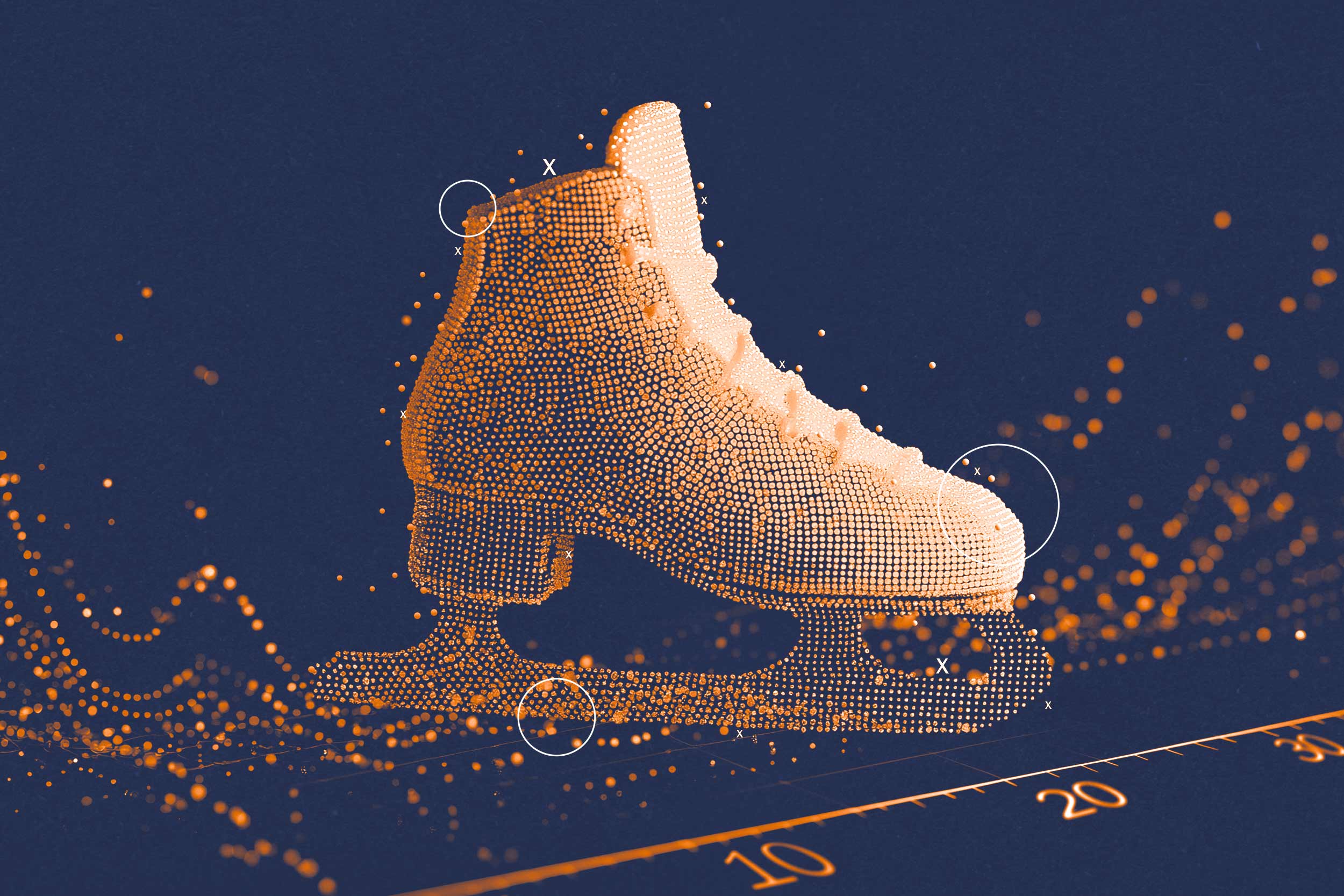
As the world of sports continues to embrace technology, two recent University of Virginia graduates are at the forefront of this innovation with their creation, OOFSkate. This AI-driven tool is revolutionizing the way figure skating performances are analyzed, offering insights into the intricate details of this graceful sport.
“My research adviser at UVA, (mathematics professor) Ken Ono, he was the one that got me into sports analytics,” said Lu, one of the creators of the tool. Ono, who gained fame through a Super Bowl ad for Miller beer (view ad), has significantly influenced Lu’s career. Together, they have worked on enhancing the performance of UVA’s top swimmers, including Gretchen Walsh and Kate Douglass, as highlighted by NBC Sports (watch video).
When an opportunity arose to assist NBC with the Olympics, Lu immediately thought of his former roommate, Blindenbach, who shared his passion for sports technology. “I mean, we love sports, and I know Jacob is very passionate about building these types of technology for sports teams,” Lu remarked.
Figure Skating: A New Frontier
Blindenbach explained the motivation behind OOFSkate: “(NBC) wanted to make the sport more understandable to the general audience. It’s figure skating. When you watch it on TV, it’s so elegant and graceful. It is difficult to know how many hours of training it took to look effortless; exactly how difficult it is to spin so quickly when they’re in the air.”
The duo’s first collaboration with NBC took place in Wichita, Kansas, at the U.S. Figure Skating Championships in January 2025. Since then, their tool has gained valuable insights from Olympic gold medalist Tara Lipinski, two-time Olympian Johnny Weir, and seasoned NBC announcer Terry Gannon, who will lend their expertise during the upcoming competitions in Italy.
OOFSkate employs a sophisticated AI algorithm capable of analyzing video footage from multiple angles. It provides real-time performance data for skaters like Team USA’s Malinin, aiding in judging, artistry, execution, and overall evaluation. Lu described the process: “The first AI algorithm that we run is called a ‘pose estimation’ algorithm that basically gives 3D points of all the limbs on their body.” This data is used to create a “digital twin reconstruction,” allowing for detailed analysis of the skater’s movements.
The tool evaluates joint movements, calculates spin speed, peak rotation, and airtime. With additional camera inputs, it can also measure jump distance and speed transitions. Lu and Blindenbach are currently in Italy, collaborating with NBC to provide live support for Lipinski, Weir, and Gannon as they cover the 25th Winter Olympic Games.
Read More Here




![Robert Harmon Celebrates 99th Birthday at UVA’s Homecomings Weekend[embed]https://www.youtube.com/watch?v=c_VPFnE8x-w[/embed]](https://realnewsfast.com/wp-content/uploads/2026/10/Robert-Harmon-Celebrates-99th-Birthday-at-UVAs-Homecomings-Weekendembedhttpswwwyoutubecomwatchvc_VPFnE8x-wembed-300x200.jpg "Robert Harmon Celebrates 99th Birthday at UVA’s Homecomings Weekend[embed]https://www.youtube.com/watch?v=c_VPFnE8x-w[/embed]")
![Environmental Opera “Auksalaq” Opens UVA’s Arts on the Hill Series[embed]https://www.youtube.com/watch?v=PjYuP9wh3Hw[/embed]](https://realnewsfast.com/wp-content/uploads/2026/10/Environmental-Opera-Auksalaq-Opens-UVAs-Arts-on-the-Hill-SeriesembedhttpswwwyoutubecomwatchvPjYuP9wh3Hwembed-300x200.jpg "Environmental Opera “Auksalaq” Opens UVA’s Arts on the Hill Series[embed]https://www.youtube.com/watch?v=PjYuP9wh3Hw[/embed]")
![New documentary explores Elizabeth Holmes’ final days before prison[embed]https://www.youtube.com/watch?v=GGJSRFWALTI[/embed]](https://realnewsfast.com/wp-content/uploads/2026/10/New-documentary-explores-Elizabeth-Holmes-final-days-before-prisonembedhttpswwwyoutubecomwatchvGGJSRFWALTIembed-300x200.jpg "New documentary explores Elizabeth Holmes’ final days before prison[embed]https://www.youtube.com/watch?v=GGJSRFWALTI[/embed]")