
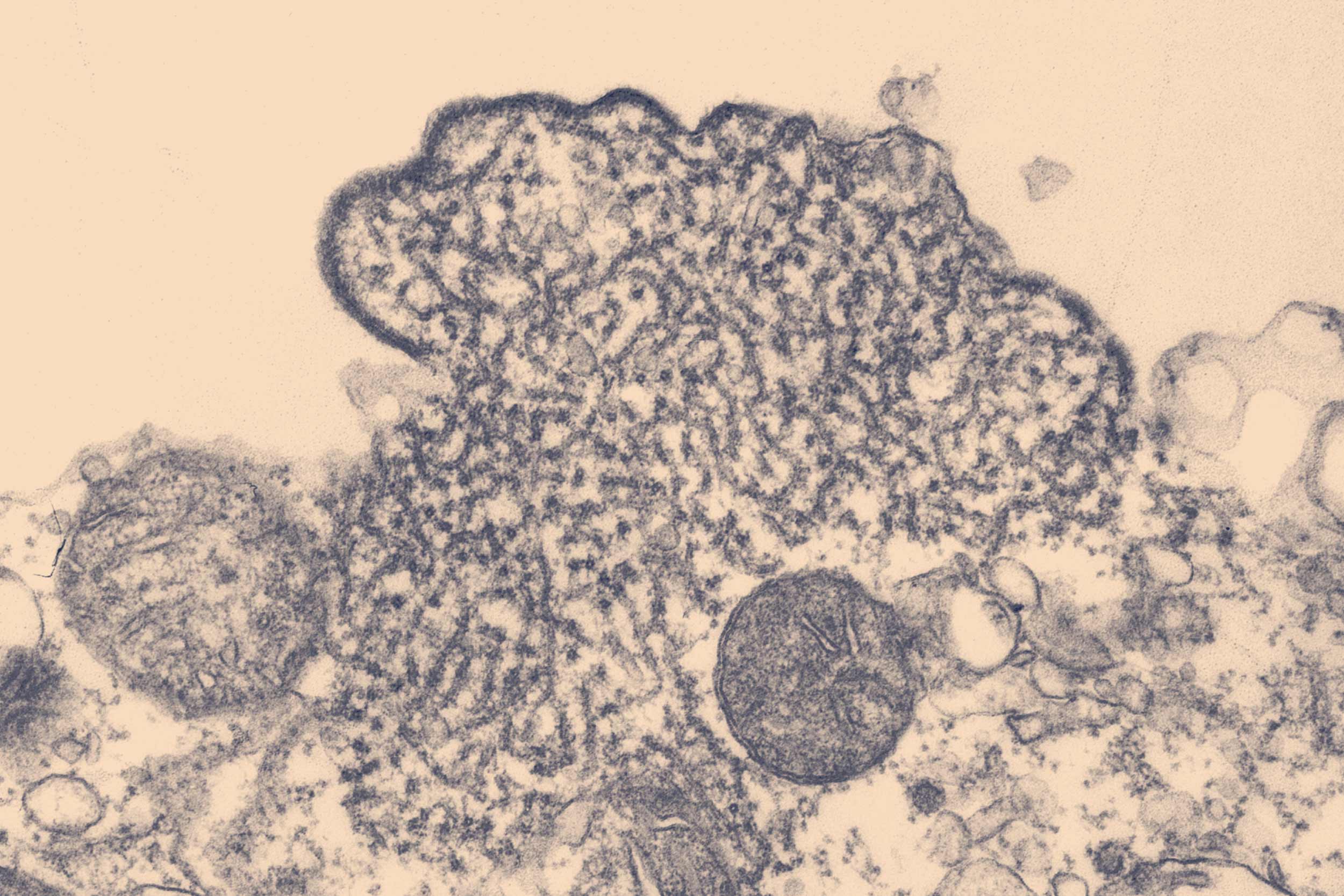
In a significant health development, Indian officials have successfully contained a potential outbreak of a bat-borne virus known for its high mortality rate and lack of an approved vaccine or cure. The Nipah virus, with a fatality rate ranging from 40% to 75%, has prompted several Asian countries to implement stringent screening protocols, such as temperature checks at airports, to curb its spread.
The World Health Organization identifies the Nipah virus as a zoonotic virus, primarily transmitted from animals like fruit bats and pigs to humans, as well as via human-to-human contact.
UVA Today reached out to Dr. William Petri, a leading infectious disease and international health expert at the University of Virginia, to gain further insights into the Nipah virus. Dr. Petri holds the position of Wade Hampton Frost Professor of Medicine and serves as vice chair for research in the Department of Medicine.
Understanding the Origins of the Nipah Virus
Dr. Petri offers an intriguing reference to popular culture by noting, “Nipah killed the character Gwyneth Paltrow was playing in the movie ‘Contagion!'” The Nipah virus, an RNA virus akin to COVID-19, shares similarities with rabies and Ebola.
In Bangladesh, where Dr. Petri conducts research on maternal and child health, the virus is endemic. It is often contracted through the consumption of raw date palm sap, which resembles maple syrup. Unlike maple syrup, it is harvested by cutting the fruit stalks of the tree.
Fruit bats serve as the primary reservoir for the Nipah virus. These bats contaminate date palm sap with their feces, saliva, or urine while feeding on it. Within a week of consuming the contaminated sap, infected individuals experience fever and flu-like symptoms, followed by headache and confusion as the virus attacks the brain, leading to encephalitis. In more than half of the cases, this results in coma and death.
The Deadly Nature of Nipah
The danger of Nipah lies in its ability to infect and replicate in a variety of cells by exploiting ephrin receptors, which play a role in cell movement. Once inside the body, Nipah affects epithelial cells in the lung airways, endothelial cells lining blood vessels, and neurons, contributing to its high lethality.
Read More Here






![Robert Harmon Celebrates 99th Birthday at UVA’s Homecomings Weekend[embed]https://www.youtube.com/watch?v=c_VPFnE8x-w[/embed]](https://realnewsfast.com/wp-content/uploads/2026/10/Robert-Harmon-Celebrates-99th-Birthday-at-UVAs-Homecomings-Weekendembedhttpswwwyoutubecomwatchvc_VPFnE8x-wembed-300x200.jpg "Robert Harmon Celebrates 99th Birthday at UVA’s Homecomings Weekend[embed]https://www.youtube.com/watch?v=c_VPFnE8x-w[/embed]")
![Environmental Opera “Auksalaq” Opens UVA’s Arts on the Hill Series[embed]https://www.youtube.com/watch?v=PjYuP9wh3Hw[/embed]](https://realnewsfast.com/wp-content/uploads/2026/10/Environmental-Opera-Auksalaq-Opens-UVAs-Arts-on-the-Hill-SeriesembedhttpswwwyoutubecomwatchvPjYuP9wh3Hwembed-300x200.jpg "Environmental Opera “Auksalaq” Opens UVA’s Arts on the Hill Series[embed]https://www.youtube.com/watch?v=PjYuP9wh3Hw[/embed]")
![New documentary explores Elizabeth Holmes’ final days before prison[embed]https://www.youtube.com/watch?v=GGJSRFWALTI[/embed]](https://realnewsfast.com/wp-content/uploads/2026/10/New-documentary-explores-Elizabeth-Holmes-final-days-before-prisonembedhttpswwwyoutubecomwatchvGGJSRFWALTIembed-300x200.jpg "New documentary explores Elizabeth Holmes’ final days before prison[embed]https://www.youtube.com/watch?v=GGJSRFWALTI[/embed]")