
A Glimpse into the Construction and History of the McIntire Amphitheater
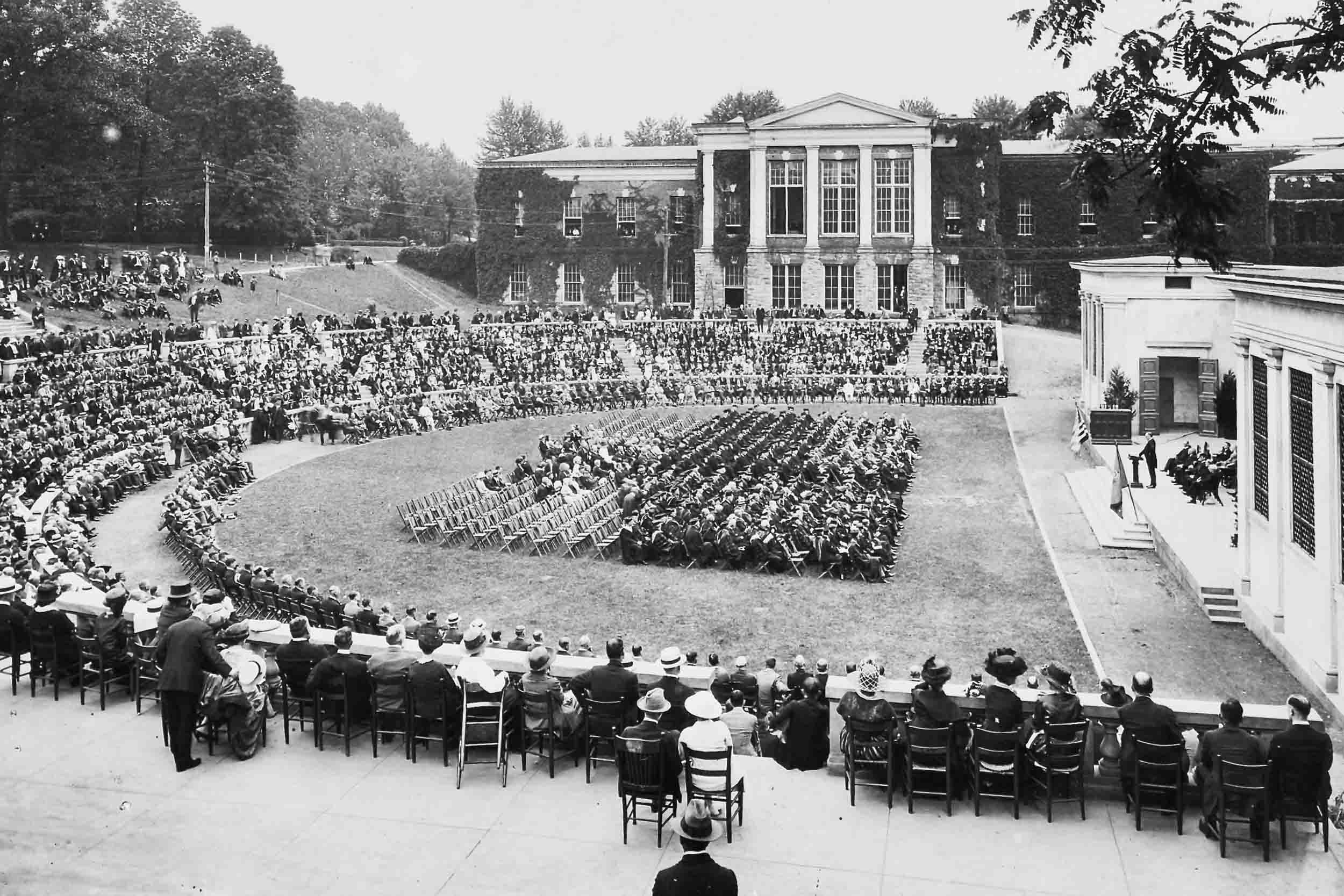
The McIntire Amphitheater, a historic venue on the University of Virginia’s campus, boasts a unique construction style reminiscent of a bygone era. Built in 1921 using terra cotta blocks, it showcases intriguing construction techniques that predate modern standardizations. These blocks, similar to today’s concrete blocks, were either filled with a cement/lime mixture or left hollow, with some incorporating reinforcing bars or “rebar” for added stability. The amphitheater’s plaster was applied directly to these blocks.
Moses, who has studied the amphitheater’s construction, remarked on the distinctiveness of the building’s materials. “We were in a very interesting construction technology era when the amphitheater was built. It is a time before standardization of rebar, which means that the metal connections and square rebar we find especially interesting. Terra cotta is also not a common building material we see around the University,” she noted.
The Genesis and Evolution of the Amphitheater
The amphitheater was a gift to the University, funded by Charlottesville philanthropist Paul Goodloe McIntire, who donated $85,000—equivalent to about $1.5 million today. Completed in 1921, it was inaugurated during the University’s centenary celebrations, a year delayed by World War I. Initially, the amphitheater hosted theatrical and musical performances and featured a large pipe organ. It was also the site of commencement ceremonies until the 1940s, when these events transitioned to the Lawn.
Despite its initial prominence, the venue experienced neglect by the mid-20th century. In 1967, the grassy area in front of the stage was paved to meet the University’s parking demands, triggering a backlash within the community. The grassy space was restored in 1973.
Plans for Transformation and Continued Use
In the years following, proposals emerged to replace the amphitheater with a rare books library, complete with an underground parking facility, but these plans were abandoned due to an economic downturn in the mid-1970s.
Today, the amphitheater remains a cherished venue. Moses expressed surprise at its frequent use, stating, “What I hadn’t realized were the daily activities. When we took the building offline for events, I would get lists of who wanted to use it. I hadn’t truly appreciated how much the community uses this facility, let alone just the classes that pop out during the day.”
Read More Here





![Robert Harmon Celebrates 99th Birthday at UVA’s Homecomings Weekend[embed]https://www.youtube.com/watch?v=c_VPFnE8x-w[/embed]](https://realnewsfast.com/wp-content/uploads/2026/10/Robert-Harmon-Celebrates-99th-Birthday-at-UVAs-Homecomings-Weekendembedhttpswwwyoutubecomwatchvc_VPFnE8x-wembed-300x200.jpg "Robert Harmon Celebrates 99th Birthday at UVA’s Homecomings Weekend[embed]https://www.youtube.com/watch?v=c_VPFnE8x-w[/embed]")
![Environmental Opera “Auksalaq” Opens UVA’s Arts on the Hill Series[embed]https://www.youtube.com/watch?v=PjYuP9wh3Hw[/embed]](https://realnewsfast.com/wp-content/uploads/2026/10/Environmental-Opera-Auksalaq-Opens-UVAs-Arts-on-the-Hill-SeriesembedhttpswwwyoutubecomwatchvPjYuP9wh3Hwembed-300x200.jpg "Environmental Opera “Auksalaq” Opens UVA’s Arts on the Hill Series[embed]https://www.youtube.com/watch?v=PjYuP9wh3Hw[/embed]")
![New documentary explores Elizabeth Holmes’ final days before prison[embed]https://www.youtube.com/watch?v=GGJSRFWALTI[/embed]](https://realnewsfast.com/wp-content/uploads/2026/10/New-documentary-explores-Elizabeth-Holmes-final-days-before-prisonembedhttpswwwyoutubecomwatchvGGJSRFWALTIembed-300x200.jpg "New documentary explores Elizabeth Holmes’ final days before prison[embed]https://www.youtube.com/watch?v=GGJSRFWALTI[/embed]")