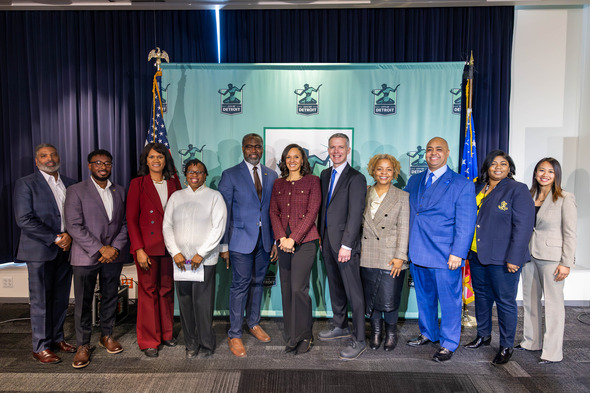
Detroit’s New Strategy to Tackle Poverty and Improve Health Services
In a significant move to reshape how essential services are provided to the city’s most vulnerable, Mayor Mary Sheffield announced a comprehensive reorganization plan aimed at tackling poverty and improving the quality of life for Detroit residents. This initiative will centralize critical health, social, and supportive services under the direction of Luke Shaefer, Ph.D., a noted expert in poverty solutions.
The restructuring will position Luke Shaefer as Detroit’s inaugural Chief Executive of Health, Human Services, and Poverty Solutions. He will oversee the Detroit Health Department, the Office of Immigrant Affairs and Economic Inclusion, and the newly established Department of Human, Homeless and Family Services, which will be led by Benita R. Miller.
“Focusing on people and on poverty are the main goals of our administration and a promise we made to Detroiters throughout our campaign,” said Mayor Sheffield. “Detroit can’t reach its full potential if families are struggling just to meet their basic needs. This new structure allows us to confront poverty directly—by aligning health, human services and homelessness prevention around a single, coordinated strategy that puts residents first.”
The reorganization aims to consolidate the delivery of human services and homelessness response functions, which were formerly dispersed across various divisions. This integration is intended to create a more coordinated and resident-focused system. By adopting national best practices, the city hopes to address fundamental needs, reduce mental and physical health barriers, and collaboratively tackle the root causes of poverty.
The Department of Human, Homeless and Family Services will prioritize reducing barriers that prevent Detroiters, particularly families with children and those experiencing housing instability, from accessing essential support. The department will focus on uniting programs that address social determinants of health, coordinating homelessness prevention, and advancing a “no wrong door” approach to service navigation.
Linda Little, co-chair of the Health, Human Services, Homelessness & Poverty Solutions Committee, emphasized the importance of the new structure, stating, “The creation of this new department and leadership role reflects the Mayor’s commitment to acting on those recommendations quickly. Addressing poverty and its impact on health and housing is essential to improving outcomes for Detroit families, and this structure positions the city to do that work more effectively.”
Luke Shaefer’s Leadership and Vision
Luke Shaefer, a well-regarded authority on poverty and social policy, previously served as the Hermann and Amalie Kohn Professor of Social Policy at the University of Michigan’s Gerald R. Ford School of Public Policy. He is also the founding director of Poverty Solutions, a U-M initiative focused on preventing and alleviating poverty. His extensive experience includes advising on anti-poverty policy for the Michigan Department of Health and Human Services, contributing to programs that significantly reduced utility shut-offs and evictions.
Shaefer’s work, including his acclaimed book “$2.00 a Day: Living on Almost Nothing in America,” has been influential in shaping national policies like the expanded Child Tax Credit of 2021. As Chief of Health, Human Services, and Poverty Solutions, Shaefer will employ data and analysis to address social determinants of health and work closely with local universities to enhance city residents’ well-being.
“Poverty is the result of systems that fail to serve families as they should–but that means these systems can be reimagined and rebuilt to empower families to lead healthy and full lives.” said Luke Shaefer. “This role is about leveraging data, analysis, lived experience, and harnessing meaningful connections across city departments, universities, and every level of government to break down barriers and help Detroiters thrive. By aligning health, human services and homelessness prevention, Detroit is poised to set a national standard for cities striving to combat poverty and improve quality of life.”
Benita R. Miller’s Role in the New Department
A native of Detroit, Benita R. Miller brings nearly three decades of experience in child welfare reform and maternal health to her role as director of the new department. Her previous leadership roles in New York City and New Jersey underscore her commitment to family-centered systems. Miller emphasized the importance of a streamlined system, stating, “Families should not have to navigate a maze to get help. This new department is about building a system that centers dignity, trust and access. We can address real barriers Detroit families face and create pathways to stability, health and opportunity by listening to our communities and coordinating services more effectively.”
Through this comprehensive reorganization, Mayor Sheffield and her team aim to establish a unified, resident-centered approach to tackling poverty and enhancing the quality of life for all Detroiters.
Read More Here