
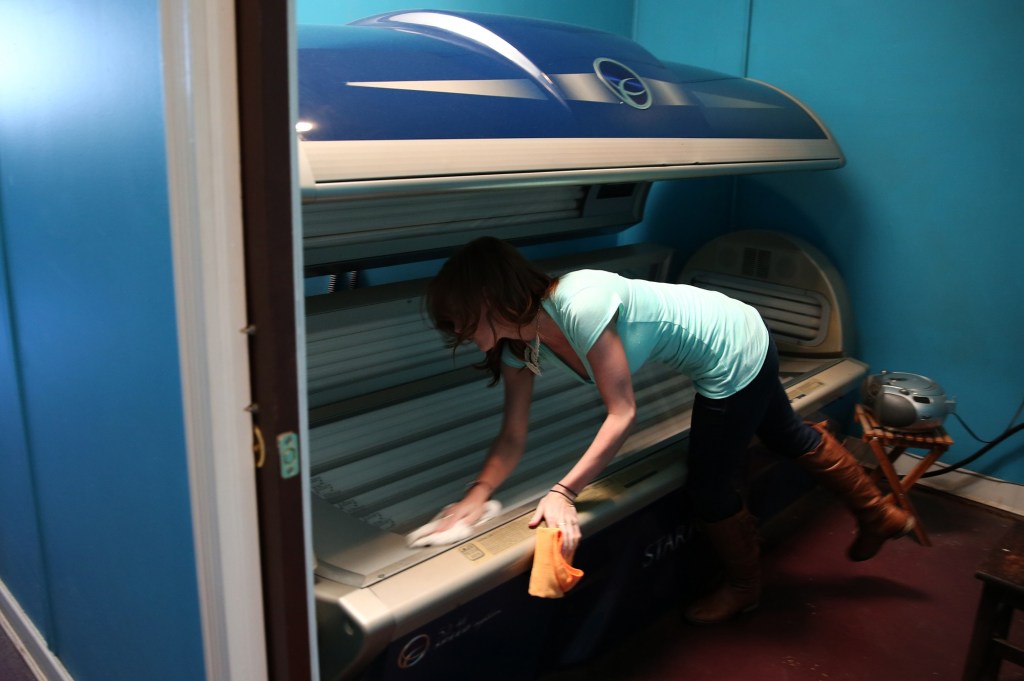
Tanning Beds Linked to Increased Melanoma Risk, New Study Reveals
While the cold weather in Illinois may push thoughts of tanning to the back burner, recent findings from Northwestern Medicine are putting the spotlight back on the dangers of tanning beds and their connection to skin cancer.
According to the study released in the journal Science Advances, individuals who frequently use tanning beds face nearly three times the risk of developing melanoma. The research also indicates that these users exhibit increased DNA damage in their skin cells.
Dr. Pedram Gerami, a key figure in skin cancer research at Northwestern University Feinberg School of Medicine, initiated the study after observing a significant number of younger female patients under 50 with recurring melanoma cases. Melanoma, although highly treatable when detected early, is recognized as the most lethal form of skin cancer.
“You’d see the common thread linking all these women was a history of tanning bed exposure,” said Gerami, who is also director of the Pigmented Lesion and Melanoma Clinic at Northwestern Medicine.
In collaboration with the University of California at San Francisco, Gerami and his team analyzed medical records from nearly 3,000 individuals who had used tanning beds at least ten times and a similar number of individuals who had never used them. The results revealed a 2.85-fold increased risk of melanoma for tanning bed users, even after factoring in age, sex, sunburn, and family history.
The study further explored DNA damage by examining skin samples from 27 individuals, including those with frequent tanning bed use and those at high risk for skin cancer without such exposure. Researchers employed advanced single-cell DNA sequencing on melanocytes, the pigment-producing skin cells.
The findings showed that skin cells from tanning bed users had nearly double the mutations compared to non-users, with a higher likelihood of melanoma-related mutations. “In the skin that looks normal in a tanning bed patient, you can find that their skin cells will have the DNA mutations that we know predispose (a person) to melanoma,” Gerami noted.
For many, like Heidi Tarr, the consequences of tanning bed use become apparent later in life. Tarr, a participant in the study, regularly used tanning beds during her high school and college years, believing it safer than sunburn. In 2011, she discovered a melanoma on her back, caught it early, and has since been cancer-free, though she must undergo biannual skin checks indefinitely.
“You think you’re getting a tan but what you don’t see is you’re damaging your skin cells, and that damage can lead to melanoma,” Tarr said. Motivated by her experience, she contributed to Gerami’s research to assist both the medical community and other patients.
Gerami advocates for stricter regulations on tanning bed use among minors and increased public awareness of the associated risks. Many states, including Illinois, already ban tanning bed use for individuals under 18. The U.S. Food and Drug Administration mandates warning labels on tanning beds, highlighting the risks and advising against use by minors.
The American Suntanning Association has voiced criticism of previous studies linking tanning beds to skin cancer, citing reliance on self-reported data and a lack of consideration for variables like responsible exposure. “We acknowledge that there are risks associated with overexposure to the sun and sunbeds, including skin cancer,” the association states on its website. “But it’s important that we keep these risks in perspective while determining public health policy decisions. Discussion of the nuance and critical confounding factors in the research isn’t happening yet.”
However, the American Academy of Dermatology stands firmly against indoor tanning, advocating for a prohibition on the production and sale of tanning equipment for nonmedical purposes.
Read More Here



![Robert Harmon Celebrates 99th Birthday at UVA’s Homecomings Weekend[embed]https://www.youtube.com/watch?v=c_VPFnE8x-w[/embed]](https://realnewsfast.com/wp-content/uploads/2026/10/Robert-Harmon-Celebrates-99th-Birthday-at-UVAs-Homecomings-Weekendembedhttpswwwyoutubecomwatchvc_VPFnE8x-wembed-300x200.jpg "Robert Harmon Celebrates 99th Birthday at UVA’s Homecomings Weekend[embed]https://www.youtube.com/watch?v=c_VPFnE8x-w[/embed]")
![Environmental Opera “Auksalaq” Opens UVA’s Arts on the Hill Series[embed]https://www.youtube.com/watch?v=PjYuP9wh3Hw[/embed]](https://realnewsfast.com/wp-content/uploads/2026/10/Environmental-Opera-Auksalaq-Opens-UVAs-Arts-on-the-Hill-SeriesembedhttpswwwyoutubecomwatchvPjYuP9wh3Hwembed-300x200.jpg "Environmental Opera “Auksalaq” Opens UVA’s Arts on the Hill Series[embed]https://www.youtube.com/watch?v=PjYuP9wh3Hw[/embed]")
![New documentary explores Elizabeth Holmes’ final days before prison[embed]https://www.youtube.com/watch?v=GGJSRFWALTI[/embed]](https://realnewsfast.com/wp-content/uploads/2026/10/New-documentary-explores-Elizabeth-Holmes-final-days-before-prisonembedhttpswwwyoutubecomwatchvGGJSRFWALTIembed-300x200.jpg "New documentary explores Elizabeth Holmes’ final days before prison[embed]https://www.youtube.com/watch?v=GGJSRFWALTI[/embed]")