
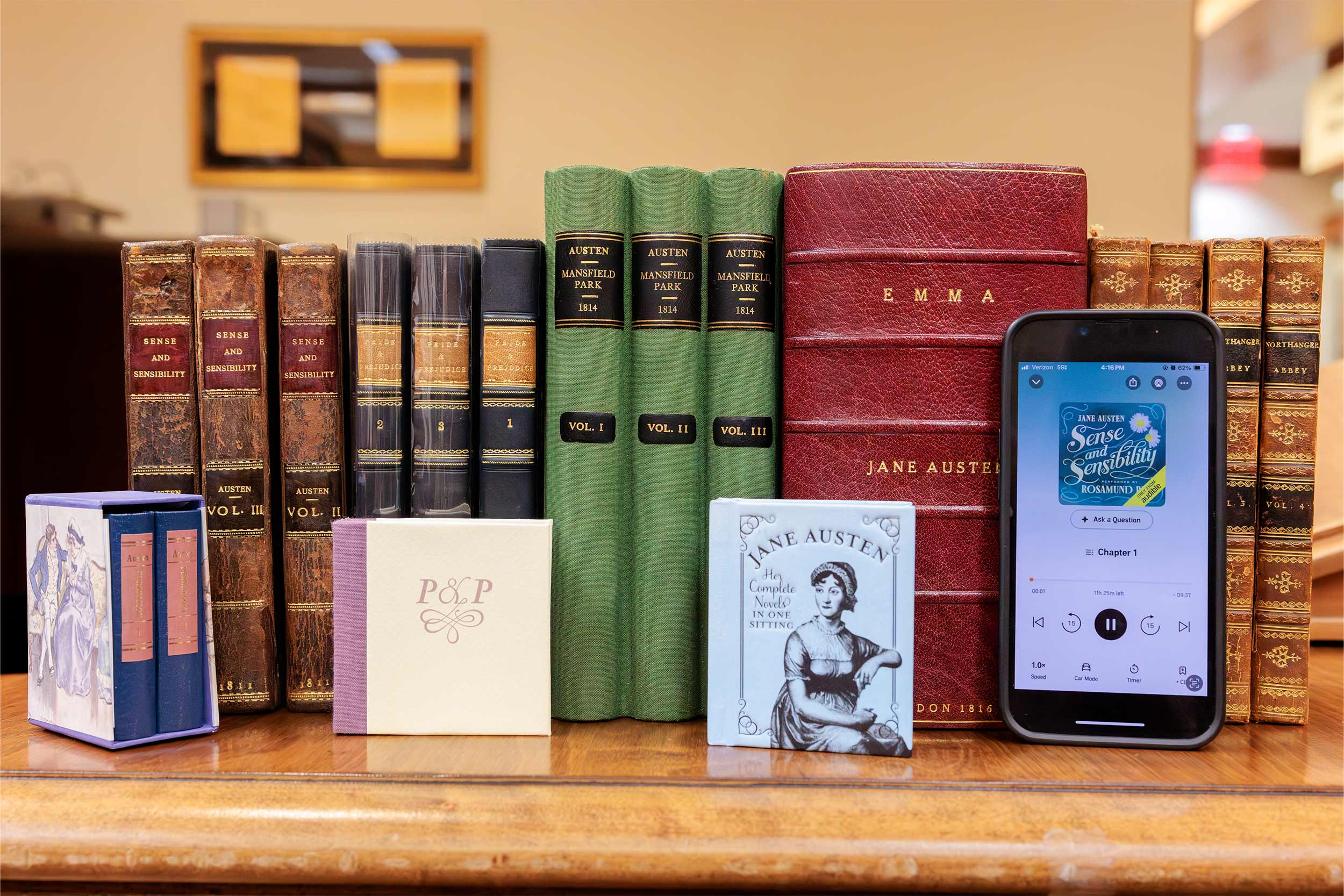
In the early 19th century, a military text printer named Thomas Egerton took a chance on a novel by an anonymous author, releasing “Sense and Sensibility” in 1811. The book, attributed only to “a lady,” was the first published work of Jane Austen, who would later become a cornerstone of English literature.
Today, Jane Austen is a household name, celebrated for her wit and keen observations on social manners. Her works, including “Sense and Sensibility,” have been adapted into numerous plays, films, and radio shows. Other titles like “Pride and Prejudice” and “Emma” have similarly inspired countless adaptations.
As fans worldwide honor what would be Austen’s 250th birthday with festivities such as Regency-style balls and visits to her former residence in Hampshire, England, her enduring influence is clear. “She was not wildly successful in her own time, but she wasn’t unsuccessful,” says Cristina Richieri Griffin, an assistant professor at the University of Virginia who specializes in Austen’s work. Griffin notes the unpredictability of Austen’s lasting fame, stating, “If you polled readers in the 1810s and asked them what author would be remembered 200 years later, they would not have said the author of ‘Sense and Sensibility.’”
The practice of publishing anonymously was not unusual in Austen’s era, although it was less common to reveal an author’s gender. “Sense and Sensibility” quickly sold out its initial print run of 750 copies, prompting a second edition two years later. Austen’s subsequent works prominently referenced “Pride and Prejudice,” released in 1813, which swiftly became her signature piece.
During her lifetime, Austen garnered a few notable admirers. Griffin highlights, “The Prince Regent read her novels and liked them well enough that she dedicated ‘Emma’ to him, but in a tongue-in-cheek way, since that novel is all about bad leadership.” This subtle nod to authority figures exemplifies the cleverness that continues to endear Austen to readers centuries later.
Read More Here






![Robert Harmon Celebrates 99th Birthday at UVA’s Homecomings Weekend[embed]https://www.youtube.com/watch?v=c_VPFnE8x-w[/embed]](https://realnewsfast.com/wp-content/uploads/2026/10/Robert-Harmon-Celebrates-99th-Birthday-at-UVAs-Homecomings-Weekendembedhttpswwwyoutubecomwatchvc_VPFnE8x-wembed-300x200.jpg "Robert Harmon Celebrates 99th Birthday at UVA’s Homecomings Weekend[embed]https://www.youtube.com/watch?v=c_VPFnE8x-w[/embed]")
![Environmental Opera “Auksalaq” Opens UVA’s Arts on the Hill Series[embed]https://www.youtube.com/watch?v=PjYuP9wh3Hw[/embed]](https://realnewsfast.com/wp-content/uploads/2026/10/Environmental-Opera-Auksalaq-Opens-UVAs-Arts-on-the-Hill-SeriesembedhttpswwwyoutubecomwatchvPjYuP9wh3Hwembed-300x200.jpg "Environmental Opera “Auksalaq” Opens UVA’s Arts on the Hill Series[embed]https://www.youtube.com/watch?v=PjYuP9wh3Hw[/embed]")
![New documentary explores Elizabeth Holmes’ final days before prison[embed]https://www.youtube.com/watch?v=GGJSRFWALTI[/embed]](https://realnewsfast.com/wp-content/uploads/2026/10/New-documentary-explores-Elizabeth-Holmes-final-days-before-prisonembedhttpswwwyoutubecomwatchvGGJSRFWALTIembed-300x200.jpg "New documentary explores Elizabeth Holmes’ final days before prison[embed]https://www.youtube.com/watch?v=GGJSRFWALTI[/embed]")