
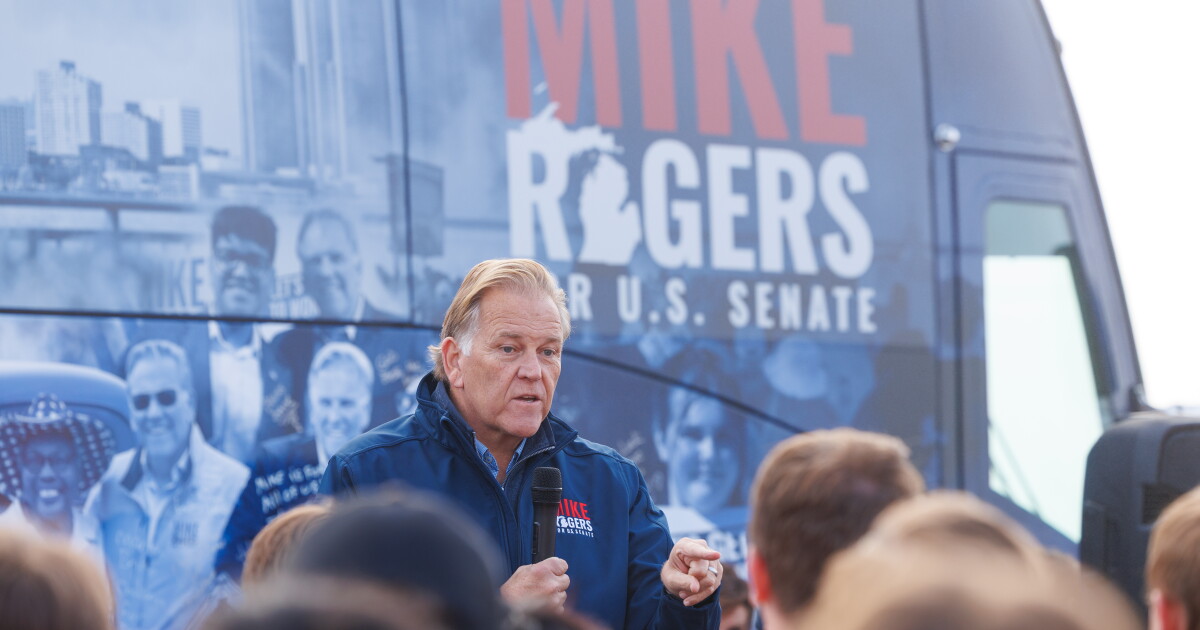
When a campaign knocks on more than 7 million doors, it’s not just a political strategy — it’s a massive operation that puts volunteers face-to-face with everyday voters who might otherwise never hear directly from a candidate. In Michigan’s 2026 midterms, that kind of ground-level outreach is shaping who gets contacted, who feels engaged, and ultimately who shows up to vote.
Republican U.S. Senate nominee Mike Rogers made that scale of voter contact central to his campaign’s closing argument when he appeared in Lansing Township on October 24 for a stop on his “We Have a State to Save” bus tour. Rogers told supporters that his campaign had already knocked more than 7 million doors — a figure he described as a record — and that volunteers were pushing toward an additional 500,000 doors in the final stretch before Election Day.
“We thought we better build a massive, mother of all ground games to get this thing done,” Rogers said.
Why Door-Knocking Matters for Voter Participation
Door-to-door canvassing is widely regarded by political scientists and campaign operatives as one of the most effective tools for reaching voters — particularly those who are infrequent voters or who may not be tuned in to campaign advertising. A volunteer showing up at someone’s door provides a personal, direct point of contact that can inform voters about where to vote, what’s on the ballot, and why their participation matters. At the scale Rogers is describing — millions of individual conversations — a ground game can meaningfully shift who ends up participating in an election.
The canvass kickoff in Lansing Township drew more than 200 college-age volunteers from 19 different states, according to organizers. Republican attorney general nominee Doug Lloyd noted the significance of young people driving the outreach effort.
“I get told all the time that ‘hey, the Republicans are just tired, they’re old, they don’t want to do anything,'” Lloyd said. “You guys are proving that wrong today.”
U.S. Rep. Tom Barrett, R-Charlotte, who joined Rogers at the event, framed the stakes in blunt terms, describing the mid-Michigan region as ground zero for the party’s midterm hopes.
“This is the battleground for America right here,” Barrett said.
State Races Take Center Stage
While federal races have drawn the most national attention in Michigan’s 2026 midterms, Republican gubernatorial nominee John James pushed back on that framing. He argued that this election should be judged as a referendum on state leadership — not federal — and encouraged volunteers to redirect voter conversations toward Michigan’s own record under Democratic governance.
James acknowledged that some voters are frustrated with high gas prices and other economic pressures, and that many want to direct that frustration at President Donald Trump. But he argued that other states operating under the same president are outperforming Michigan economically.
“Democrats need a boogeyman because they don’t have any solutions,” James said. “I mean, ‘orange man bad’ is not enough to make the next four years better.”
Gov. Gretchen Whitmer has led Michigan for eight years. Democratic gubernatorial nominee Jocelyn Benson previously served as secretary of state. Whitmer has pointed out that some Republican state lawmakers are running ads featuring photos with her — a sign, she argues, that the Democratic agenda holds broad appeal with voters.
Democrats Also on the Ground
Republicans are not the only ones investing heavily in direct voter contact. Democratic nominees Jocelyn Benson and U.S. Senate candidate Abdul El-Sayed are both conducting statewide bus tours, with affordability as a central message to Michigan voters. The dual mobilization on both sides reflects just how fiercely contested this election cycle is — and how much both parties believe that direct voter engagement in the final days can determine the outcome.
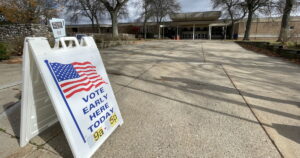
For voters across Michigan, the record-level canvassing from Republicans and the Democratic ground push alike mean one thing: more information, more contact, and more opportunities to make an informed choice before Election Day. Whether all of that activity translates into higher turnout — and greater participation in the democratic process — will become clear once the votes are counted.
For more on the candidates and issues shaping this election, follow Michigan politics coverage and subscribe to WCMU’s Weekly News Podcast, Between the Lakes, for in-depth local reporting. Related coverage includes fact checks and takeaways from Donald Trump’s recent Michigan appearance and former President Obama’s rally with El-Sayed and Benson in Detroit.



Comments are closed.