
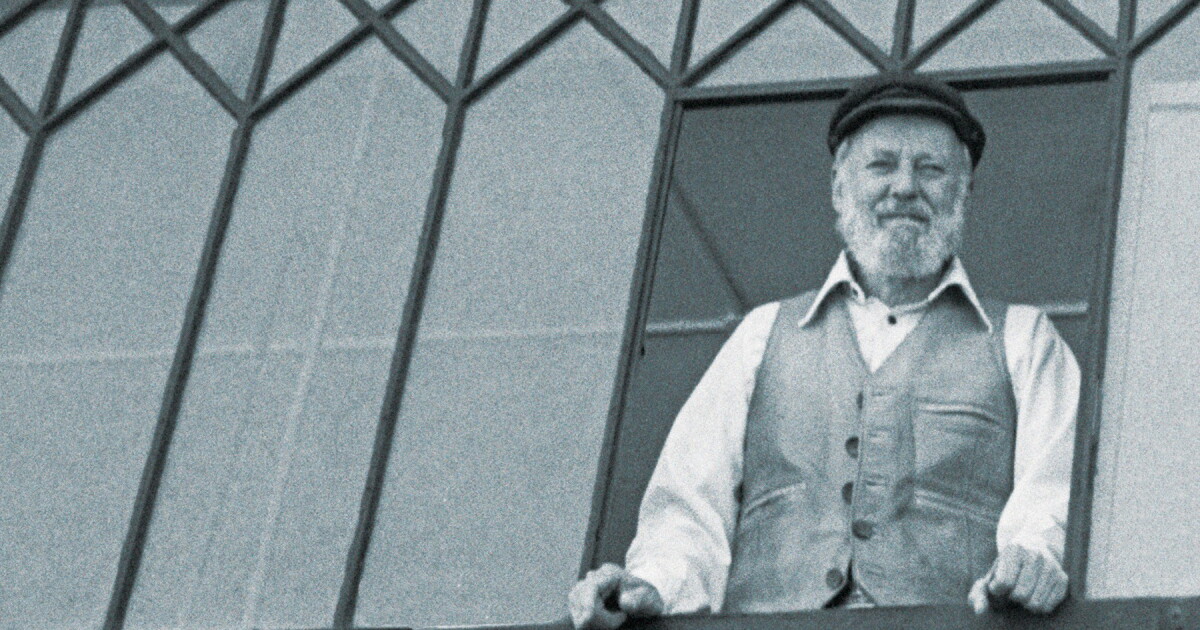
A single bookstore in San Francisco has shaped how Americans think about literature, community, and free expression for more than seven decades. Now, a Northern Arizona University professor has written the definitive account of how that happened.
Gioia Woods, a humanities professor at NAU, recently published City Lights: Lawrence Ferlinghetti and the Biography of a Bookstore, tracing the origins and lasting influence of one of the most iconic independent bookstores in the country. The book focuses on Lawrence Ferlinghetti — poet, painter, activist, and founder — who opened City Lights in San Francisco’s North Beach neighborhood in the early 1950s and launched City Lights Press in 1955. Woods spoke with KJZZ’s Mark Brodie about the store’s evolution and why it still matters today.
A Different Kind of Bookstore
When Ferlinghetti opened City Lights, American bookstores were a far cry from the welcoming spaces many readers know today. Woods described them as formal, even intimidating environments.
“In those days in the United States, bookstores were more like white-glove affairs. They were — you had to go in knowing what you wanted, and someone would pick a hardcover from the shelf.”
Ferlinghetti had a different vision, one shaped by his time studying in Paris at the Sorbonne after World War II. He wanted a place where people could browse freely, exchange ideas, and simply spend time. The response was immediate. According to Woods, when Ferlinghetti first opened City Lights, he couldn’t close the doors at closing time because people were so eager to be there.
The store was also all-paperback from the start — a deliberate choice. At the time, paperbacks carried a low cultural reputation, seen as something you read to pass time on a train. Ferlinghetti had grander ambitions. As Woods put it,
“Ferlinghetti turned the paperback into a tool of revolution, really an idea to put sort of radical ideas in people’s pockets.”
That philosophy led directly to the launch of the Pocket Poets Series through City Lights Press in 1955, which became one of the most influential poetry publishing ventures in American literary history.
A “Cultural First Responder”
Over the following decades, City Lights became something more than a retail space. Woods described the store as a kind of cultural barometer, adapting to meet the needs of the community through successive waves of social change.
“It’s sort of like a cultural first responder. It came to wherever the sort of cultural need was in the 1950s and ’60s with the stifling conformity of the Cold War; in the ’70s with the new ecology movement and the Vietnam War; in the ’80s and ’90s with Latin American intervention and the AIDS crisis, particularly ground zero in San Francisco. 9/11 and the advent of Islamophobia in the 21st century in the United States. So it became a place that stood for progressive values.”
The store’s global reach also set it apart. Ferlinghetti built relationships with writers, poets, translators, and artists around the world. Woods noted that in the 1970s, teenagers from then-Czechoslovakia were writing to him asking for copies of Allen Ginsberg’s latest poems. City Lights stocked books by Indian, Cuban, and Russian authors at a time when few other American bookstores did — something Woods described as a direct reflection of Ferlinghetti’s belief in a global literary avant-garde.
A Template for Independent Bookstores
Woods argued that City Lights didn’t just serve its local community — it helped reshape what bookstores across America could be. The store’s open, conversational atmosphere influenced not only independent shops but also major retail chains.
“His model of independent bookstore even influenced the superstores. When Waldenbooks came along and when Barnes & Noble came along, you probably remember that they had couches and even play sections for the kids. So the whole attitude about books, about books and bookstores and how they serve the community really changed. It wasn’t just for an elite audience. It was for everyone.”
That shift had real consequences for public access to literature and ideas. The more welcoming a bookstore feels, the broader the audience it reaches — and City Lights helped prove that point decades before it became industry standard.
A Personal Connection
For Woods, the story of City Lights is also personal. As a high school student in Los Angeles, she discovered a Ferlinghetti poem called “The Old Italians Dying” and felt an immediate connection. She described the experience as breaking through a long-held barrier she had with poetry — something she compared to math anxiety.
“I recognized my people in there, you know? And I thought, ‘Oh, my gosh, this is great,’ and I could understand it, and it spoke to me, and it moved me.”
Learning that Ferlinghetti also ran a bookstore in the Bay Area, she made her first trip to City Lights at age 16, shortly after getting her driver’s license — a long drive up from Los Angeles. She has been returning ever since, and she says the store’s core identity has remained consistent throughout.
One physical change she highlighted is the storefront banner series, developed in the early 21st century in response to crises like 9/11. The banners display poetry — by Ferlinghetti and others — across the building’s exterior, turning the storefront itself into a public literary statement. Woods described it as
“its own broadside, its own poem that’s recognized by the community.”
For more coverage of books and arts and culture, including stories like Hillary Frank’s new audiobook thriller Wedlocked, a mother’s memoir of grief and loss, Mesa’s new award-winning library, Melissa Dunmore’s writing on Puerto Rican identity, and sports romance novelist Ginger Scott’s move to mainstream publishing, visit The Show on KJZZ, a service of Rio Salado College and the Maricopa Community Colleges. You can also listen live, subscribe to newsletters, or support the station through Friends of Public Radio Arizona.









Comments are closed.