
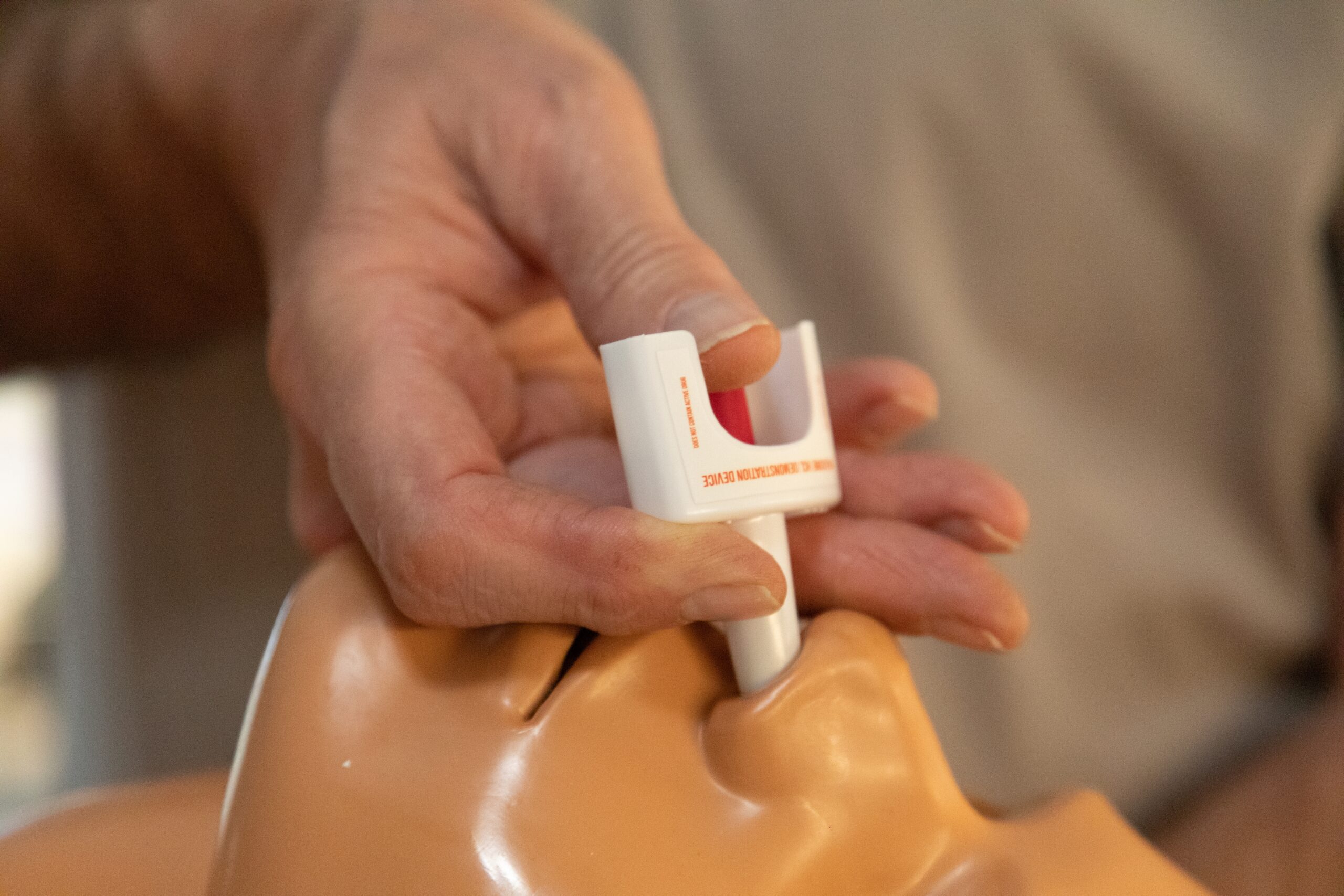
Amidst the ongoing opioid crisis, an innovative legislative approach in Arizona has shown promising results in increasing the availability of naloxone, a critical medication for reversing opioid overdoses. Since 2018, a state law has mandated that healthcare providers prescribing high doses of opioids must also prescribe naloxone, commonly known as Narcan. This measure aims to curb overdose deaths by ensuring wider access to this life-saving drug.
Research conducted by the University of Arizona, led by Professor James Cunningham from the Department of Family and Community Medicine, highlights the success of this initiative. The study reveals a significant rise in naloxone prescriptions among patients receiving high-dose opioids, demonstrating the law’s effectiveness.
The Ripple Effect of Arizona’s Law
The impact of the law extended beyond its immediate targets. “The increase wasn’t limited to patients covered by the law,” said Cunningham. “Naloxone prescribing also increased for patients receiving moderate doses of opioids. Pharmacists also sharply increased naloxone dispensing to patients who had opioid prescriptions but had not been prescribed naloxone, even though pharmacist dispensing wasn’t addressed by the law.”
As the National Institute on Drug Abuse reports, over 105,000 drug overdose deaths occurred in 2023, with opioids involved in more than 75% of these cases. The Centers for Disease Control endorses naloxone as a “life-saving medication,” effective in reversing overdoses in over 90% of cases.
Implemented in April 2018, Arizona’s law applies to patients prescribed more than 90 morphine milligram equivalents (MME) of opioids daily. Researchers, including Beth Meyerson from the College of Nursing and the Comprehensive Center for Pain and Addiction, analyzed data from the Arizona Controlled Substances Prescription Monitoring Program. This program tracks opioid prescriptions statewide, ensuring naloxone is not only prescribed but also dispensed.
Statistical Evidence of Success
Published in the American Journal of Preventive Medicine, the study found a 331% increase in naloxone coprescribing for patients receiving 90 to 119 MME per day and a 360% increase for those on at least 120 MME per day within the first two months of the law’s enactment. Although these numbers eventually declined, they remained significantly higher than pre-law levels.
Pharmacist involvement further boosted naloxone availability through statewide “standing orders,” allowing them to dispense the medication without individual prescriptions. This contributed to a 111% increase in naloxone dispensing across all opioid-dose categories, including low-dose patients.
By the close of 2022, naloxone coprescriptions rose to approximately 2.3 per 100 opioid prescriptions among patients receiving 90 to 119 MME per day and about 1.5 per 100 for those on at least 120 MME per day, compared to 0.5 per 100 before the law. However, the study notes that an optimal coprescribing level remains undetermined as not every opioid prescription requires a new naloxone prescription.
Ongoing Challenges and Future Research
Despite naloxone’s over-the-counter availability nationwide since March 2023, prescriptions still play a crucial role, especially for those who may struggle with the medication’s cost. A prescription can enable insurance coverage, often reducing naloxone’s price from $30 to $40.
The law also ensures naloxone stays prominent in clinical discussions. “You’re in the doctor’s office for 10, 15 minutes, and then you’re out the door,” Cunningham noted. “Clinicians have a lot of things competing for their attention, but the regulation helps keep naloxone in the conversation.”
Arizona’s approach has additionally reached individuals who might not access naloxone through community organizations, which often concentrate on illicit opioid use. “Community organizations are doing important work to provide naloxone to people who use opioids, but they often focus on illicit opioid use,” Cunningham said. “The coprescribing law helped provide naloxone to patients who might not have gotten it through community organizations.”
While the study does not establish a direct link between increased naloxone prescribing and reduced overdose deaths, further research is needed to explore this potential correlation. “Certainly, that’s the hope,” Cunningham expressed.
Read More Here





![Environmental Opera “Auksalaq” Opens UVA’s Arts on the Hill Series[embed]https://www.youtube.com/watch?v=PjYuP9wh3Hw[/embed]](https://realnewsfast.com/wp-content/uploads/2026/10/Environmental-Opera-Auksalaq-Opens-UVAs-Arts-on-the-Hill-SeriesembedhttpswwwyoutubecomwatchvPjYuP9wh3Hwembed-300x200.jpg "Environmental Opera “Auksalaq” Opens UVA’s Arts on the Hill Series[embed]https://www.youtube.com/watch?v=PjYuP9wh3Hw[/embed]")


![New documentary explores Elizabeth Holmes’ final days before prison[embed]https://www.youtube.com/watch?v=GGJSRFWALTI[/embed]](https://realnewsfast.com/wp-content/uploads/2026/10/New-documentary-explores-Elizabeth-Holmes-final-days-before-prisonembedhttpswwwyoutubecomwatchvGGJSRFWALTIembed-300x200.jpg "New documentary explores Elizabeth Holmes’ final days before prison[embed]https://www.youtube.com/watch?v=GGJSRFWALTI[/embed]")
Comments are closed.