
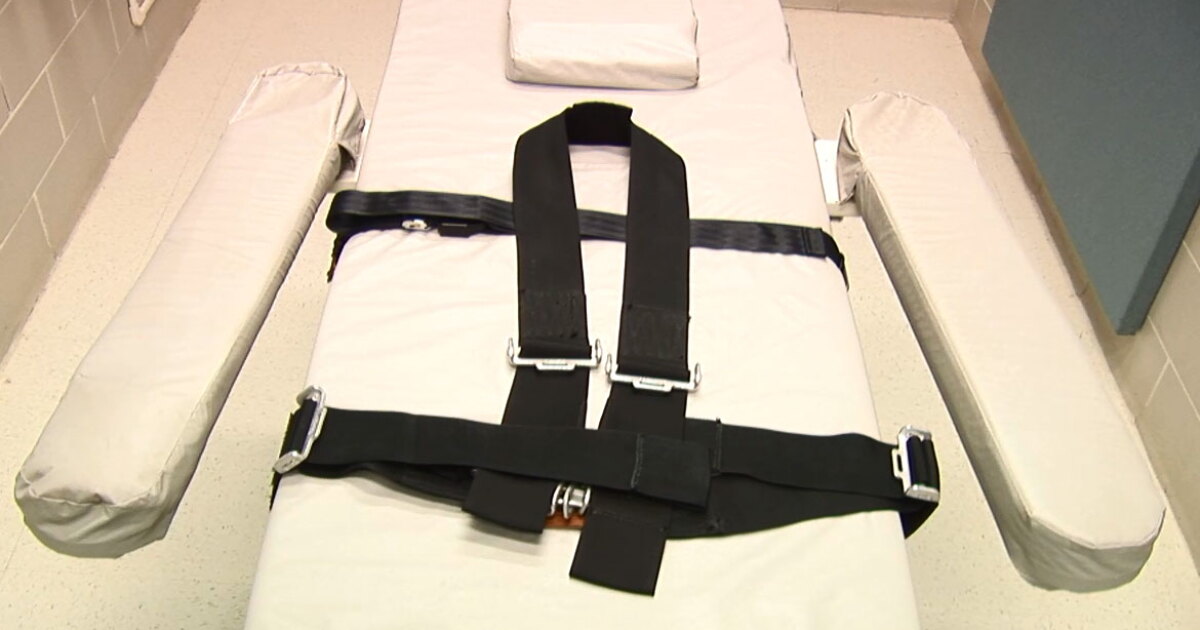
When a government institution ignores a person’s known medical conditions and proceeds with a procedure that causes prolonged suffering, it raises urgent questions about healthcare standards, medical oversight, and who bears responsibility when things go terribly wrong. Tennessee’s failed execution of Christa Pike — a convicted murderer who survived two doses of lethal drugs and was rushed to a hospital in critical condition — is a story not just about capital punishment, but about what happens when medical realities are dismissed by state officials.
The case has drawn renewed attention to a broader pattern of failures in how correctional systems handle medical care — a pattern with deep roots in Arizona, where KJZZ journalist Lauren Gilger recently explored the troubling connections between Tennessee’s botched execution and the state’s own complicated history on The Show.
A Preventable Medical Catastrophe
Pike’s attorneys had warned the court that she had compromised veins and a blood disease — documented medical conditions that any healthcare provider would treat as critical factors before administering intravenous drugs. The court allowed the execution to proceed anyway. Dale Baich, a former federal public defender and adjunct professor at ASU’s Sandra Day O’Connor College of Law who has witnessed 15 executions, said the outcome was entirely foreseeable.
“I was horrified when I heard the news. It was really predictable. Her lawyers brought to the court’s attention that she had compromised veins and that she had a blood disease. But the court allowed the execution to go forward. And as I said, the outcome was predictable.”
This is precisely the kind of failure that healthcare advocates and patient safety experts warn about when medical information is overridden by institutional decision-making. In any other healthcare setting, proceeding with an intravenous procedure on a patient with known vascular disease and compromised veins — without adjusting the protocol — would be considered a serious breach of medical standards.
The Arizona Connection: A Pattern of Ignored Medical Warnings
Tennessee’s botched execution is not an isolated incident — and one man connects both states’ failures. Frank Strada served as deputy director of the Arizona Department of Corrections from 2020 through 2022, where he was responsible for overseeing executions and assembling execution teams. He later became Tennessee’s top prison official before resigning in the wake of Pike’s case. Reporter Wayne Schutsky documented Strada’s Arizona ties and the overlapping problems that followed him from state to state.
Baich noted that during Arizona’s 2022 executions under Strada’s watch, two of the three carried out that year had significant IV access problems — the same medical issue that derailed Pike’s execution in Tennessee. And before Pike’s case, Tennessee’s team had already failed to obtain IV access for another scheduled execution.
“There’s a history of incompetence.”
Arizona’s most glaring example came in 2014, when the execution of Joseph Wood became the longest in U.S. history. Wood struggled and gasped for air for nearly two hours. Baich, who was present, described watching the prolonged suffering that resulted from officials dismissing medical and legal warnings — again, warnings that were predictive of exactly what occurred.
“The witnesses sat there and watched Joe gasp, gulp and struggle to breathe for over an hour and 40 minutes. And what we didn’t know was that the director ordered that additional doses of drugs be administered. In all, there were 15 doses of drugs that were administered during that execution. Again, that wasn’t allowed under the protocol.”
Ohio had used the same drug combination just months earlier, and that execution took 25 minutes. Those concerns, raised by Baich and others at the time, were dismissed.
Prison Healthcare Under the Microscope
The question of medical oversight in correctional facilities extends well beyond execution chambers. Just days before the Pike story broke, the U.S. Supreme Court rejected Arizona’s bid to block a court-ordered takeover of healthcare operations in its prisons. A federal court had found that Arizona had provided inadequate care to incarcerated people and had dragged its feet in making improvements. That ruling underscores a larger truth: when institutions are left to self-regulate healthcare, the most vulnerable people — those with the least power to advocate for themselves — frequently suffer the consequences.
These are real people with real medical conditions. Their access to adequate healthcare, even within prison walls, is a matter of basic human welfare. When those standards slip — whether in routine care or in clinical procedures carried out under court order — families bear the emotional and sometimes legal fallout.
A System-Wide Failure of Medical Accountability
Baich described the pattern as systemic, not limited to any one state. After Oklahoma’s botched execution of Clayton Lockett in 2014 and a subsequent execution using the wrong drug in 2015, a review was conducted — and largely ignored.
“What happens is a study is completed, the report is turned over, and the directors of the departments of corrections go on with their business. They don’t always follow the recommendations of the experts.”
This is a dynamic that healthcare policy advocates recognize immediately. Expert recommendations — whether from physicians, patient safety boards, or independent reviewers — are only meaningful if institutions are required to act on them. When they are treated as optional, preventable harm becomes inevitable.
The legal standard for challenging an execution method compounds the problem. According to Baich, it is not enough for a prisoner to present strong medical evidence that a method will cause severe or excruciating pain. The prisoner must also identify a feasible alternative and prove it would reduce risk — an almost impossible bar to clear.
“In practice, this is an extraordinarily difficult, almost impossible standard for a prisoner to meet. So in the case of Joe Wood, in the case of Christa Pike, the lawyers are putting on evidence, strong medical evidence, that there’s going to be pain, but that’s not enough.”
Shifting Public Opinion and Fewer Death Sentences
While these institutional failures tend to surface only when something visibly catastrophic occurs, public opinion on the death penalty has been shifting quietly for years. Polling shows that when Americans are asked whether they prefer the death penalty or life without parole, support for execution drops below 50%. Juries in Arizona and other states are handing down fewer death sentences — a trend Baich sees as meaningful evidence of changing values.
Alternatives like firing squads, which have been proposed in Arizona and implemented in states like South Carolina, are not without their own documented failures. In one South Carolina case, two shooters missed their target and the person took minutes to die while suffering.
Baich’s view is direct:
“In my view, the most humane way to carry out a death sentence is old age. Life without parole is a death sentence.”
As states continue wrestling with how — and whether — to carry out executions, the medical and healthcare dimensions of these decisions demand greater scrutiny. Independent experts and law enforcement oversight bodies have repeatedly identified the same problems. What remains missing is institutional accountability — the same accountability that patient safety advocates demand in every other healthcare setting. Related political pressures are also mounting: Wayne Schutsky has reported on the Arizona attorney general’s race, where criminal justice accountability has become a central campaign issue. Meanwhile, on the business side of healthcare fraud, reporter Connor Greenwall covered how a Yuma doctor was convicted in a $36 million Arizona Medicaid fraud scheme — another reminder of how institutional failures in healthcare carry real consequences for real people. And in a separate but connected story, the Arizona House speaker asked the DOJ to investigate Sunshine Residential pay-to-play allegations involving a residential care provider — underscoring just how far institutional accountability failures can reach into the lives of vulnerable people depending on the system for their care.










Comments are closed.