
Carnegie Mellon’s Robotics Expertise Shines at Global Conference
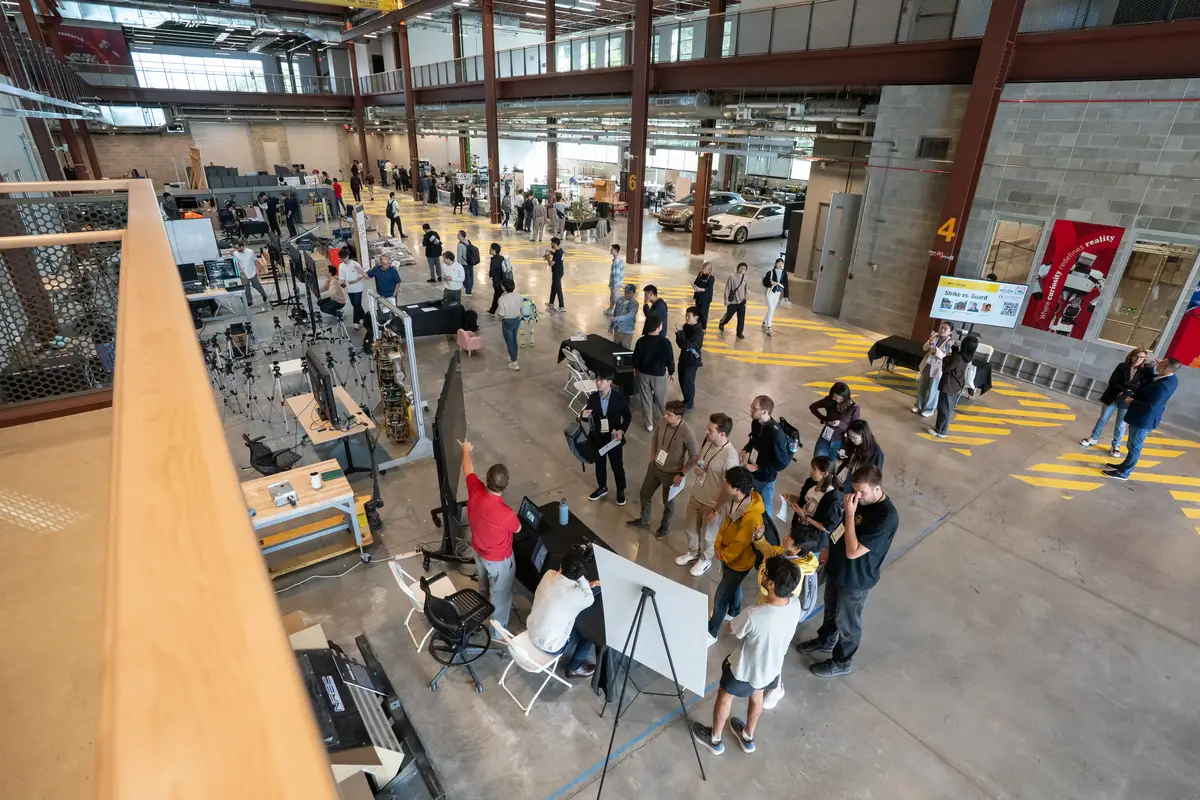
In an event that underscores Pittsburgh’s prominence in the world of robotics, the International Conference on Intelligent Robots and Systems (IROS) returned to the city after over two decades. This year’s conference, held at Carnegie Mellon University (CMU), showcased groundbreaking robotic innovations and offered attendees an immersive experience into the future of robotics.
Howie Choset, the Kaνčić-Moura Professor of Computer Science at CMU, served as the general chair for the event. He emphasized the significance of the conference tours designed to give visitors a firsthand look at the region’s expertise. “There are so many new things we are introducing to make a big conference feel small,” remarked Choset. “There truly will be something for everyone.”
Among the highlights was a demonstration by Choset’s Biorobotics Lab, which displayed several nature-inspired robotic creations, such as their snake robots used in underwater navigation and earthquake rescue operations in Venezuela.

Innovative Approaches to Everyday Robotics

Assistant Professor Alexandra Ion from the Human-Computer Interaction Institute shared her work on creating smart devices that integrate seamlessly into daily life, a concept she terms “unobtrusive intelligence.” Her Interactive Structures Lab focuses on developing devices like proactive robotic objects and wearable exoskeletons, which can infer user intent and assist dynamically.
“The current advances in robotics and the enthusiasm around it is exhilarating and it was exciting to showcase our contributions with a global audience of experts,” Ion said.
Additionally, the AirLab demonstrated the future of drone technology with autonomous flying robots capable of complex spatial navigation.

CMU’s undergraduates contributed to the event by introducing 26x, a student-built autonomous car capable of both driverless and human-driven control. This project represents the collaborative efforts of students across CMU’s schools, with each year’s cohort building on the previous one’s work.

Arya Lohia, a third-year engineering student and lead for the Carnegie Mellon Racing Autonomous Division, highlighted the importance of sharing their designs with attendees. “To be able to speak about our work to other people is a massive, massive opportunity,” Lohia stated. “Having people who are the best at what they do come to see our work from all over the world is just a fantastic experience.”

Recognized as one of the leading robotics gatherings, IROS attracted researchers and companies showcasing the latest advancements in the field. The conference’s return to Pittsburgh highlights the city’s status as a leader in robotics and dynamic physical systems. “The occurrence of large robotics conferences like IROS in Pittsburgh further cements Pittsburgh as a global hub for robotics with a vibrant and growing ecosystem of start-ups, research centers and talent,” said Jeff Legault, associate director at NREC.
The next IROS conference is set to take place in Florence, Italy, where CMU aims to maintain a strong presence.
Read More Here







Comments are closed.