
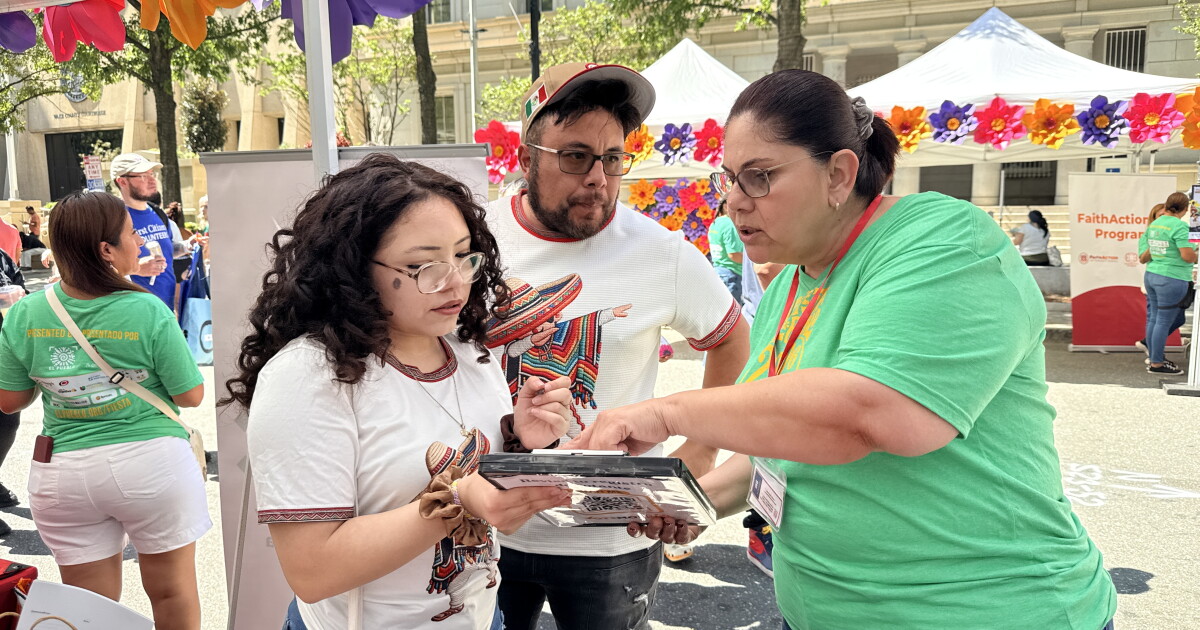
With the 2026 midterm elections just weeks away, immigrant communities across North Carolina are navigating a charged political environment — one where fear of immigration enforcement is shaping how some eligible voters think about going to the polls. Advocacy organizations are responding with concrete tools and resources designed to ensure that every eligible voter can cast their ballot without intimidation.
Groups like El Pueblo and N.C. Asian Americans Together (NCAAT) say they are hearing real anxiety from community members — anxiety rooted in the sharp increase in immigration arrests over the past two years. While President Donald Trump stated as recently as last Friday that immigration officers will not be deployed to polling locations — a practice that is prohibited under federal law — advocates say the fear is understandable and must be addressed head-on.
Alissa Lopez, a board volunteer at El Pueblo, put the stakes plainly:
“I think right now this political climate is making folks feel very disempowered in North Carolina and across the country, and (voting) is one of the key ways that people can exercise their power. (The current administration) is trying so hard to take away this power through intimidation and fearmongering tactics because we have a powerful voice.”
The concern is not abstract. Some North Carolina counties and municipalities have signed 287(g) agreements with ICE, which grant local police authority to enforce federal immigration law. The American Civil Liberties Union has mapped where these agreements are in effect — currently, none exist in the Triangle region, though agreements are more concentrated in rural parts of the state.
For voting rights organizations, the worry is straightforward: if eligible voters stay home out of fear, election outcomes could be affected. North Carolina is known for razor-thin margins in many of its races, making voter turnout from every community critical.
Chavi Khanna Koneru, executive director of NC Asian Americans Together, framed it this way:
“What we don’t want is for voters to not turn out to vote. We know, especially in North Carolina, the margins are so slim in some of these races. So every vote counts, and we need to make sure that everyone’s able to safely cast those votes.”
Multilingual Voter Hotlines
Both organizations are activating multilingual hotlines to help voters navigate the process. El Pueblo will launch its Spanish-language hotline on the first day of in-person early voting, Thursday, October 15. Voters can reach it at 1-888-VE-Y-VOTA (1-888-687-8683). The hotline is staffed by volunteers trained in North Carolina election law and is run in partnership with NALEO Education Fund, a national Latino civic engagement nonprofit.
NCAAT operates a voter hotline at 1-833-VOTE-NCAAT, available in nine languages including Chinese, Vietnamese, Korean, Hindi, and Urdu.
Poll Monitors at Polling Locations
NCAAT plans to station nonpartisan poll observers at three sites in Wake County, and one each in Mecklenburg, Cumberland, Orange, and Cabarrus counties — covering every day of in-person early voting through Election Day. The organization is also teaming up with Underwire, a local group of mothers focused on voter engagement.
Lopez noted that Democracy NC is offering vote protection training for volunteers who want to watch for unusual activity at polling sites. Both NCAAT and El Pueblo are also connected to organizations that track ICE activity, including Carolina Migrant Network and Siembra NC. If there is any suspected immigration enforcement presence near polling locations, these networks will be activated.
Help with Absentee and Mail-In Voting
Mail-in voting is especially important for North Carolina’s Asian American community. Data shows that Asian voters in North Carolina choose vote-by-mail at higher rates than other racial groups in the state. To help, NCAAT is hosting webinars and clinics explaining the rules — including newer requirements, such as ensuring the inner envelope is fully sealed before submission to the N.C. Board of Elections.
NCAAT is also among the organizations that have filed suit to block recently approved absentee ballot guidelines from the N.C. Board of Elections, arguing the new rules could prevent mail-in voters from having their ballots counted.
For Spanish-language assistance with absentee and mail-in voting, El Pueblo’s Lopez points voters to votemosnc.com.
The efforts reflect a broader reality in American elections: when eligible voters feel unsafe or uncertain about the process, they may not show up — and that silence has real consequences for democratic representation. Advocacy groups in North Carolina are working to make sure fear does not determine who gets heard at the ballot box.






Comments are closed.