
The unpredictability of pandemics continues to challenge the global community, but efforts are underway to bring more certainty to the dynamics of disease spread. An epidemiologist from Northern Arizona University is at the forefront of this initiative, contributing to an international collaboration aimed at enhancing disease forecasting.
Efforts by Spencer Fox
Spencer Fox, an assistant professor affiliated with the School of Informatics, Computing, and Cyber Systems, applies mathematical and statistical models to forecast the behavior of diseases such as COVID-19, influenza, Ebola, and Zika. With over a decade of experience in predicting influenza trends in the United States, Fox has recently extended his expertise globally, focusing on training public health personnel in South America and India to better predict seasonal epidemics and emerging health threats.
Real-time disease forecasting holds the potential to revolutionize public health responses by providing early warnings of infection surges, akin to weather predictions. Despite its promise, the field of infectious disease forecasting is still developing, with researchers facing challenges in accurately predicting seasonal diseases such as influenza.
“If we can’t reliably forecast an influenza epidemic that we see every year, how can we be ready to forecast the course of the next pandemic?” Fox emphasized.
Fox is working to refine his models by testing them in regions where such forecasting is not commonly performed, ranging from individual U.S. communities to countries in the Southern Hemisphere. The aim is to empower public health officials with forecasts that can enhance and save lives within their communities.
Localized Forecasting Initiatives
During the COVID-19 pandemic, Fox and his colleagues observed that broad national and state-level forecasts were insufficient. Localized forecasts were necessary for public health officials to make informed decisions. This was evident during his collaboration with the City of Austin, where his team’s model enabled better anticipation of the city’s healthcare demands.
“Like the weather, disease patterns vary significantly from place to place,” Fox noted. “Public health decisions are made locally, so the forecasts need to be local too.”
In response, the CDC established the Center for Forecasting and Outbreak Analytics, subsequently launching InsightNet, a network that includes academic institutions and various public health agencies. Fox is part of epiENGAGE, an InsightNet member producing tailored forecasts for U.S. metropolitan regions.
Expanding Global Forecasting Capabilities
Historically, only a select few countries had the means to produce real-time disease forecasts. Fox has been pivotal in extending this capability by adapting his U.S. forecasting tools for broader use globally.

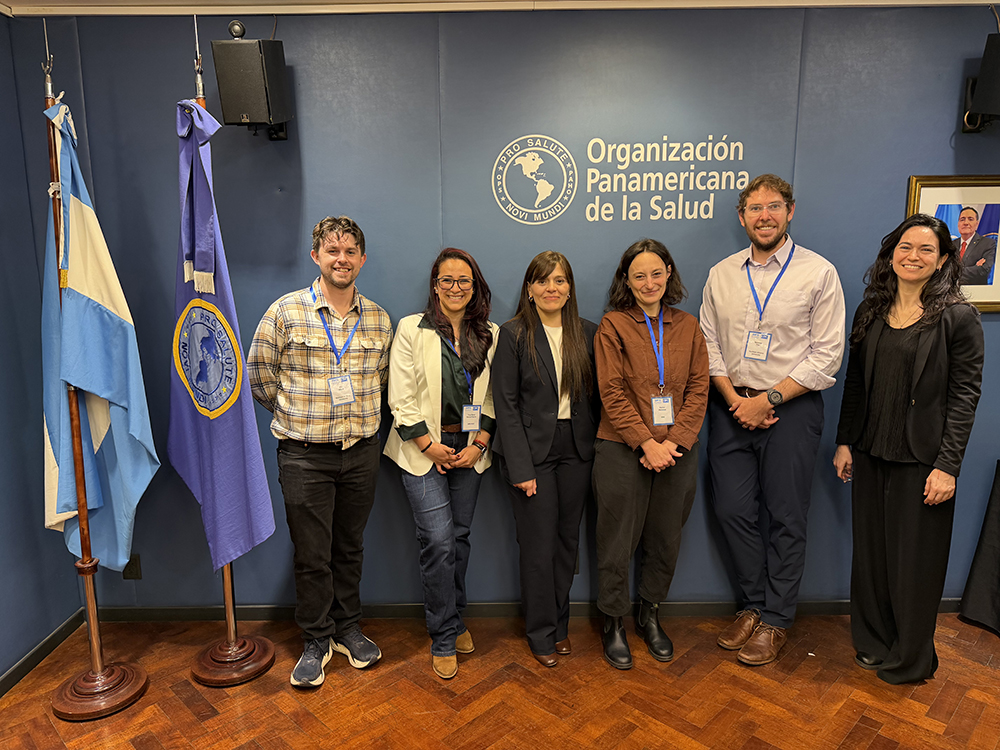
The initiative began with a pilot program in Paraguay, where Fox’s team demonstrated that U.S. influenza models could be adapted for real-time forecasts in the Southern Hemisphere. This year, Fox has been active in South America and India, training public health officials on respiratory disease forecasting techniques.
“A model that works here in the U.S may not work as well elsewhere,” Fox remarked. “Testing these tools across different countries and disease patterns pushes our models in new directions and ultimately helps us build better forecasts everywhere.”
Expanding forecasting abilities globally also enhances understanding of respiratory disease spread worldwide. With flu seasons occurring at different times across hemispheres, forecasts from one can inform preparations for the other.
Read about Fox’s work in Chile.
Future Pandemic Preparedness
Fox views his local and international forecasting endeavors as part of a broader mission: improving responses to seasonal epidemics while laying the groundwork for future pandemic preparedness.
“Every flu season gives us an opportunity to test our models, learn where they fail and make them better,” Fox stated. “That helps us respond better now, but it also helps us build the muscle we’ll need when the next pandemic arrives.”
His lab is currently working to integrate data from various diseases, locations, and scales into a cohesive forecasting framework.
“The goal I have for my lab over the next five years is to synthesize all of this data into a single forecasting framework that can make accurate predictions from the local to the global scale,” Fox explained. “We’re using machine learning and artificial intelligence approaches to help connect those different scales and learn from data collected around the world.”
Read More Here





Comments are closed.