
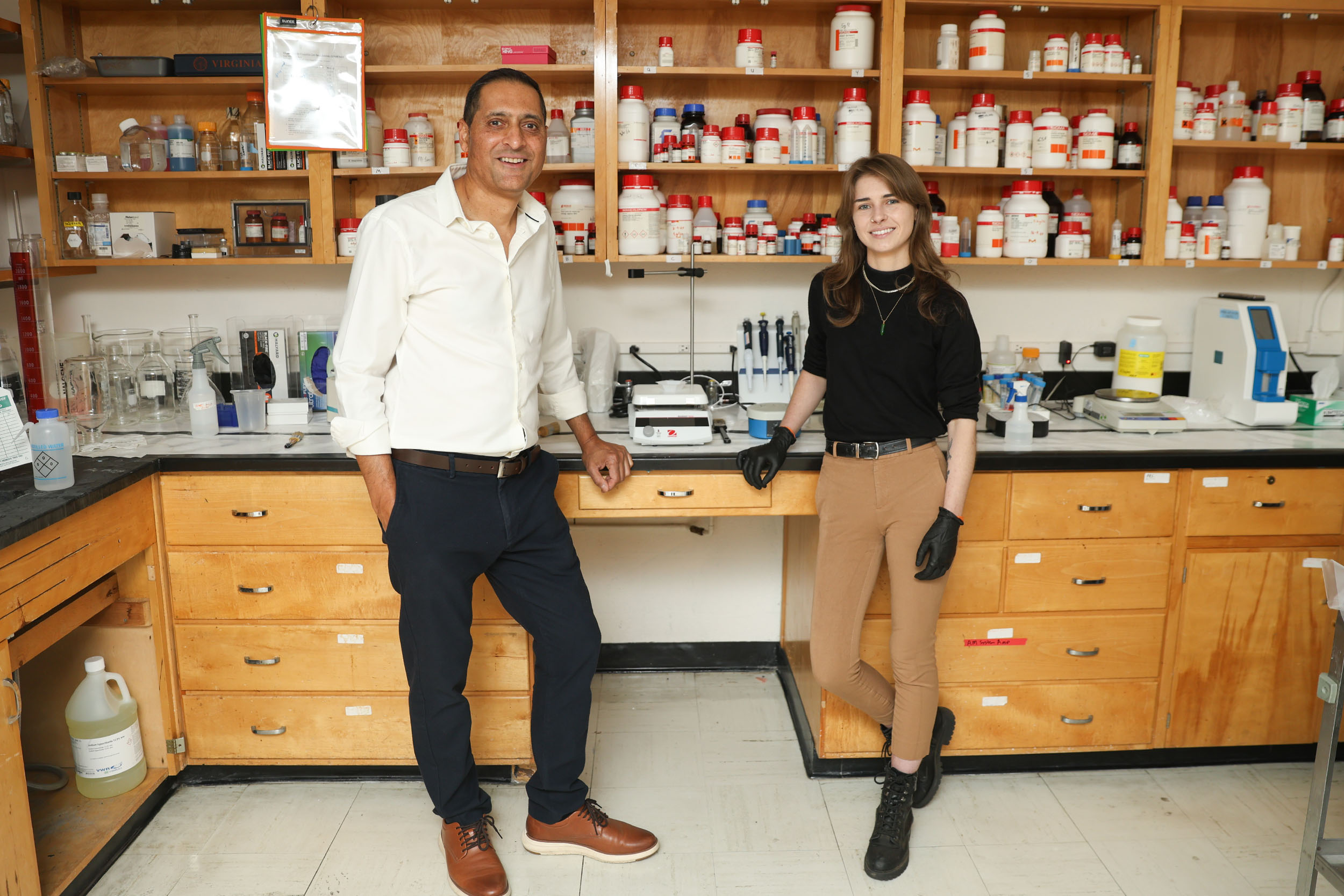
In the pursuit of innovative treatments for rare diseases, a new venture from the University of Virginia is standing out. Stellula Therapeutics, a startup created by graduate student Caeley Reever and UVA anesthesiology professor Manoj Patel, is focusing its efforts on a rare form of epilepsy known as SCN8A developmental and epileptic encephalopathy (SCN8A-DEE).
The name “Stellula,” meaning “little star” in Latin, symbolizes the company’s commitment to the children affected by this condition. Professor Patel explains, “The name reflects the inspiration behind the company and the children living with this disorder. To us, every child affected by this disease is a little star – unique, resilient and deserving of the opportunity for a healthier future.”
Stellula Therapeutics aims to develop a gene therapy that addresses the root cause of SCN8A-DEE, a condition with an incidence of about 1 in 52,000. The rarity of the disorder has historically led to a lack of interest from larger pharmaceutical companies, creating a gap that Stellula aims to fill by advancing precision gene-editing therapies.
Gene Therapy: A Potential Solution
Gene therapy offers a promising approach for SCN8A-DEE, which is caused by a single-gene mutation. Through base editing, Stellula Therapeutics plans to correct the mutation directly, potentially providing a one-time, curative treatment. This method contrasts with traditional treatments that merely aim to manage symptoms like seizures.
If successful, this strategy not only offers hope for those with SCN8A-DEE but also serves as a potential model for treating other severe genetic disorders caused by single-nucleotide variants.
Scientific Breakthrough and Intellectual Property
The scientific innovation behind Stellula’s approach has shown promise in preclinical studies using a mouse model. The base editing technology effectively reduced seizures and improved survival rates, with the engineered molecules specifically targeting the disease-causing mutation. These results have been a pivotal factor in the disclosure of Stellula’s intellectual property to the UVA Licensing & Ventures Group.
Future Plans and Goals
Looking ahead, Stellula’s immediate objectives include completing further studies and forming strategic partnerships to advance their platform. The company also aims to gather the necessary resources to conduct preclinical toxicology and safety studies, which are prerequisites for initiating human clinical trials.
Read More Here






![Robert Harmon Celebrates 99th Birthday at UVA’s Homecomings Weekend[embed]https://www.youtube.com/watch?v=c_VPFnE8x-w[/embed]](https://realnewsfast.com/wp-content/uploads/2026/10/Robert-Harmon-Celebrates-99th-Birthday-at-UVAs-Homecomings-Weekendembedhttpswwwyoutubecomwatchvc_VPFnE8x-wembed-300x200.jpg "Robert Harmon Celebrates 99th Birthday at UVA’s Homecomings Weekend[embed]https://www.youtube.com/watch?v=c_VPFnE8x-w[/embed]")
![Environmental Opera “Auksalaq” Opens UVA’s Arts on the Hill Series[embed]https://www.youtube.com/watch?v=PjYuP9wh3Hw[/embed]](https://realnewsfast.com/wp-content/uploads/2026/10/Environmental-Opera-Auksalaq-Opens-UVAs-Arts-on-the-Hill-SeriesembedhttpswwwyoutubecomwatchvPjYuP9wh3Hwembed-300x200.jpg "Environmental Opera “Auksalaq” Opens UVA’s Arts on the Hill Series[embed]https://www.youtube.com/watch?v=PjYuP9wh3Hw[/embed]")
![New documentary explores Elizabeth Holmes’ final days before prison[embed]https://www.youtube.com/watch?v=GGJSRFWALTI[/embed]](https://realnewsfast.com/wp-content/uploads/2026/10/New-documentary-explores-Elizabeth-Holmes-final-days-before-prisonembedhttpswwwyoutubecomwatchvGGJSRFWALTIembed-300x200.jpg "New documentary explores Elizabeth Holmes’ final days before prison[embed]https://www.youtube.com/watch?v=GGJSRFWALTI[/embed]")