

In a tale that intertwines with the birth of a nation, the lesser-known “Sister Bell” once rang in harmony with the Liberty Bell at Independence Hall in July 1776. For almost two centuries, this bell has been closely associated with Villanova University and the Order of St. Augustine.
The Liberty Bell’s Sister rang with its famous sibling during the birth of the nation. Under the stewardship of the Augustinians, it became a unique local symbol of religious freedom. (Photo courtesy of Digital Library@Villanova University)
On a bright and pleasant morning on July 8, 1776, the Pennsylvania State House’s two bells rang out in Philadelphia. As the crowd gathered, Colonel John Nixon was poised to make the first public reading of the colonies’ Declaration of Independence. The bells continued to toll until Nixon began, “When in the Course of human events…”
After the reading concluded, the bells rang again, celebrating the newfound nation’s independence. While the Liberty Bell remains an iconic symbol, drawing millions annually, its counterpart, the Sister Bell, took a quieter path, becoming a part of Villanova University’s history.
The Sister Bell, originally made for the State House’s clock tower, was crafted following dissatisfaction with the original bell’s tone and fears of it cracking again. Although initially meant to replace the Liberty Bell, the Sister Bell found its purpose in marking time from the clock tower.
“For many years, these two bells were used to call assemblies, to announce events, to protest actions or simply to toll the hours,” wrote Rev. Louis A. Rongione, OSA, in his book, The Liberty Bell’s Sister.
Aside from a brief relocation during the Revolutionary War, the Sister Bell remained in service until a little-known chapter in its story began—a testament to America’s commitment to religious freedom.
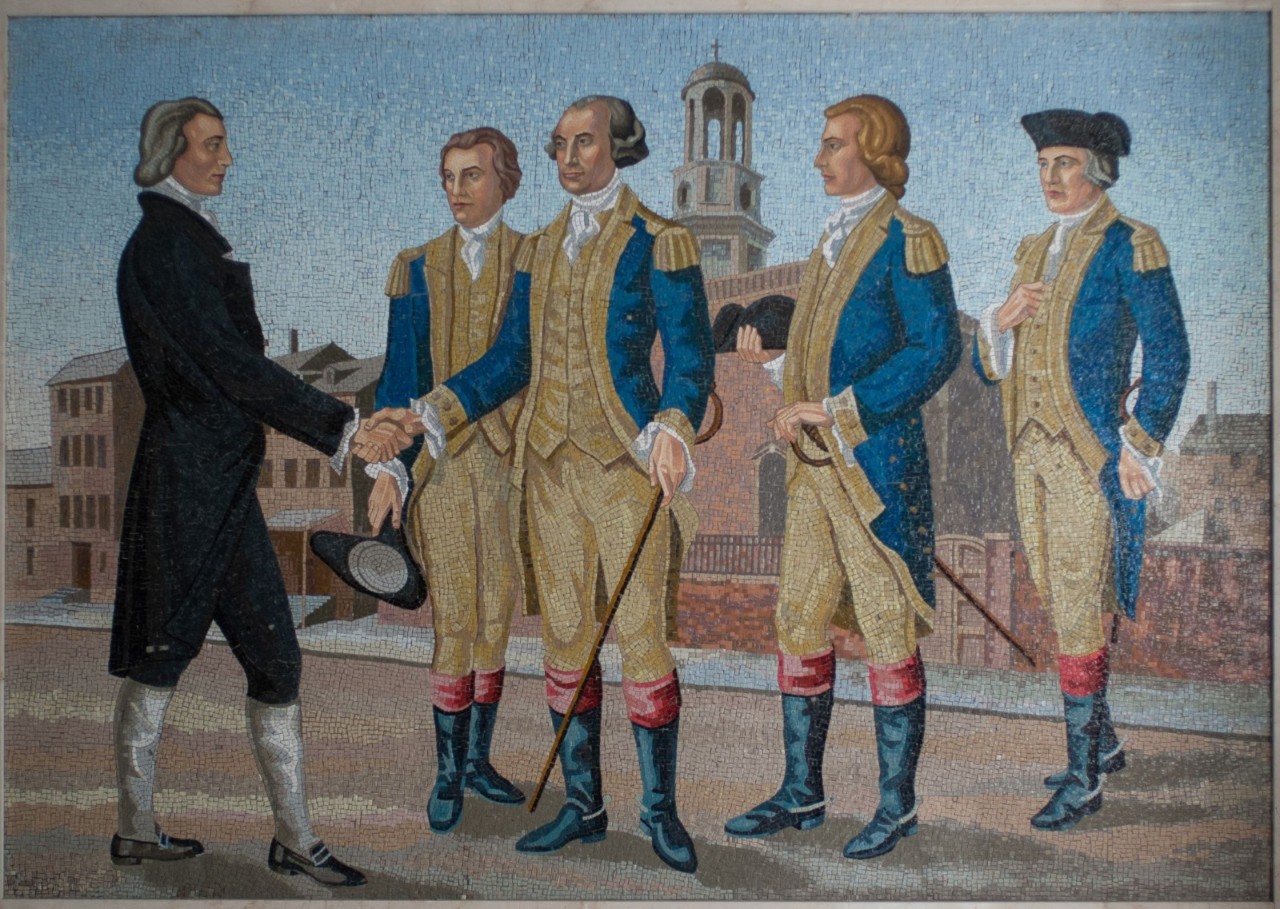
This mosaic in St. Mary’s Hall—one of four in the entryway comprising the piece “Missioners of the Order in the New World”—depicts George Washington and other prominent figures donating funds for the first Augustinian church in America. (Photo courtesy of Villanova University Art Collection)
Four mosaics, crafted by Angelo Lualdi Studios in Italy, adorn the entryway to St. Mary’s Hall at Villanova, capturing key moments in the Order of St. Augustine’s history. One depicts the Very Rev. Matthew Carr, OSA, meeting George Washington to raise funds for the first Augustinian church in America.
Rev. Carr, arriving in 1796, solicited donations, raising about $9,000, and attracted support from prominent figures like Commodore John Barry, Thomas Fitzsimmons, and Stephen Girard. The church’s foundation stone was blessed in September, with notable attendees.
“These men might not have shared Father Carr’s specific beliefs, but their action was a way in which the beautiful words put into the Declaration really became concretized,” said Rev. Michael Di Gregorio, OSA. The church became a symbol of hope for Catholics in the U.S., integrating colonial and European motifs in its architecture.
In 1830, the Sister Bell was transferred to St. Augustine’s newly-built steeple, marking a new chapter in its journey. This transfer was part of a broader effort to establish a lasting Augustinian presence, which would eventually lead to the foundation of Villanova University.
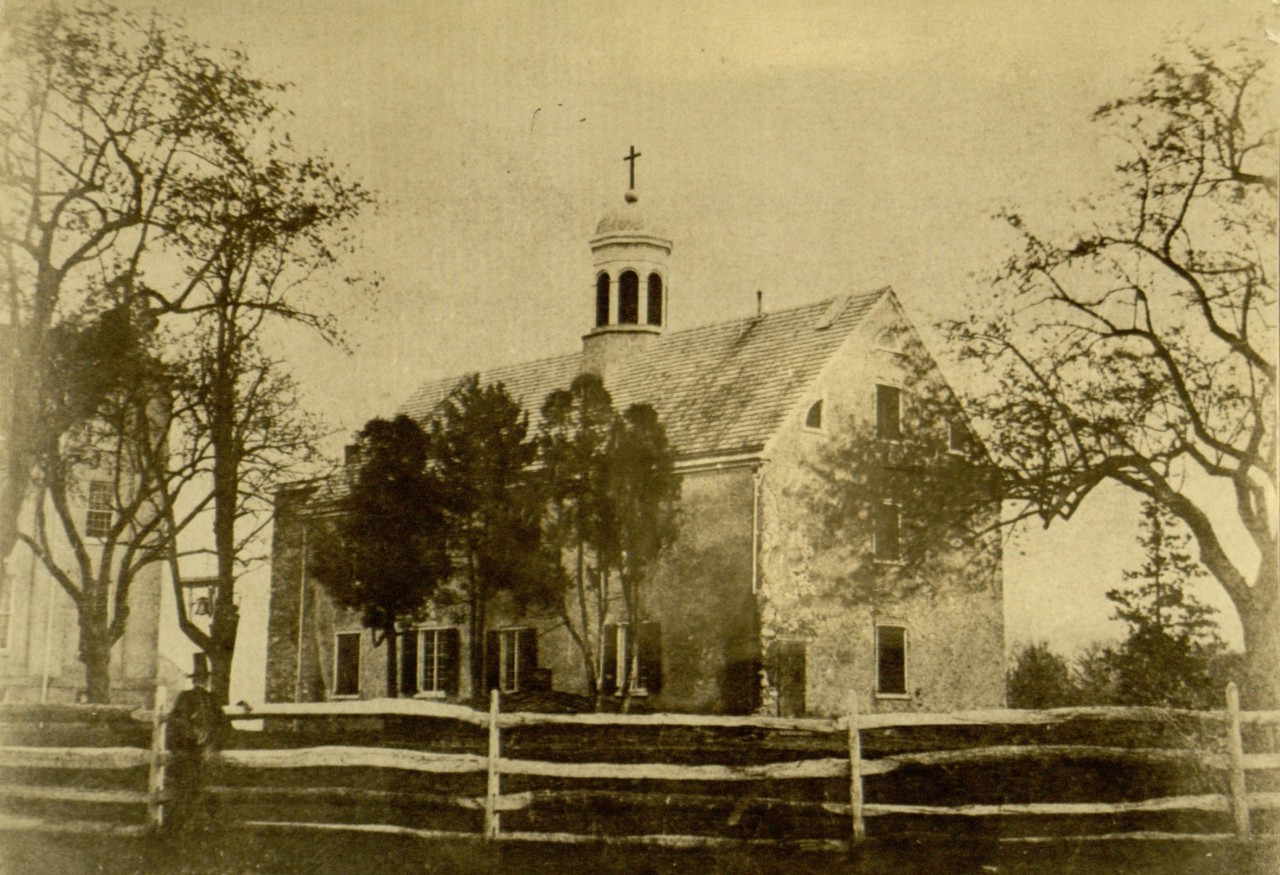
In this 1856 photo of the original chapel on campus, the Sister Bell can be seen affixed to the tree to the left of the building, just above the top hat of the gentleman near the fence. (Photo courtesy of Digital Library@Villanova University)
Rising anti-Catholic sentiment in the 19th century culminated in the destruction of St. Augustine’s Church in 1844, when rioters burned it down. The Sister Bell was destroyed in the fire, but its pieces were recast into a smaller bell in 1847.
To protect the bell from further violence, it was moved to Villanova College, where it served the campus community for decades, marking daily schedules and chapel services.
Dr. Whitney Martinko, a history professor at Villanova, notes that using the bell in daily life was a form of preservation, making it meaningful and showing its value.
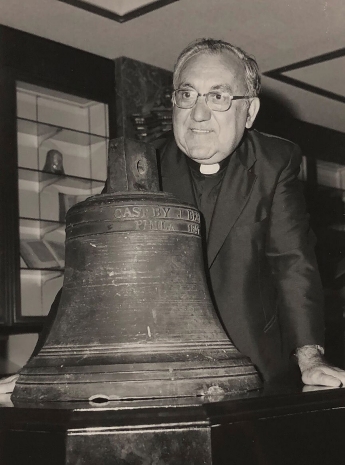
It was during Father Rongione’s time as head librarian at Villanova that he became interested in researching the history of the bell. (Photo courtesy of Villanova University Archives)
Father Rongione, Villanova’s librarian, dedicated himself to documenting the Sister Bell’s history, publishing his work during the Bicentennial. His efforts ensured the bell’s story was preserved and recognized.
In 2022, the bell returned to St. Augustine’s Church, where a “Welcome Home” ceremony celebrated its significance. The event highlighted the bell’s historical journey and its enduring symbolism of liberty and resilience.
As Rev. Di Gregorio noted, “The bell carries the history, in all its brighter and darker moments, of Catholics and Augustinians in America—the hope of religious freedom, the struggle to fit in, the beginnings of real membership, and finally a sense of real belonging.”
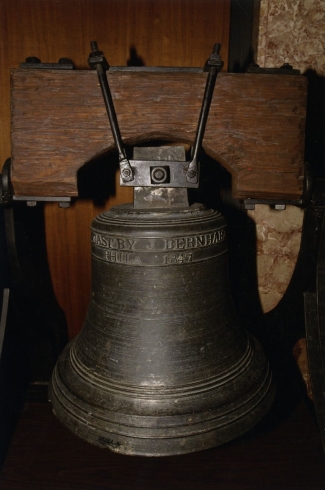
Like its sibling, the Sister Bell endures as a symbol of the principles on which the United States was founded. (Photo courtesy of Digital Library@Villanova University)
The Sister Bell, much like its famous sibling, stands as a testament to the principles of liberty and freedom on which the United States was founded. Its history is woven into the narrative of religious freedom, resilience, and the growth of an academic institution.
As Father Rongione aptly titled the epilogue of his book, “Let Freedom Ring.”
Read More Here







Comments are closed.