The University of Arizona is advancing space exploration with the development of EMILIA-3D, a cutting-edge scientific instrument set to enhance lunar research. As part of NASA’s initiative for lunar exploration, this technology will be delivered to the moon by a future Commercial Lunar Payload Services (CLPS) lander.
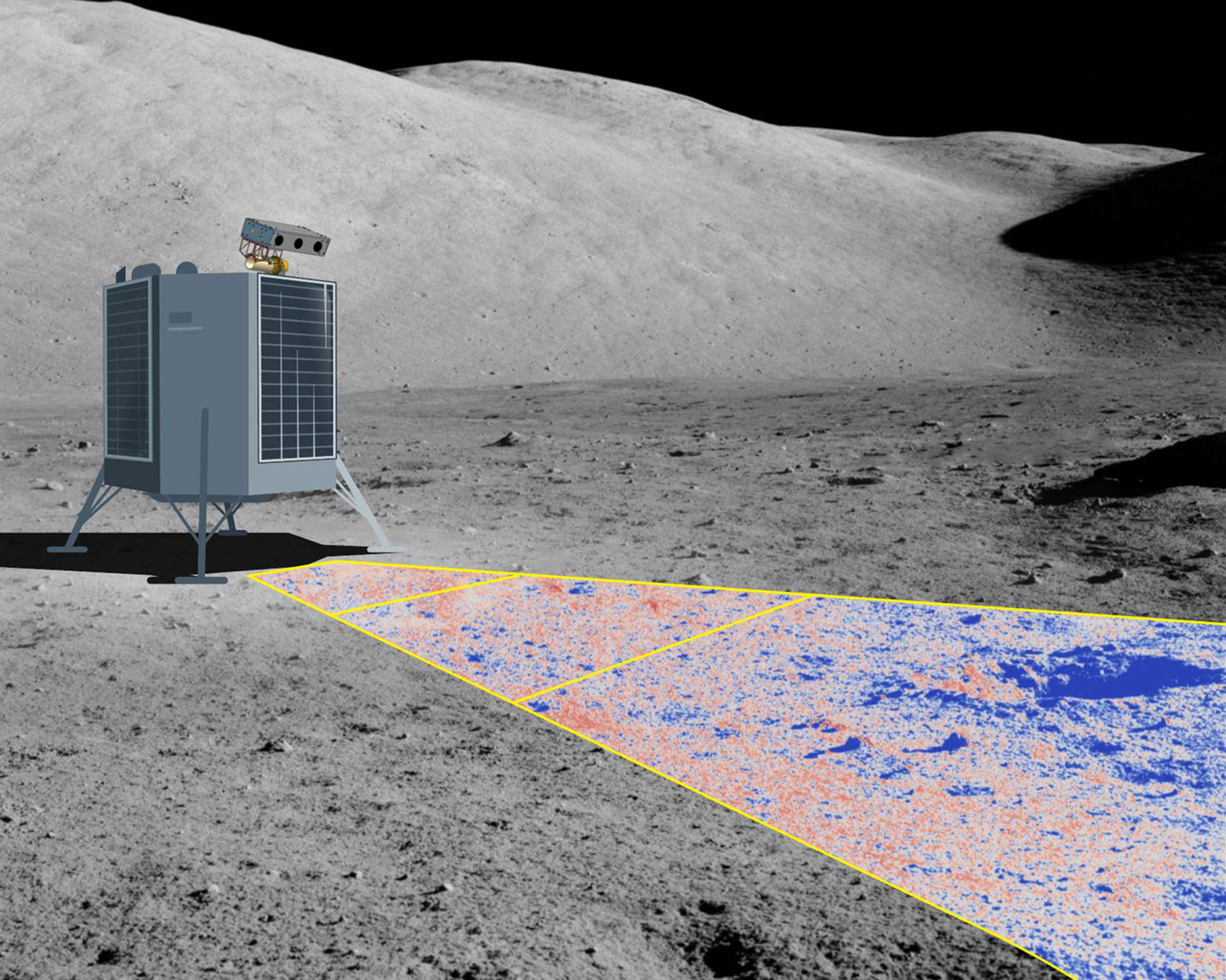
EMILIA-3D, an acronym for EMission Imager for Lunar Infrared Analysis in 3D, was chosen under the PRISM SALSA program, aiming to facilitate comprehensive studies of the moon’s surface. This instrument will enable scientists to generate three-dimensional thermal models of the lunar regolith by analyzing lighting conditions, topography, and temperature variations. Such insights are expected to significantly improve navigation and imaging of the moon’s surface.
Equipped with the Stereo Visible Imaging System (SVIS) and the Thermal Infrared Imager (TIR), EMILIA-3D will utilize a gimbal designed by Rocket Lab Robotics (Motiv) to conduct extensive scans of the lunar landscape. These sensors will capture data every eight hours over the course of a lunar day, enhancing our understanding of the moon’s thermal environment.
Bridging the Data Gap
Sarah Sutton, the principal investigator for EMILIA-3D and photogrammetry program lead at the University of Arizona’s Lunar and Planetary Laboratory, emphasized the importance of this mission: “The stereo images will be combined with thermal measurements at the centimeter- to meter-scale to create a totally new dataset of the lunar surface. This will help fill an important gap in data, since most images of the lunar surface are taken by the Lunar Reconnaissance Orbiter, which are comparatively low-resolution at this scale.”
The scientific team is particularly focused on understanding temperature variations in relation to the moon’s small-scale surface features. These features, which can harbor volatile compounds like water ice, are crucial for future human exploration. Andy Ryan, a co-investigator, highlighted the significance: “Understanding how human exploration affects volatiles, such as water, will be important before Artemis astronauts land at the lunar south pole.”
Additionally, the study of heat transfer through lunar regolith will reveal insights into the moon’s geological history, including particle size and subsurface compaction.
Exploration Effects and Instrument Design
Another objective of EMILIA-3D is to observe the impact of lander thrusters on the lunar surface, which could inform the design of future equipment and exploration strategies. The payload is designed to achieve its objectives irrespective of the landing site or lander used, ensuring broad applicability.
The development team, led by Sutton, aims to deliver the instrument within 24 months. The sensors are based on proven technologies, such as Northern Arizona University’s VISIONS instrument, which is currently en route to Mars on NASA’s ESCAPADE mission. Chris Haberle of NAU noted, “With EMILIA-3D, we’re taking that same approach from a Mars mission to the surface of the Moon.”
Support for the project comes from the Technology and Research Initiative Fund (TRIF), which aids in constructing a vacuum chamber for testing the instrument under simulated lunar conditions. This effort, led by Michael Phillips of the University of Arizona, will enhance the interpretation of lunar data.
The project benefits from the expertise of a multidisciplinary team, including members from various universities and research institutions, ensuring a comprehensive approach to lunar exploration.
Read More Here