Pandora Begins Its Ambitious Mission to Explore Distant Worlds
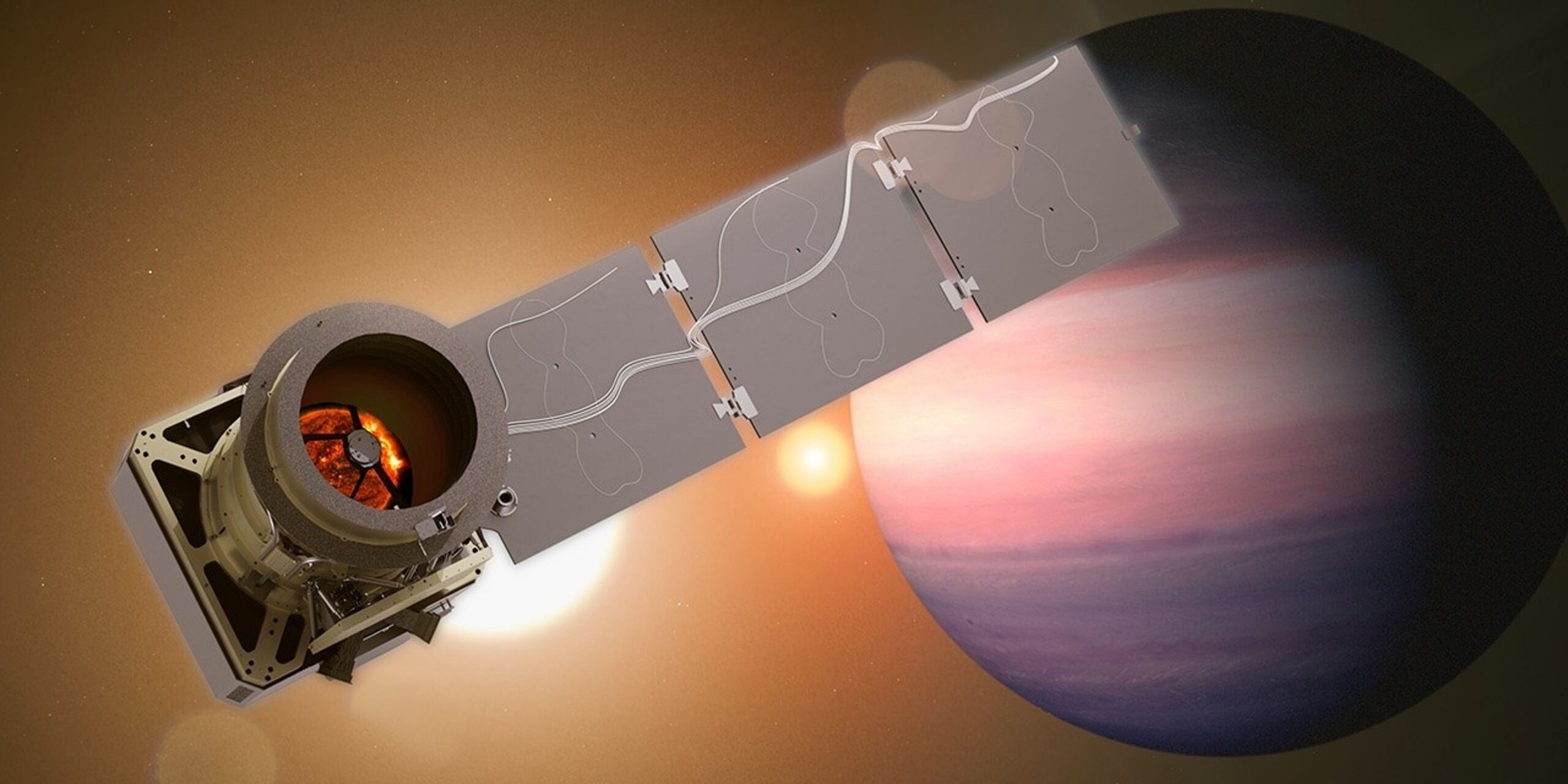
The exploration of worlds beyond our solar system has taken a significant leap forward with the commencement of NASA’s latest mission, Pandora. Seven months post-launch, Pandora aims to provide unprecedented insights into exoplanets and their host stars. The University of Arizona (U of A) is at the forefront of this mission, with its team of engineers and scientists playing a pivotal role.
Pandora is set to unravel the atmospheric compositions of over 20 exoplanets, identifying elements like hazes, clouds, and water. The mission is led by NASA’s Goddard Space Flight Center, with operational leadership by U of A. Daniel Apai, a professor at the U of A Steward Observatory and Lunar and Planetary Laboratory, and Nic Altamirano, Pandora’s mission operations project manager, are spearheading the initiative. Lawrence Livermore National Laboratory is tasked with project management and engineering.
As the first space telescope crafted for detailed multi-color observations of starlight through exoplanetary atmospheres, Pandora will simultaneously examine planets and their stars in visible and infrared light. Its prolonged observation capability surpasses flagship observatories like NASA’s James Webb Space Telescope, enhancing data interpretation from both ongoing and past missions, such as NASA’s Kepler Space Telescope.
“This is a big moment for our Pandora science team members here on campus,” remarked Apai, who guides the Pandora Exoplanet Science Working group. “Our U of A team, including astronomy students and early-career researchers, are taking their first looks at the atmospheres of worlds and their suns that have never been studied in such details before.”
Pandora’s telescope, equipped with an 18-inch all-aluminum mirror and instrumentation for analyzing light spectra, achieves exceptional brightness measurement accuracy. Light spectra, akin to signatures, reveal the chemical properties of a star and its orbiting planet’s atmosphere. Dips in brightness signal a planet’s transit across its star from the observer’s viewpoint.
Marking a milestone, Pandora is the first on-orbit NASA mission operated from U of A’s Multi-Mission Operation Center (MMOC), part of the Arizona Space Institute. Altamirano expressed excitement over entering “steady-state operations,” highlighting the expertise of the mission operation team and students.
“We have assembled a strong team of mission operation professionals and students who are equipped to support Pandora’s day-to-day operations, providing the experience and operational maturity needed to sustain the mission moving forward,” Altamirano stated.
U of A’s MMOC collaborates with NASA’s Goddard Space Flight Center’s Science Operations Center and NASA Ames Research Center’s Data Processing Center to translate the science calendar into executable spacecraft commands. Altamirano explained, “This involves taking planned observations and science activities, building the appropriate commands, validating them through our operational processes and coordinating with the SOC to ensure the final sequences are ready for uplink and execution.”
Despite automation, mission operations necessitate manual oversight to address spacecraft states, constraints, anomalies, or plan changes. “Pandora is entering the most exciting phase of its journey: the science is beginning,” stated Tomás Díaz de la Rubia, senior vice president for research and partnerships. The mission provides a unique opportunity for U of A researchers and students to delve into the atmospheres of extraterrestrial worlds, leveraging the university’s strengths in astronomy, planetary science, and astrobiology.
Telescopes study a planet’s atmosphere during transits, where starlight passes through the atmosphere before reaching Earth. As light interacts with atmospheric molecules, it bears chemical signatures. Pandora’s instruments, however, also capture light from the entire star, not just the planet’s atmosphere. Stars have non-uniform surfaces with features like faculae and sunspots that impact measurements.
“Water is one of the most important molecules we can measure to understand the composition and physical conditions of an exoplanet atmosphere,” noted Benjamin Rackham, an MIT researcher formerly part of Apai’s group. “But features on the star can distort the water signal we’re searching for. Pandora is designed to disentangle the signals from the planet and the star, helping us to understand the planets more accurately and laying the groundwork for the eventual study of planets that could harbor life.”
Throughout its year-long primary mission, Pandora will observe each of the 20 exoplanets at least 10 times, with each observation spanning 24 hours and including a transit event.
Read More Here