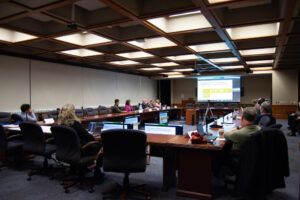
In an era where educational dynamics are under constant scrutiny, the latest figures regarding North Carolina’s public school educators paint a picture of steady principal retention and a modest uptick in teacher attrition. Presented to the North Carolina State Board of Education (SBE), the data indicates a slight increase in teacher departures for the 2024-25 academic year compared to the previous year.
The State of the Teaching Profession and School Administrator Report, a requirement of the North Carolina General Assembly (NCGA), examines teacher attrition and vacancies across the state’s 115 public school districts from March 2024 to March 2025.
Teacher attrition, which measures those exiting the teaching profession, saw a minor increase to 10.11% in 2024-25, up from 9.88% in 2023-24. This change translates to 221 more teachers leaving their roles out of 9,107 full-time permanent positions. The trend signals a stabilization following a post-COVID peak observed in the 2022-23 period.
North Carolina Superintendent of Public Instruction Maurice “Mo” Green commented, “This year’s report reinforces the importance of addressing the core issues that lead to teacher attrition. Our public schools cannot be best in the nation if our teachers are not adequately compensated, trained and revered. It will take action from the North Carolina General Assembly, the North Carolina Department of Public Instruction and our schools to strengthen the education profession.”
In partnership with the SBE, Green introduced the Achieving Educational Excellence strategic plan for 2025-2030 to enhance public schooling in North Carolina. The initiative prioritizes improved teacher compensation, enhanced support for new teachers, and bolstering the status of educators. Additionally, it advocates for broadening the state’s Advanced Teaching Roles Program, offering career development for effective teachers.
The attrition challenge is most pronounced among teachers with minimal experience or those nearing retirement, with attrition rates ranging from 14% to 18% for new teachers and 15.5% to 25% for veteran educators. Notably, almost one-third of newly hired teachers between March 2024 and March 2025 emerged through the residency pathway, whereas 27.23% followed a traditional education degree route.
Vacancy Data
In 2021, state legislators expanded the definition of a vacancy to encompass positions filled by temporarily licensed educators and rehired retirees. Under this definition, the vacancy rate for 2024-25 was 7.4%, a slight dip from 7.6% the prior year.
Dr. Tom Tomberlin, senior director of educator preparation, licensure and performance at the North Carolina Department of Public Instruction (NCDPI), highlighted that many “vacant” roles are occupied by temporary or rehired staff. “School and district leaders understand the importance of having an educator in every classroom, and they work diligently to ensure that every student is supported,” Tomberlin explained. He noted that positions genuinely lacking staff contribute to a lower vacancy rate of approximately 1.2%.
Principal Movement
This year’s report also marks the second inclusion of data on principal movements, a reflection of recent legislative changes. By the close of the 2024-25 school year, 151 out of 2,482 principals exited North Carolina public schools, resulting in a 6.1% attrition rate, with 59% of these departures due to retirement.
Among the principals who remained, a significant 92.4% continued in their principal roles, while 4.3% transitioned to district-level positions. Notably, over 75% of principals from underperforming schools sustained their positions at the same institutions.
Read More Here