
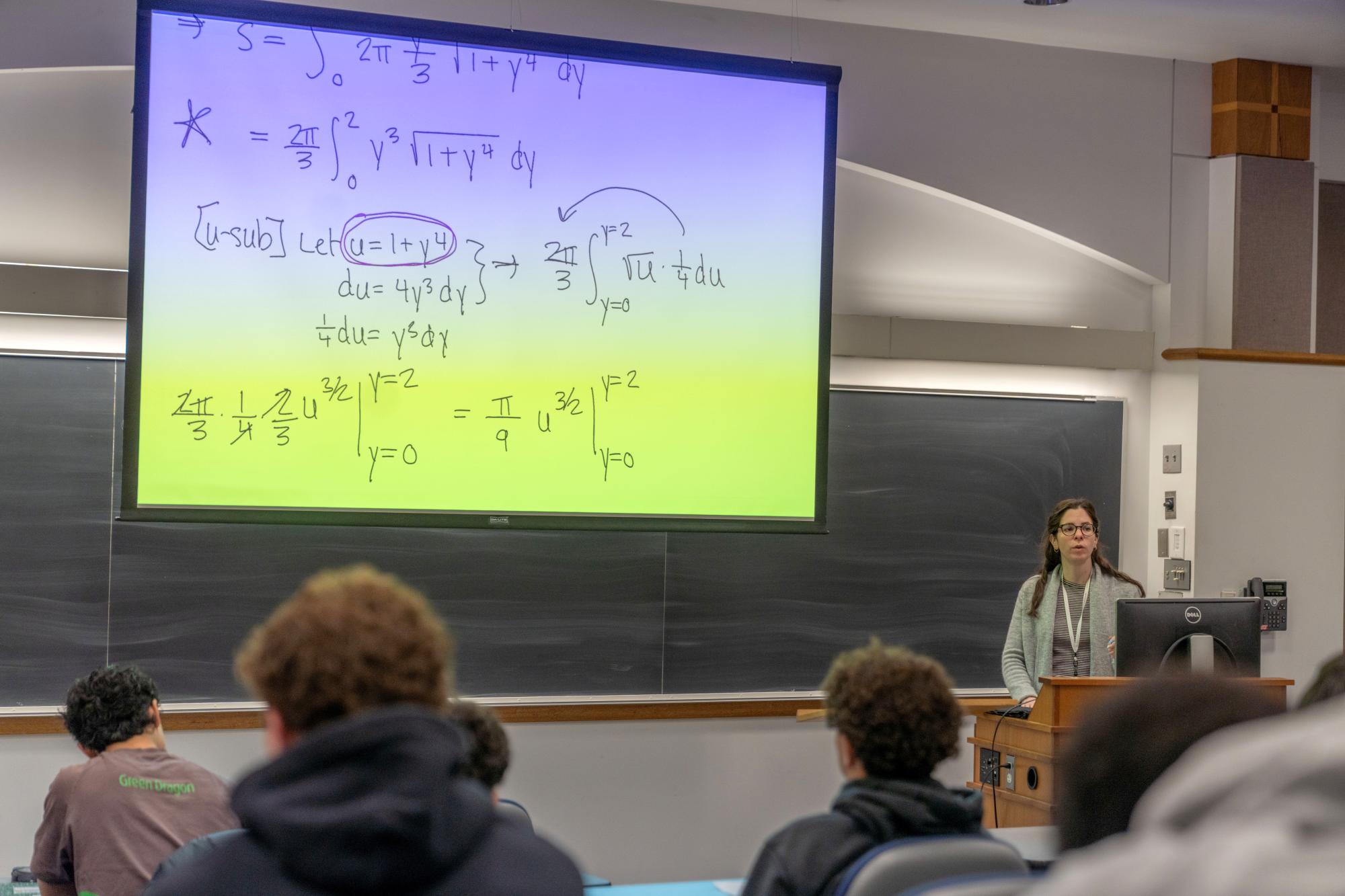
Innovative Approaches in Mathematics Education at Lehigh University
Lehigh University’s mathematics department is embracing new strategies to enhance student learning and engagement. By introducing adaptive learning systems and fostering a supportive classroom environment, faculty members aim to improve student outcomes while maintaining high academic standards.
Megan Cream, a teaching associate professor of mathematics, has played a key role in this transformation. She introduced the ALEKS courseware system to the pre-calculus program and developed materials for an adaptive learning system. “We wanted to make sure that our classes are not the ones that are holding students back,” Cream explained. “We don’t want our classes to be the gatekeeping classes, and we still want to make sure that our standards are high enough that students are getting what they need out of the courses.”
Fostering a Sense of Belonging
Inspired by social psychologist Kevin Binning’s “sense of belonging” activity, Cream and others have implemented practices to help students overcome self-doubt and feel more integrated into the academic environment. This activity involves reflection writing, story sharing, and group discussions to help students realize that challenges are temporary.
Cream, along with Donna Mohr, director of retention, and Isaak, implemented this activity in various calculus courses at Lehigh. Beginning in the fall 2024 semester, it was introduced in Calculus I (MATH 21) and Calculus II (MATH 22), and later expanded to other courses. As a result, more students are attending office hours and openly discussing their concerns.
Encouraging Participation with Active Learning
In a shift from traditional lecture-based teaching, the mathematics department has begun incorporating active learning methods to engage students more effectively. Cream utilizes “knowledge checks” by pausing class for students to work on problems individually or in groups, which has increased attendance and participation.
These methods are spreading through the department, with other faculty members adapting them to their courses. Cream hopes that these innovations can extend beyond the mathematics department to other areas within the College of Arts and Sciences.
To further these efforts, the department’s calculus committee plans to host a workshop for faculty and graduate students. Co-chaired by Cream, Jiayuan Wang, and Nick Russoniello, the workshop will highlight successful teaching strategies to encourage broader adoption.
Napier noted that the department has also invested in training for teaching assistants, providing them with tools and practices to enhance their teaching skills. “All of these activities are really giving our teaching assistants some additional tools and incentive to develop so that later on, they can innovate in their own teaching or industry,” he said.
Read More Here






Comments are closed.