
Robotic Surgery Revolutionizes Kidney Donation in Tucson
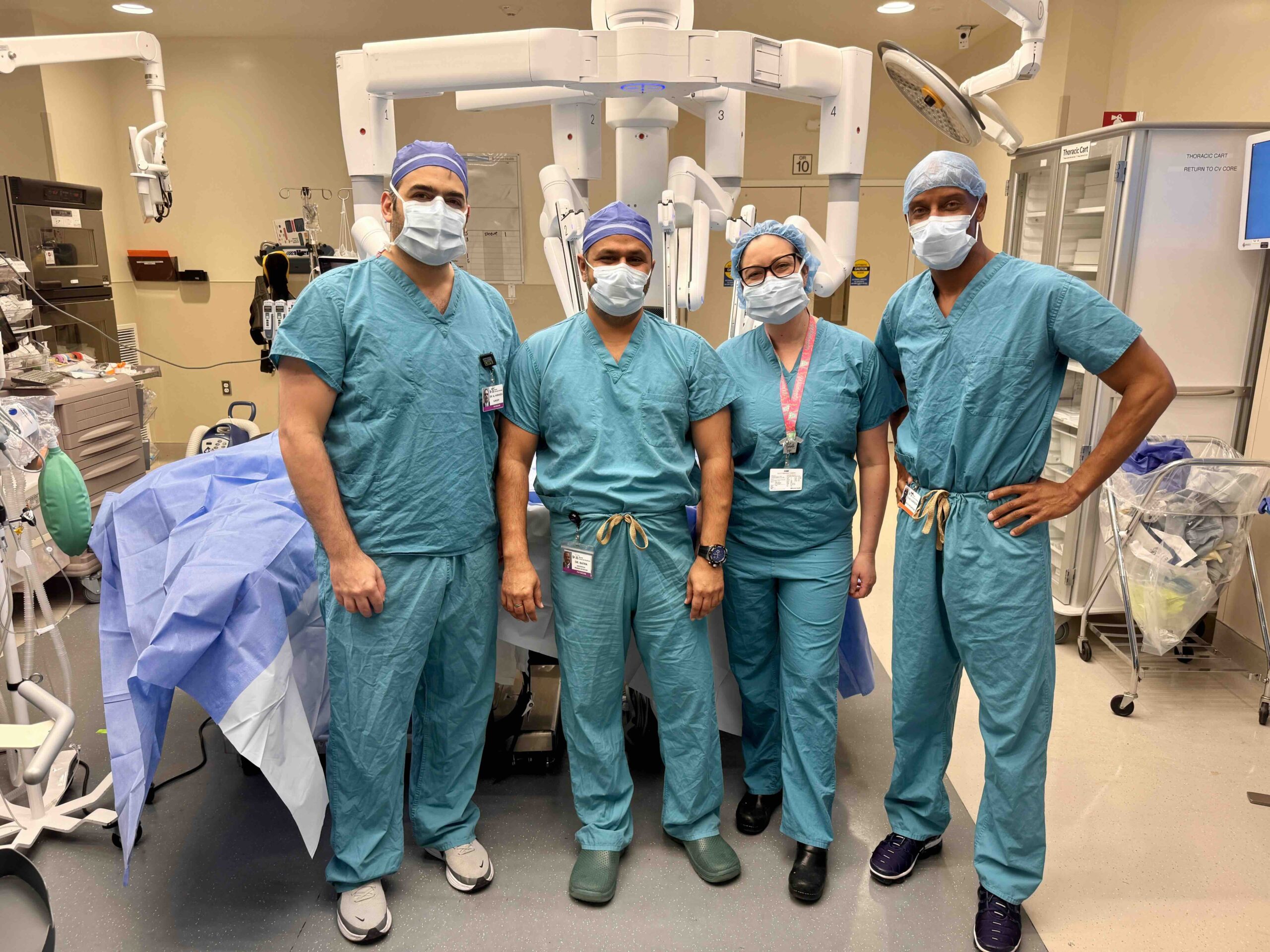
A groundbreaking medical advancement has taken place in Tucson as Banner – University Medicine Tucson successfully performed the first robotic-assisted living donor kidney removal within the Banner Health network. This pioneering procedure was conducted by the University of Arizona College of Medicine – Tucson’s Department of Surgery, promising enhanced transplant care for patients in southern Arizona and across six western states served by Banner Health.
Leading the procedure was Dr. Ramesh Batra, the division chief of abdominal transplant surgery at the College of Medicine – Tucson. Dr. Batra is noted for his expertise in liver and kidney transplantation, living donor surgeries, and innovative surgical practices.
Robotic-assisted living donor nephrectomy involves using robotic technology to extract a kidney from a living donor, which is then transplanted into a recipient. Unlike traditional open surgery, which involves a large incision, the robotic method utilizes smaller incisions for improved precision. This results in reduced pain for donors and a quicker recovery, allowing them to resume their daily activities sooner. This advancement is particularly beneficial for donors who are taking time away from work or family responsibilities.
The availability of this procedure in Tucson addresses a significant need, as living donors in Southern Arizona previously had to travel outside the region for such surgeries. Now, donors can recuperate at home, surrounded by family during this challenging time.
“This milestone reflects our commitment to bringing advanced, patient-centered surgical care to Arizona,” stated Dr. Geoffrey Gurtner, chair of the Department of Surgery. “I am certain this is just the first of many innovative, patient-centric procedures that Dr. Batra’s team will introduce to Arizona.”
The first surgery involved sisters Paula Haywood and Clarissa Shosie. Shosie, at 34, faced declining kidney function due to lupus, prompting Haywood to volunteer as a living donor.
“The family has been through lupus before. There’s no way we’re going to lose someone else, and if I can help my sister, I will,” Haywood shared.
Prior to the surgery, Haywood received a hero walk – a hospital tradition that acknowledges the generosity and gravity of living organ donors’ decisions. Reflecting on the experience, Haywood remarked, “That was the moment I could exhale. We did it. My sister and I could breathe and say, ‘It’s done.'”
Living kidney donations are open to family, friends, or even strangers, pending a medical evaluation. The surgical team aims to progressively apply robotic techniques to all transplant surgeries in the future.
“Living kidney donors make a remarkable, selfless choice, and we are committed to honoring that gift through innovative robotic technology and exceptional patient care,” commented Dr. Batra.
A version of this story originally appeared on the Department of Surgery website.
Read More Here









Be First to Comment